
Artificial Intelligence (AI) has transformed industries by enabling systems to learn from data, make informed decisions, and perform complex tasks. At the core of these abilities lies AI model training, a process that allows models to learn from vast amounts of training data to deliver accurate results. This article delves deep into AI model training techniques and provides insights into supervised, supervised and unsupervised learning,, and advanced training methods, as well as the challenges and future of AI model training. Whether you are a data scientist, a machine learning enthusiast, or a tech professional, this guide is designed to help you understand the intricacies of training AI models effectively.

I. Introduction to AI Model Training
What is AI Model Training and Why is it Important?
AI model training is the process of teaching an AI model to recognize and act upon patterns within a dataset. This is training an ai model involves feeding structured or unstructured data into the model, allowing it to learn from labeled and unlabeled data. The trained AI model then uses this data to make predictions or decisions, mimicking aspects of human intelligence. Without effective model training, an AI system’s predictions would be unreliable, limiting its real-world applications.
Why is model training important? Because it directly impacts a machine learning model’ performance and accuracy, ensuring that AI systems can adapt and respond in diverse real-world scenarios. By improving their understanding of patterns, trends, and relationships in the data, AI models excel in tasks like object detection, sentiment analysis, and predictive analytics. From machine learning models to deep learning techniques, effective training is essential to creating high-performing AI systems capable of handling complex data tasks.
The Role of AI Model Training in Real-World Applications
AI models are widely used in sectors such as healthcare, finance, retail, and transportation, each with unique data requirements. In healthcare, for example, AI systems use training data to detect diseases from image data or to predict patient outcomes. In finance, AI models analyze market data to assess credit risk or detect fraud. The development and training of AI models are key to these applications, making them responsive, adaptive, and accurate.
Key Concepts in AI Model Training:
|
Term |
Definition |
|---|---|
|
Training Data |
Data fed into the model to help it learn patterns and make accurate predictions. |
|
Machine Learning |
A subset of AI that focuses on algorithms that allow machines to learn from data. |
|
Deep Learning |
A type of machine learning model that uses neural networks with multiple layers for complex tasks. |
|
Model Performance |
The effectiveness of a model in making accurate predictions or identifying patterns in new data. |
II. Types of AI Model Training Techniques

Training an AI model requires selecting an appropriate training technique based on the type of data and task. The primary types of AI model training techniques are supervised learning, unsupervised learning, reinforcement learning, and semi-supervised learning.
Supervised Learning Techniques
In supervised learning, the AI model is trained on labeled data, where each data point includes an input-output pair. Supervised learning is ideal for tasks requiring clear, specific predictions, such as binary outcomes or classifications.
Popular Supervised Learning Algorithms
-
Linear Regression: Predicts continuous outcomes by identifying relationships between dependent and independent variables.
-
Logistic Regression: Used for binary classification problems, such as spam detection.
-
Support Vector Machines (SVM): Effective for classification tasks, SVMs create a decision boundary between classes.
-
Neural Networks: Modeled after the human brain, these algorithms excel at recognizing complex patterns and are widely used in deep learning.
Supervised learning requires a large amount of labeled data, which can be time-consuming and costly to prepare. However, its effectiveness in providing accurate and targeted results makes it ideal for applications like image classification, sentiment analysis, and predictive modeling.
Unsupervised Learning Techniques
Unlike supervised learning, unsupervised learning uses unlabeled data to identify and recognize patterns or groupings within the data. This method is useful for tasks that do not require specific answers but aim to uncover hidden patterns and relationships.
Key Unsupervised Learning Techniques
-
Clustering: Groups similar data points together, widely used in customer segmentation and recommendation systems.
-
Dimensionality Reduction (e.g., PCA): Reduces data complexity while retaining critical information, often used for visualization and noise reduction.
Unsupervised learning is highly effective for analyzing large datasets where manual labeling is impractical. For example, in customer segmentation, clustering algorithms help companies identify distinct customer groups for more targeted marketing.
Reinforcement Learning Techniques
Reinforcement learning enables an AI system to learn by trial and error, receiving positive or negative reinforcement based on its actions. This technique is ideal for environments where the AI system, or “agent,” interacts with its surroundings, making it suitable for applications like robotics and autonomous driving.
Components of Reinforcement Learning
-
Agent: The AI model that makes decisions.
-
Environment: The system in which the agent operates.
-
Reward System: Provides positive or negative reinforcement to guide behavior.
-
Policy: The strategy that the agent uses to determine its actions.
Reinforcement learning is effective in complex, dynamic environments where real-time decision-making is essential. It allows AI models to mimic human behavior and adapt based on feedback, making it essential for reinforcement learning models used in gaming and robotics.
Semi-Supervised and Self-Supervised Learning
Semi-supervised learning combines both labeled and unlabeled data, maximizing the value of small amounts of labeled data to achieve efficient model development. Self-supervised learning, a new approach in AI, generates its own labels from data, proving valuable in scenarios where labeled data is scarce. This technique is gaining traction in computer vision and natural language processing (NLP), allowing AI models to process vast datasets with limited manual input.
III. The AI Model Training Process
Training an AI model involves a sequence of carefully orchestrated steps, from gathering data to training validation to evaluating model performance. Each phase is crucial to the model training process and influences the AI model’s accuracy and reliability.
Data Collection and Preparation
High-quality training data is the foundation of any AI model training and development process. The quality and relevance of the data directly impact the model’s ability to generalize and perform accurately.
Gathering Relevant and High-Quality Data
Data is gathered from various sources, often requiring automated data collection methods to handle large-scale data. Structured data (e.g., spreadsheets) and unstructured data (e.g., text, images) are both used in AI model training, depending on the project’s scope.
Data Processing and Cleaning
Data processing ensures consistency by removing outliers, addressing missing values, and standardizing formats. For instance, in a computer vision project, processing image data may involve resizing, normalizing, and filtering images to reduce noise. A critical step in data preparation and cleaning is ensuring data quality since poor performance often results from biased or inconsistent data.
|
Data Processing Step |
Description |
|---|---|
|
Outlier Removal |
Removing anomalies that can skew model training. |
|
Standardization |
Ensuring consistent data formats for seamless model input. |
|
Handling Missing Values |
Addressing gaps in data to prevent incorrect learning outcomes. |
|
Normalization |
Adjusting values to a common scale, crucial for models like SVMs. |
Data Labeling and Annotation for Supervised Learning
In supervised machine learning, data must be accurately labeled to ensure correct predictions. Human oversight is often necessary to annotate complex datasets, such as medical images or text for sentiment analysis. For AI models that need precise object detection, each image in the dataset is annotated with bounding boxes and labels, enhancing the model’s ability to make accurate predictions.
Model Selection and Initial Training
Choosing the Right Model Architecture
Choosing a model involves evaluating the complexity and scope of the task. For deep learning models, neural networks are generally preferred for their ability to handle complex data relationships, while support vector machines are suitable for smaller datasets and binary classifications.
Initial Training and Setting Parameters
During initial training, prepared data is fed into the model to establish a baseline performance level. This phase involves setting parameters like the learning rate and batch size to control how the model adjusts its weights during ai training itself. Proper initialization is essential for obtaining more accurate predictions and minimizing model errors.
Model Validation and Testing
Importance of Training and Validation Datasets
Dividing data into training and validation datasets helps prevent overfitting, ensuring the model generalizes well to unseen data. Cross-validation is a technique used to evaluate the model’s performance on multiple data splits, further enhancing the model’s stability and robustness.
Performance Evaluation Metrics
Evaluating model performance involves metrics of model functions like accuracy, precision, recall, and F1 score. These metrics allow data scientists to assess whether the model performs effectively across different tasks. In binary outcome tasks, the ROC-AUC curve provides a detailed view of the model’s true positive versus false positive rate.
IV. Advanced AI Model Training Techniques

Transfer Learning for Efficient Model Training
Transfer learning enables an AI model
to leverage a pre-trained model, significantly reducing training time and resources. This is especially valuable in fields like computer vision and natural language processing (NLP), where building models from scratch requires vast data and compute resources to begin training with. Transfer learning allows a model trained on a large image dataset to quickly adapt to new tasks with a limited amount of new data.
Hyperparameter Tuning for Optimal Model Performance
Hyperparameter tuning optimizes a model’s parameters to improve its performance. Techniques like grid search and random search evaluate various combinations of parameters, while Bayesian optimization uses a probabilistic approach to find the best values.
Cross-Validation Techniques for Reliable Results
Cross-validation is essential for assessing model robustness and avoiding overfitting. K-fold cross-validation divides the data into subsets, training the model on different combinations test data to ensure consistent results. By validating the model on multiple data splits, data scientists can gauge the model’s resilience across varying datasets.
Data Augmentation for Limited Training Data
Data augmentation enhances training data by creating new samples from existing data. In image data, techniques like rotating, cropping, and flipping images allow the model to learn from diverse scenarios. For text data, word embeddings and synonyms provide alternative samples, making it a powerful technique in deep learning techniques for natural language tasks.
Ensemble Learning for Enhanced Accuracy
Ensemble learning combines multiple models to improve accuracy. Techniques like bagging (Random Forest) and boosting (XGBoost) improve model resilience and accuracy by leveraging the strengths of different models. Ensemble methods are popular in model selection processes where high accuracy is a priority.
V. Challenges in AI Model Training
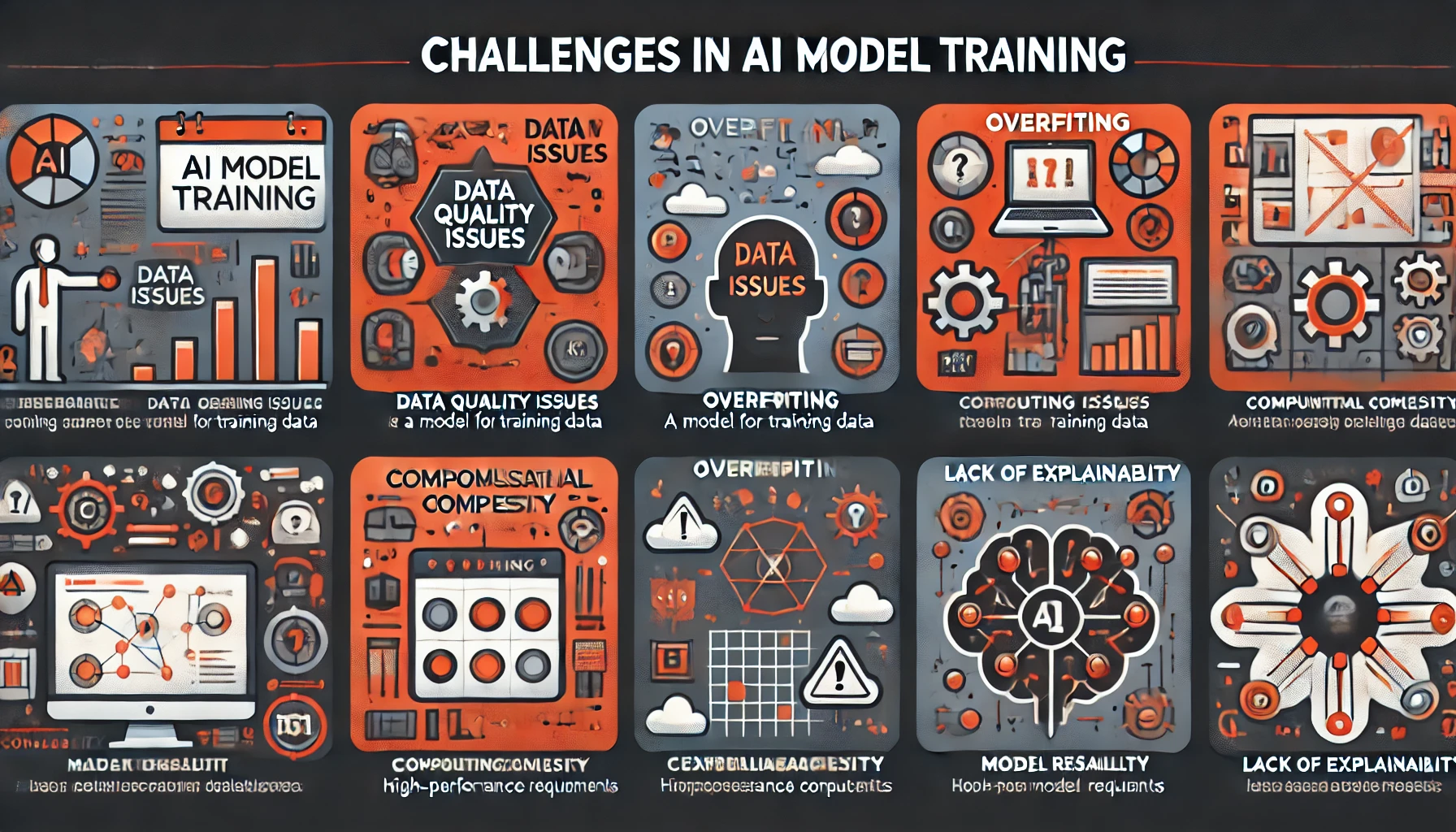
Training AI models is challenging, with potential pitfalls in data quality, resource constraints, and ethical considerations.
Data Quality and Quantity Challenges
High-quality data is essential, yet large volumes of relevant data are often difficult to obtain. Issues like data imbalance, missing values, and unstructured data can hinder model performance. Addressing these challenges involves automated data collection, data augmentation, and regular data cleaning.
Overfitting and Underfitting
Overfitting happens when a model learns noise instead of patterns, performing well on training data but poorly on new data. Underfitting results when a model is too simplistic, leading to low accuracy. Techniques like dropout layers in neural networks and cross-validation mitigate these issues by balancing model complexity.
Compute Resource Limitations
Training AI models, especially deep learning models, is computationally intensive. Cloud solutions and model compression help manage resource constraints. Compute resources like GPUs and TPUs accelerate deep learning model training, making them essential in large-scale projects.
Privacy and Security Concerns
Sensitive data is often used in AI model training, raising privacy concerns. Ensuring compliance with data protection regulations and anonymizing sensitive data is essential, especially in sectors like healthcare and finance.
VI. Real-World Applications of Advanced AI Model Training Techniques
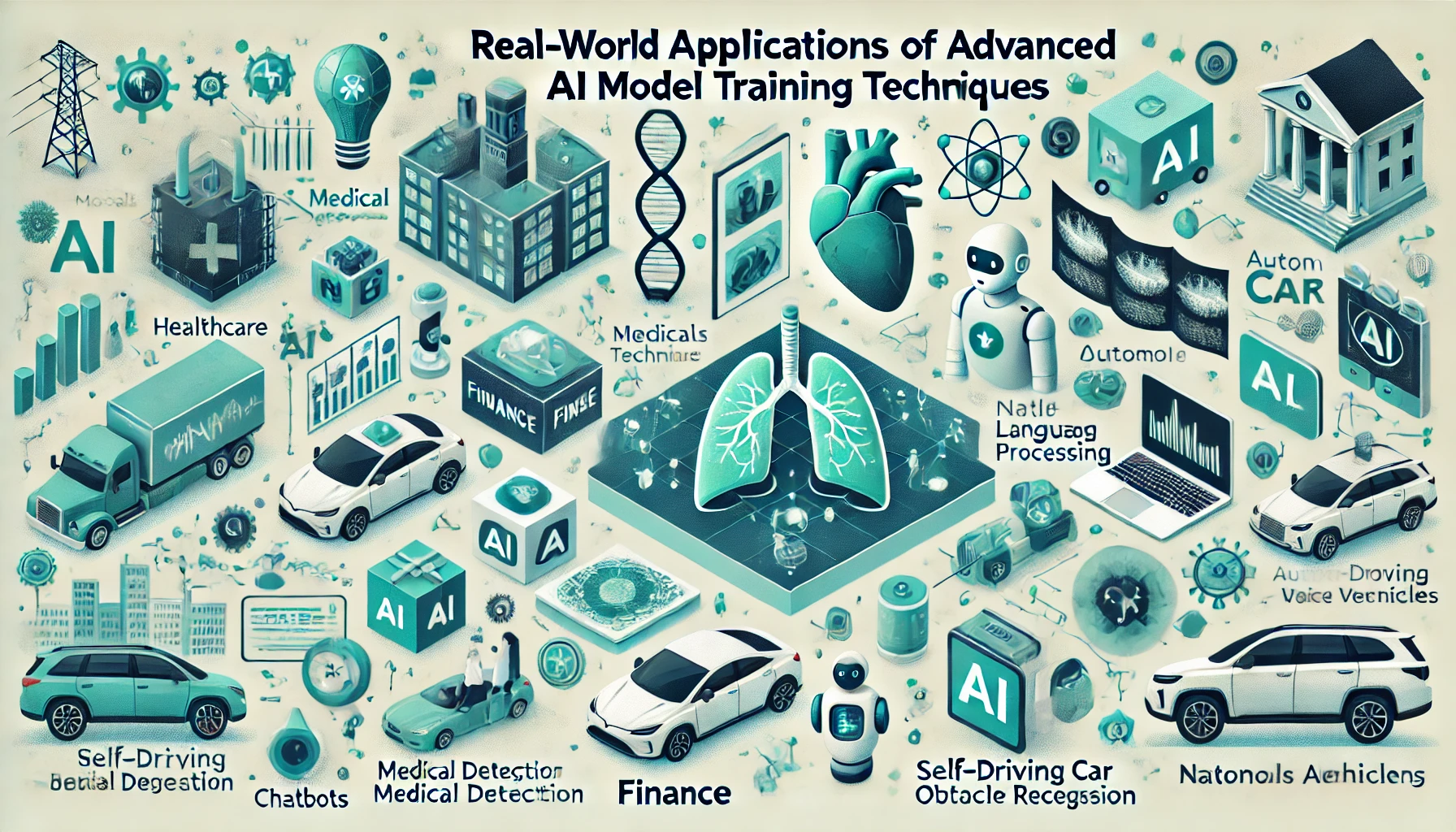
Advanced AI model training techniques enable powerful applications across industries.
Computer Vision Applications
AI models trained in computer vision are used in object detection, facial recognition, and medical imaging. For example, AI-powered security systems analyze live footage to detect unauthorized access, while in healthcare, artificial intelligence models can assist in diagnosing diseases from X-rays and MRIs.
Natural Language Processing and Sentiment Analysis
NLP models analyze text for sentiment, translating language, and automating customer service. Sentiment analysis helps businesses understand public perception, while translation models bridge language gaps.
Reinforcement Learning in Robotics and Gaming
Reinforcement learning models are widely used in robotics, allowing machines to perform tasks like sorting and assembling items autonomously. In gaming, these models enhance AI opponents, creating challenging and adaptive gameplay.
AI in Financial Services and Fraud Detection
AI models analyze transaction data to detect fraud and assess creditworthiness. By training on historical data, these models predict and flag suspicious behavior, enhancing security in financial systems.
VII. The Future of AI Model Training Techniques
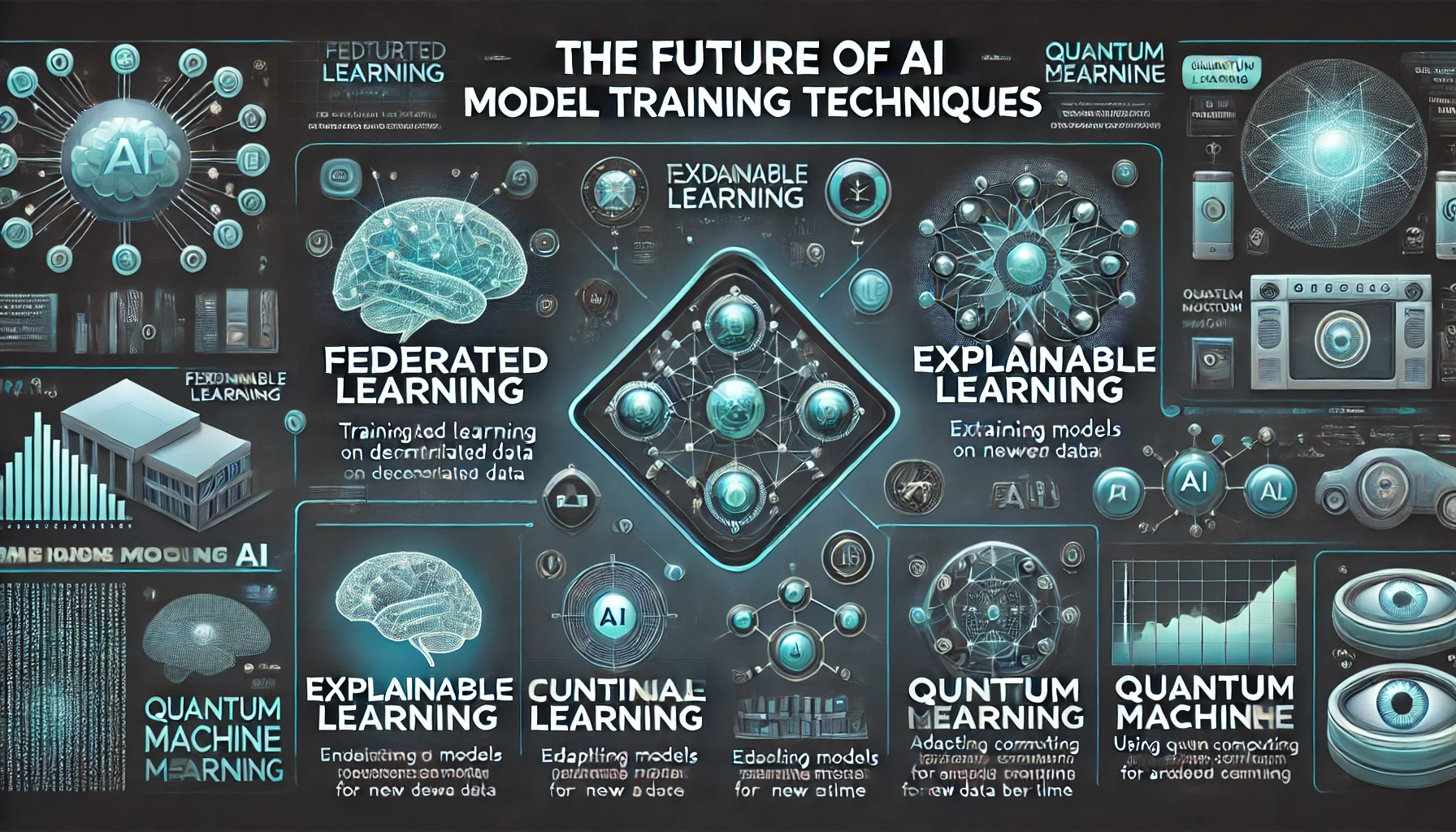
Emerging techniques and trends are shaping the future of AI model training.
Emerging Trends in AI Model Training
Techniques like few-shot learning and zero-shot learning are advancing model adaptability, allowing AI to learn from limited or no examples. These methods expand AI’s application to novel, real-time situations.
Responsible and Ethical AI Model Training
Responsible AI training prioritizes fairness, transparency, and bias mitigation, essential for ethical AI development. Fair model training avoids biases, ensuring models make equitable and accurate predictions about human intelligence.
AI Model Training and Real-World Adaptation
Continuous learning enables AI models to adjust to changing data in real-time, ensuring that predictions stay relevant and accurate. This approach is crucial in fields like finance and healthcare, where adaptability is critical for accuracy.
VIII. Conclusion: Advancing AI Model Training Techniques for the Future
Mastering advanced AI model training techniques allows data scientists and AI developers to create robust, accurate models. These techniques are key to transforming data into actionable insights, driving innovation across industries from healthcare to finance. As AI model training continues to evolve, staying informed about new methods and trends will empower professionals to develop smarter, more efficient, and ethically responsible AI systems.
