

Artificial intelligence (AI) is changing the landscape of healthcare by significantly improving the way diseases are predicted, diagnosed, and managed. With the rise of AI in disease forecasting, the healthcare industry has witnessed groundbreaking advancements in disease prevention, early intervention, and predictive models that can accurately anticipate disease outbreaks and health conditions. AI’s ability to analyze vast amounts of data, identify complex patterns, and offer predictive insights is revolutionizing the way healthcare professionals and public health officials manage patient care and control disease outbreaks.
In this blog post, we will explore the key role of AI in disease forecasting, focusing on how machine learning models, predictive analytics, and advanced algorithms are being employed to forecast diseases, especially infectious diseases, and chronic conditions such as heart disease, lung cancer, and liver disease. We will also discuss how AI can process diverse health data sources, including electronic health records (EHRs), medical images, social media, and mobility data, to enhance the accuracy of disease predictions and improve patient care.
Introduction to AI in Disease Forecasting
AI in disease forecasting involves the use of advanced machine learning algorithms, deep learning models, and other AI techniques to analyze medical data and predict future disease patterns. The core idea is to create predictive models that can identify complex patterns in health data that may not be immediately obvious to human researchers or healthcare professionals.
The healthcare industry has long relied on traditional methods for disease diagnosis, but the advent of AI has changed this landscape by providing tools to analyze massive datasets, leading to more accurate and timely predictions. AI systems can process and interpret patient data from routine blood tests, medical records, imaging data, and environmental factors, enabling healthcare systems to forecast disease trends, identify at-risk populations, and provide targeted interventions.
The Importance of AI in Disease Forecasting
AI offers significant advantages over traditional disease forecasting methods. Traditionally, disease prediction models were built using statistical methods and human-driven expertise. However, these models were limited by the inability to process large volumes of complex data, such as patient records, clinical data, environmental data, and even social media trends.
With AI, predictive models can integrate various sources of data, including:
-
Electronic Health Records (EHRs): AI analyzes patient data, such as medical histories, diagnostic information, and treatment outcomes, to identify potential health risks.
-
Medical Images: AI models can analyze X-rays, CT scans, and MRI scans to detect early signs of diseases like cancer, heart disease, and lung disease.
-
Social Media and Mobility Data: AI can use real-time data from social media posts and mobility patterns to track the spread of infectious diseases, such as COVID-19.
The integration of these diverse data sources allows AI to forecast disease outbreaks, manage disease spread, and predict patient outcomes with higher accuracy.
Key AI Techniques Used in Disease Forecasting
AI models in disease forecasting utilize a variety of techniques that enhance their ability to identify patterns, predict outcomes, and provide accurate diagnostics. Some of the most important AI techniques include:
-
Machine Learning Algorithms: Machine learning is a subset of AI that uses algorithms to detect patterns in data without explicit programming. These models can be used to forecast disease outbreaks or predict patient outcomes based on historical data.
-
Deep Learning Models: A more advanced form of machine learning, deep learning models, such as convolutional neural networks (CNNs), have been widely used in disease forecasting. These models are particularly useful for analyzing medical images and other large datasets, offering highly accurate predictions in disease diagnosis.
-
Natural Language Processing (NLP): NLP is an AI technique that allows computers to process and understand textual data. In the context of disease forecasting, NLP can be used to analyze medical records, scientific research papers, and social media content for early signs of emerging health threats.
-
Support Vector Machines (SVMs): This machine learning algorithm is used for classification tasks and is widely applied in predicting disease outcomes. By learning from historical patient data, SVMs can classify patients into different risk categories and forecast the likelihood of diseases such as heart disease or liver disease.
-
Random Forest Models: Random forest is an ensemble learning technique that combines multiple decision trees to improve the accuracy of predictions. In disease forecasting, this model can be used to predict patient risk factors, assess disease progression, and forecast the development of conditions like cancer or chronic diseases.
AI in Infectious Disease Prediction: A Key Tool for Managing Disease Outbreaks
AI has become a crucial component in predicting and managing infectious disease outbreaks, including COVID-19, influenza, and other contagious diseases. Traditional methods of tracking infectious diseases have relied heavily on manual reporting and observational data, which can often be slow and inconsistent. However, AI in disease forecasting provides a more efficient and scalable solution by analyzing health data, mobility data, environmental data, and even social media trends to predict where outbreaks are likely to occur and how they will spread.
The Role of AI in Predicting Infectious Diseases
AI uses a combination of machine learning models and predictive analytics to forecast the spread of infectious diseases. These models integrate various data sources and provide real-time predictions that help healthcare professionals and public health officials make informed decisions regarding disease control, resource allocation, and preventive measures.
-
Data Collection and Analysis: AI algorithms process data from multiple sources to detect early signals of potential outbreaks. These sources can include:
-
Electronic Health Records (EHRs): Patient data, such as symptoms, test results, and historical health conditions, are used to identify potential outbreaks and at-risk populations.
-
Mobility Data: AI models analyze mobility patterns, including population movements and travel data, to forecast the spread of diseases like COVID-19. For example, AI can track the movement of people from high-risk areas to low-risk areas, allowing officials to predict where the disease might spread next.
-
Social Media: Public sentiment and health-related discussions on social platforms can offer early warnings about emerging disease threats. AI-powered natural language processing (NLP) algorithms analyze social media data to detect trends and keywords that could indicate an outbreak.
-
-
Early Detection and Early Intervention: One of the most significant advantages of AI in infectious disease forecasting is its ability to detect diseases at early stages. By analyzing patient data, including symptoms and medical history, AI models can predict who is at risk of contracting a disease or who may be spreading it to others. This allows healthcare systems to implement early intervention strategies and prevent widespread transmission.
-
Predictive Models for Disease Spread: AI can also create predictive models that simulate the spread of diseases under different scenarios. These models can take into account factors such as:
-
Population density
-
Healthcare infrastructure
-
Public health measures (e.g., quarantine, lockdown, vaccination)
-
Environmental conditions
-
By using deep learning algorithms and machine learning models, AI can predict the trajectory of an outbreak, allowing public health officials to implement timely interventions, such as social distancing, resource allocation, and targeted testing. AI-based prediction models have been essential during the COVID-19 pandemic in forecasting case numbers and guiding public health policies.
Case Study: AI in COVID-19 Prediction and Response
The COVID-19 pandemic demonstrated how AI can be used effectively in disease forecasting and managing disease outbreaks. During the early stages of the pandemic, AI models played a key role in predicting infection hotspots, tracking the spread of the virus, and guiding resource allocation.
For instance, BlueDot, an AI-powered platform, used machine learning algorithms to track disease outbreaks globally by analyzing data from electronic health records, airline data, and news reports. BlueDot’s AI system was able to identify COVID-19 as a potential global health threat nine days before the World Health Organization (WHO) officially declared it a public health emergency. By detecting early signals and patterns of disease spread, AI tools like BlueDot helped public health officials better prepare for the pandemic and respond effectively.
Similarly, DeepMind, a subsidiary of Google, used its deep learning models to predict the spread of the virus and help researchers understand how the virus mutates and spreads across regions. By analyzing genetic sequences of the virus, DeepMind’s AI algorithms provided insights into the viral protein structure, helping scientists design more effective vaccines and treatments.
AI’s ability to analyze patient data and detect early outbreaks helped countries manage COVID-19, allocating medical resources and implementing preventive measures in real time.
AI for Managing Disease Outbreaks and Controlling Spread
AI’s role in infectious disease forecasting extends beyond disease prediction. It also plays a key role in managing the response to outbreaks, ensuring that resources are allocated efficiently and targeted interventions are implemented promptly.
-
Resource Allocation: AI models can predict which areas will be most affected by an outbreak, enabling governments and healthcare organizations to allocate resources, such as medical supplies, vaccines, and healthcare professionals, to areas with the greatest need. For example, AI can help predict hospital capacity, identifying regions where ICU beds may be running low and where more medical supplies are required.
-
Targeted Interventions: AI allows public health officials to develop targeted interventions for specific populations at high risk of contracting or spreading the disease. This can include contact tracing using mobility data, isolating high-risk individuals, and prioritizing vaccination efforts for those most vulnerable.
-
Improving Healthcare Systems: AI’s ability to integrate multiple data sources enables healthcare systems to become more responsive and adaptable to outbreaks. By automating data processing and creating predictive models, AI helps healthcare organizations make more accurate forecasts and respond to disease threats with greater speed.
AI’s Role in Predicting and Managing Chronic Diseases
While AI in disease forecasting has made its most significant impact in infectious diseases, AI models are also being applied to forecast and manage chronic diseases, such as heart disease, lung cancer, and liver disease. These conditions require long-term monitoring, and AI’s ability to analyze medical data over time allows for more accurate and early detection of potential health risks.
-
Heart Disease Prediction: AI models can analyze data from routine blood tests, medical records, and imaging data to predict an individual’s risk of developing heart disease. By identifying early markers of the disease, such as cholesterol levels, blood pressure, and genetic predispositions, AI enables early detection and the implementation of preventive measures to reduce the risk of heart attacks and stroke.
-
Lung Cancer Prediction: AI techniques, particularly deep learning models, are being used to analyze medical images such as X-rays and CT scans to detect early signs of lung cancer. These AI models can accurately predict the likelihood of lung cancer years before symptoms appear, allowing for early intervention and improved patient outcomes.
-
Liver Disease Management: AI is also being applied to predict the onset and progression of liver disease, particularly in patients with chronic conditions like hepatitis or cirrhosis. By analyzing data from blood tests, imaging, and patient histories, AI models can predict how the disease will progress and help healthcare professionals manage patient care more effectively.
Predicting Disease Outcomes and Enhancing Patient Care
Beyond predicting disease outbreaks and managing public health crises, AI is transforming how disease diagnosis and patient care are handled at the individual level. By creating predictive models based on patient data, AI can forecast the likelihood of certain diseases, allowing for personalized treatment plans and improved health outcomes.
-
Accurate Diagnoses: AI-powered models can assist healthcare professionals in diagnosing diseases more accurately by analyzing a variety of data sources, including medical images, routine blood tests, and genetic information. This helps reduce the chances of misdiagnosis and ensures that patients receive the correct treatment early in the disease’s progression.
-
Predicting Treatment Responses: AI models can also predict how a patient will respond to certain treatments based on their medical history, genetics, and other personal factors. This allows healthcare systems to personalize treatment plans and improve patient outcomes by selecting the most effective therapies.
Challenges and Limitations of AI in Disease Forecasting
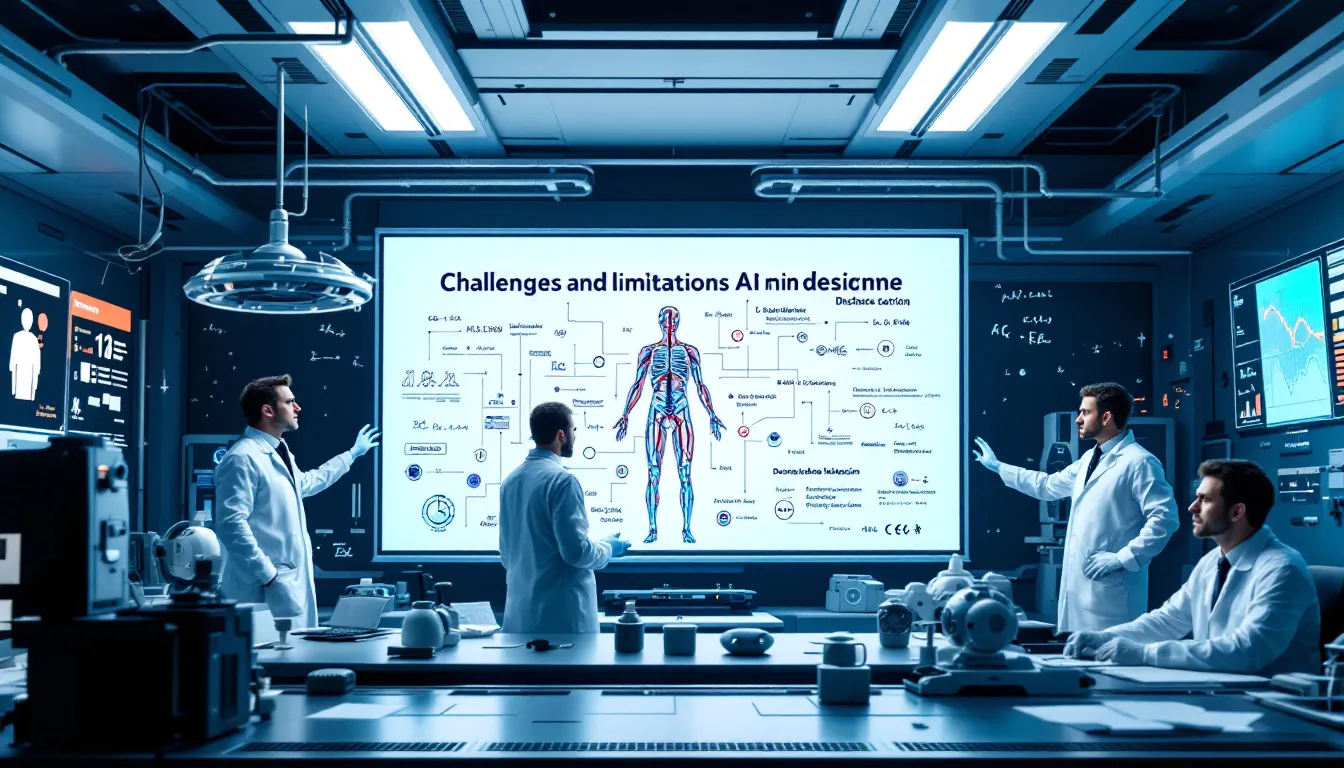
While AI in disease forecasting offers remarkable potential for improving disease prediction, early detection, and resource allocation, there are still significant challenges and limitations that need to be addressed. From concerns about data privacy to the complexity of integrating AI into healthcare systems, the adoption of AI in disease forecasting is not without its obstacles.
1. Data Privacy and Security Concerns
One of the most critical challenges when using AI for disease prediction and forecasting is ensuring the privacy and security of patient data. AI systems in healthcare rely on vast amounts of health data, including electronic health records (EHRs), medical images, genetic information, and even social media data. While this data is essential for accurate disease forecasting and predictive models, it also raises concerns about how patient information is stored, shared, and protected.
-
Data Breaches: As AI models require large datasets to train effectively, they often aggregate data from multiple sources. This increases the risk of data breaches, especially when healthcare institutions do not have robust cybersecurity measures in place.
-
Patient Consent: Electronic health records often contain sensitive information about a patient’s medical history, lifestyle choices, and genetic predispositions. Patients must give informed consent for their data to be used for AI-driven research and disease forecasting. Without proper consent protocols, the ethical use of AI in healthcare can be compromised.
-
Anonymization of Data: To mitigate privacy risks, it is essential that patient data be anonymized before being used in AI models. However, this is not always feasible, especially when dealing with small datasets or highly personalized medical records.
To address these concerns, healthcare institutions and AI developers must work together to create robust data privacy protocols, including secure data storage and de-identification techniques. Governments and regulatory bodies can also play a role in ensuring that data privacy laws, such as the Health Insurance Portability and Accountability Act (HIPAA) in the U.S., are followed.
2. Data Accuracy and Quality
The accuracy and effectiveness of AI in disease forecasting largely depend on the quality of the data used to train AI models. If the data used in machine learning models is inaccurate, incomplete, or biased, it can result in incorrect predictions and faulty disease forecasts.
-
Incomplete Data: Often, patient records are incomplete, and critical medical information may be missing or incorrectly recorded. This can hinder the AI’s ability to make accurate predictions about disease risk, treatment outcomes, or disease outbreaks.
-
Bias in Data: If AI models are trained on biased datasets, they may produce skewed predictions. For example, if certain demographic groups are underrepresented in a dataset, the model may fail to identify health risks for those populations. This bias can lead to health disparities, where some individuals receive inadequate healthcare based on AI-driven predictions.
-
Inconsistent Data Formats: AI models must process data from a variety of sources, including routine blood tests, medical imaging, and clinical notes. These data types often come in different formats, making it challenging to integrate and analyze them in a consistent manner.
To overcome these challenges, healthcare organizations and AI developers need to focus on improving data collection practices, ensuring that patient data is complete, accurate, and representative of all populations. Additionally, using data normalization techniques and standardized formats for medical data can improve the quality of data fed into AI models.
3. Integration with Healthcare Systems
Despite the potential benefits of AI in disease forecasting, healthcare systems are often slow to adopt new technologies, including AI-driven solutions. Integrating AI tools into existing healthcare infrastructure presents several challenges:
-
Legacy Systems: Many healthcare institutions still use outdated legacy systems that are incompatible with modern AI algorithms. This makes it difficult to integrate AI into their health data management processes and may require significant upgrades to infrastructure.
-
Resistance to Change: Healthcare professionals and administrators may be resistant to adopting AI-based tools, particularly if they are unfamiliar with how these technologies work. This resistance can delay the implementation of AI models for disease prediction and forecasting.
-
Interoperability Issues: Healthcare systems often use different EHR platforms, medical imaging systems, and data storage formats. AI models that work well on one system may not be compatible with others, leading to inefficiencies in data processing and decision-making.
Overcoming these barriers requires greater collaboration between healthcare professionals, AI developers, and policy makers to ensure the seamless integration of AI into healthcare systems. Additionally, the development of interoperable systems that can handle diverse data sources will be crucial for improving the effectiveness of AI in disease forecasting.
4. Complexity of Disease Prediction Models
Disease prediction models powered by AI are complex, and they require sophisticated machine learning models to accurately forecast outcomes. However, predicting disease outcomes is often an inherently uncertain process due to the complexity of biological systems, environmental factors, and individual patient characteristics.
-
Multifactorial Nature of Disease: Diseases like cancer, heart disease, and infectious diseases are influenced by multiple factors, including genetics, lifestyle, environment, and access to healthcare. Creating accurate predictive models that take all of these variables into account can be challenging.
-
Dynamic Changes in Disease Progression: Diseases often evolve over time in unpredictable ways. For instance, a COVID-19 infection might progress differently in different individuals, and the presence of comorbidities or the timing of interventions can affect the outcome. AI models need to account for these dynamic changes to remain accurate over time.
Despite these challenges, advancements in deep learning and reinforcement learning algorithms are helping to improve the accuracy of predictive models by allowing AI systems to continuously learn and adapt from new data. Moreover, AI’s ability to analyze vast amounts of medical data from diverse sources can help create more nuanced and accurate disease predictions over time.
5. Regulatory and Ethical Considerations
The application of AI in disease forecasting raises significant ethical concerns that must be addressed to ensure fair and equitable use. These concerns include:
-
Bias in AI Algorithms: AI models can unintentionally reinforce existing health disparities if they are trained on biased or incomplete data. For example, AI models that are primarily trained on data from one racial or socioeconomic group may not perform as well for other populations.
-
Informed Consent: AI-driven disease forecasting often relies on large-scale data collection from patients, which raises concerns about informed consent. Patients must be fully aware of how their data will be used, and they must have the option to opt out if they choose.
-
Accountability: As AI becomes more integrated into healthcare decision-making, it is crucial to establish clear accountability frameworks. If an AI model makes an incorrect prediction that leads to harm, who is responsible—the AI system, the developers, or the healthcare provider using the model?
Regulatory bodies, such as the FDA and EMA, need to establish guidelines for the ethical use of AI in healthcare. This includes ensuring transparency in how AI algorithms are developed, how they are tested, and how they are used to inform patient care.
Conclusion: The Future of AI in Disease Forecasting

AI holds immense potential in transforming disease forecasting, from predicting infectious disease outbreaks to managing chronic conditions. By leveraging machine learning models, deep learning algorithms, and predictive analytics, AI can significantly improve early detection, patient care, and the management of public health crises. However, there are challenges, including data privacy concerns, data quality issues, integration hurdles, and ethical dilemmas that need to be addressed for AI to be fully embraced by the healthcare industry.
As AI continues to evolve, it will play an increasingly crucial role in improving global health by enabling early intervention, preventive measures, and more accurate diagnoses. By addressing these challenges and focusing on the responsible and equitable use of AI, healthcare systems worldwide can unlock the full potential of AI-driven disease forecasting.

Your point of view caught my eye and was very interesting. Thanks. I have a question for you. https://www.binance.com/sk/register?ref=OMM3XK51
Thanks for sharing. I read many of your blog posts, cool, your blog is very good. https://www.binance.com/sk/register?ref=WKAGBF7Y