

Introduction to Agentic AI
Definition and Overview
-
Agentic AI represents a fundamental shift from traditional AI systems to autonomous AI systems that can perform complex tasks without constant human oversight.
-
Agentic AI systems are designed to act autonomously, perceiving, reasoning, planning, and executing tasks without human intervention, making decisions and carrying out actions based on their programming and data analysis.
-
The agentic AI revolution is transforming enterprise operations by enabling autonomous AI agents to execute complex workflows and improve operational efficiency. Agentic AI systems are capable of orchestrating multi-step workflows, breaking down broad objectives into manageable subtasks to achieve enterprise goals.
-
Agentic AI solutions are being adopted across various industries, including healthcare, finance, and logistics, to enhance customer satisfaction and reduce costs.
Benefits of Agentic AI
Increased Efficiency and Productivity
-
Agentic AI eliminates the need for human intervention in repetitive tasks, freeing up human agents to focus on more complex and high-value tasks. AI assistants automate these repetitive processes, allowing human agents to dedicate more time to empathetic and nuanced customer interactions.
-
Autonomous AI agents can execute tasks faster and more accurately than human agents, resulting in increased productivity and efficiency. Importantly, agentic AI is designed to augment and enhance human capabilities, fostering collaborative partnerships that amplify human potential and drive organizational productivity.
-
Agentic AI enables enterprises to scale their operations without proportional increases in headcount, reducing costs and improving profitability.
-
The use of agentic AI in customer interactions can improve customer satisfaction and reduce churn by providing personalized and timely support.
Agentic AI in Enterprise Operations
Enterprise Transformation
-
Agentic AI is driving enterprise transformation by enabling autonomous AI agents to execute complex workflows and improve operational efficiency. In customer support systems, an ai agent operates with a high degree of autonomy, handling complex and multi-turn interactions, and escalating issues to humans when necessary.
-
The adoption of agentic AI is leading to a fundamental shift in how enterprises operate, with a focus on intelligent automation, executing complex workflows, and data-driven decision-making.
-
Agentic AI systems are being integrated with existing systems to enhance their capabilities and improve business outcomes.
-
The use of agentic AI in enterprise operations is resulting in higher customer satisfaction, improved operational efficiency, and increased competitiveness.
Implementing Agentic AI
Assessment and Readiness
-
Implementing agentic AI requires a thorough assessment of an enterprise’s readiness, including its data infrastructure, IT systems, and human resources.
-
Enterprises need to evaluate their current systems and processes to determine where agentic AI can be applied to improve operational efficiency and customer satisfaction.
-
The implementation of agentic AI requires a strategic approach, including the development of a roadmap, the establishment of a governance framework, and the provision of training and support to human agents. Many agentic ai projects face significant implementation challenges and high failure rates, making strategic planning and risk assessment essential for successful integration.
-
Enterprises need to consider the potential risks and challenges associated with agentic AI, including data security, bias, and job displacement. Deploying agentic ai in manufacturing and supply chain optimization can help predict demand, optimize inventory, and adapt to disruptions, but also introduces integration and security challenges that must be addressed.
Machine Learning and Agentic AI
Machine learning is at the heart of agentic AI, powering the ability of these advanced AI systems to learn from experience, adapt to new information, and make intelligent decisions in real time. Unlike traditional rule-based systems, agentic AI systems leverage machine learning to process vast and complex data sets, uncover patterns, and generate actionable insights. This integration allows autonomous systems to move beyond static automation, enabling them to continuously improve their performance and respond dynamically to changing enterprise environments.
By embedding machine learning into agentic AI, organizations can deploy intelligent systems that not only automate routine processes but also evolve alongside business needs. These agentic AI systems are capable of handling complex workflows, optimizing operations, and supporting enterprise transformation by making data-driven decisions with minimal human intervention. As a result, enterprises benefit from increased agility, operational efficiency, and a competitive edge in rapidly changing markets.
Machine Learning Algorithms
A variety of machine learning algorithms form the foundation of agentic AI, each contributing unique capabilities to AI agents as they perform complex tasks. Supervised learning enables agentic AI systems to learn from labeled examples, making it possible to predict outcomes and classify data with high accuracy. Unsupervised learning, on the other hand, empowers these systems to identify hidden structures and relationships within unstructured data, revealing insights that might otherwise go unnoticed.
Reinforcement learning is particularly valuable for agentic AI agents, as it allows them to learn optimal behaviors through trial and error, receiving feedback in the form of rewards or penalties. This approach is essential for developing agentic AI systems that can autonomously navigate complex environments, make decisions, and interact effectively with both humans and other AI agents. By combining these machine learning techniques, agentic AI agents are equipped to perform complex tasks, adapt to new challenges, and drive innovation across enterprise operations.
What Makes Agentic AI Successful
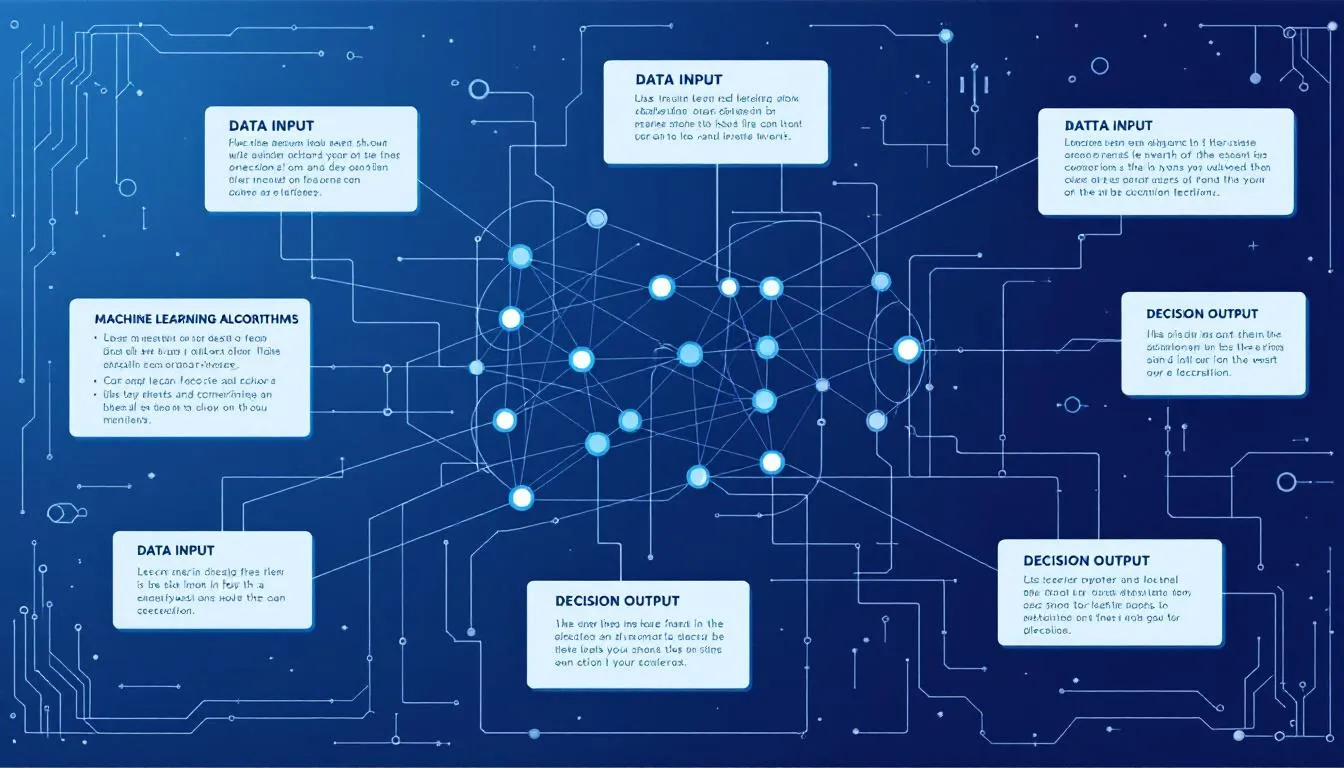
The effectiveness of agentic AI hinges on several critical factors that work together to ensure reliable, responsible, and impactful outcomes. First and foremost, agentic AI systems require access to high-quality, relevant data. The better the data, the more accurately these systems can learn, adapt, and make informed decisions that align with business objectives.
Equally important is the sophistication of the machine learning algorithms powering agentic AI. Advanced algorithms enable these systems to analyze complex data, recognize subtle patterns, and continuously refine their performance. This capability is what allows agentic AI systems to move beyond basic automation and deliver intelligent, autonomous solutions that transform enterprise operations.
Finally, human oversight remains a cornerstone of successful agentic AI deployment. While agentic AI systems are designed to act independently, ongoing human involvement ensures that these systems operate within ethical and operational boundaries, maintain transparency, and remain aligned with organizational goals. By combining robust data, cutting-edge machine learning, and effective human oversight, enterprises can unlock the full potential of agentic AI, driving sustainable growth and innovation in the age of autonomous AI.
Autonomous AI Agents
Autonomous AI
-
Autonomous AI agents are capable of acting independently, making decisions, and executing tasks without human intervention.
-
These agents use machine learning and data analytics to improve their performance and adapt to changing circumstances.
-
Autonomous AI agents can be used in a variety of applications, including customer support, fraud detection, and supply chain operations.
-
The use of autonomous AI agents is enabling enterprises to improve their operational efficiency, reduce costs, and enhance customer satisfaction.
Customer Interactions
Customer Support and Engagement
-
Agentic AI is being used to improve customer interactions, including customer support and engagement.
-
Autonomous AI agents can provide personalized and timely support to customers, improving their satisfaction and reducing churn. Human teams, the traditional workforce in customer support, are now working alongside digital workers or AI agents, allowing humans to focus on higher-value activities such as empathy, creativity, and strategic interactions.
-
The use of agentic AI in customer interactions is enabling enterprises to scale their customer support operations without proportional increases in headcount.
-
Agentic AI is also being used to enhance customer engagement, including through the use of chatbots and virtual assistants. While generative AI is primarily focused on content creation—such as generating text, images, or code—agentic AI distinguishes itself by enabling more autonomous decision-making and actions in customer engagement.
Business Operations
Enterprise Operations and AI
Conclusion and Future Outlook

The Future of Agentic AI
-
The future of agentic AI is promising, with potential applications in a variety of industries, including healthcare, finance, and logistics.
-
The adoption of agentic AI is expected to continue to grow, driven by the need for enterprises to improve their operational efficiency, reduce costs, and enhance customer satisfaction.
-
Agentic AI is expected to play a key role in the development of edge AI, including through the use of autonomous AI agents in edge computing applications.
-
The use of agentic AI is also expected to drive innovation in areas such as fraud detection, supply chain operations, and customer support.
