
Introduction to Content Creation
Content creation is evolving with the help of AI tools and social media platforms. Success in content creation is shifting from simply measuring reach to understanding emotional impact and engagement metrics. Social media users are becoming more discerning and less tolerant of inauthentic brand messaging. In 2026, communities will replace follower counts as the most valuable social metric.
The content creation process involves planning, writing, and optimizing blog posts for search engines. Creating engaging content is crucial for audience growth and building a personal brand. High-quality content is a valuable asset for any online business, and a well-planned content strategy can lead to financial freedom. Human insight and judgment are essential for creating content that resonates with the target audience. Maintaining a consistent brand voice is also critical to ensure content resonates, upholds brand identity, and stands out in a crowded digital landscape.
Developing a Content Strategy
Developing a content strategy is the foundation of any successful online business. In today’s fast-paced digital world, a well-crafted content strategy helps you map out how to create, distribute, and manage high quality content that resonates with your target audience. By leveraging ai tools and automation tools, you can streamline the content creation process, making it easier to generate content ideas, create custom images, and even draft blog posts or videos tailored for each social media platform.
A strong content strategy starts with understanding your audience—what platforms they use, what topics matter to them, and how they prefer to consume content. For example, if your audience is active on YouTube, incorporating YouTube Shorts or video content into your plan can help you reach new followers. If your community is engaged on X, creating timely x threads can spark conversations and boost engagement. AI powered tools can analyze data from these platforms to suggest the best formats and topics, helping you stay relevant and maximize your reach.
However, while artificial intelligence can handle much of the heavy lifting—like scheduling posts, optimizing for search engines, and even drafting the first draft of a blog post—human insight remains essential. Human oversight ensures that every piece of ai generated content aligns with your unique voice and brand values. Double check each post to maintain consistency and authenticity, and use your expertise to add the nuance and creativity that only real people can provide.
A content calendar is another valuable asset in your content strategy toolkit. By planning your content in advance, you can organize uploads, coordinate campaigns, and ensure a steady flow of new content across all your social media channels. This proactive approach helps you build authority in your niche, attract new followers, and support your overall marketing strategy.
Ultimately, a well-developed content strategy powered by the right mix of ai tools, automation, and human judgment—enables you to create high quality content efficiently, build a loyal audience, and achieve financial freedom. By staying organized and focused, you can turn your content into your most valuable asset and drive real results for your business.
Building a Content Creation System
-
A content creation system involves using AI-powered tools to automate repetitive tasks and focus on high-quality content creation. Linking various tools and platforms streamlines workflow and enhances content distribution, making it easier to manage and scale marketing efforts.
-
Automation tools can help with social media distribution, email marketing, and search engine optimization. These tools can also efficiently schedule and publish content across multiple platforms, ensuring timely and consistent distribution without manual effort.
-
A well-structured content calendar is essential for consistent posting and audience engagement. Creating a content schedule in advance reduces decision fatigue and enhances consistency in posting. Batch creating content saves time and ensures messaging consistency across platforms.
-
Leveraging human insight and AI tools can help create a successful content creation system.
Leveraging Human Insight
-
Human insight is the most valuable asset in content creation, as it brings creativity and originality to the content.
-
AI-generated content can be helpful, but it requires human oversight to ensure it meets the brand’s standards.
-
Human judgment is necessary for creating content that is engaging, informative, and relevant to the target audience.
-
A good content strategy should balance AI tools with human insight to create high-quality content.
Creating Engaging Content calendar

-
Creating engaging content involves understanding the target audience and their needs. Choosing content pillars or themes that you can talk about passionately and consistently is essential for maintaining authenticity and long-term audience engagement.
-
Short-form videos such as Reels, TikToks, and Shorts now serve as the entry point for content creators, making it crucial to capture attention quickly.
-
In 2026, brands will need to adopt an ‘info-first content’ approach, ensuring every short video delivers immediate value to viewers.
-
Including FAQ sections with schema markup can help AI tools generate direct answers to user queries, increasing your content’s visibility and citation potential.
-
Valuable and relevant content can help build trust and authority with the audience.
-
Using custom images, videos, and other multimedia elements can enhance the content and make it more engaging.
-
A unique voice and writing style can help differentiate the brand and attract new followers.
Optimizing for Search Engines
-
Optimizing content for search engines is crucial for increasing visibility and reach.
-
Using relevant keywords, meta tags, and descriptions can help improve search engine rankings.
-
AI tools can assist with keyword research and optimization, but human judgment is necessary for ensuring the content is high-quality and relevant.
-
Search engines reward content that is valuable, informative, and engaging, so focusing on quality is essential.
Social Media Distribution
-
Social media platforms are essential for content distribution and audience growth. Social platforms now play a central role in marketing, customer support, and sales, shaping the overall brand experience in the digital landscape. Cross-platform consistency will become essential for trust and brand recognition in 2026, as audiences expect integrated and coherent content strategies across all channels. Social media is also becoming a primary customer service channel, requiring brands to provide support directly within the platforms. Additionally, short-form video content is shifting from entertainment-heavy feeds to more intentional, educational content.
-
Using automation tools can help schedule and post content consistently across multiple social media platforms.
-
Engaging with the audience on social media can help build a community and increase brand loyalty.
-
Live events, YouTube Shorts, and other social media content can help attract new followers and increase brand visibility.
The Role of the Content Creators
-
The content creator plays a crucial role in building and maintaining the brand’s online presence.
-
Creating high-quality content, engaging with the audience, and staying up-to-date with the latest trends and technologies are essential responsibilities. In 2026, technology is transforming content creation from manual production to strategic orchestration, allowing creators to focus on systematization and efficiency.
-
Using AI tools and automation can help streamline the content creation process, but human insight and judgment are necessary for ensuring the content is relevant and engaging. In 2026, creators will leverage AI for content scaling, focusing on niche authenticity and building engagement through platforms like Reddit and Discord.
-
A content creator should focus on building a unique voice, writing style, and brand identity to attract and retain a loyal audience. However, relying on a single platform or revenue stream is risky; diversification across multiple channels and income streams is essential for long-term stability. To achieve this, creators need to invest in trustworthy tools and integrated systems that support brand consistency and business growth. The real win in 2026 is achieving consistency, efficiency, and strategic systematization through AI and integrated workflows.
Creating a Blog Post
-
Creating a blog post involves planning, writing, and optimizing the content for search engines.
-
Using AI tools can help with research, outlining, and drafting the post.
-
Human oversight is necessary for ensuring the post is high-quality, engaging, and relevant to the target audience.
-
A well-structured blog post can help build authority, increase visibility, and attract new followers.
Repurposing Content creation in 2026 how creators are building audiences on autopilot
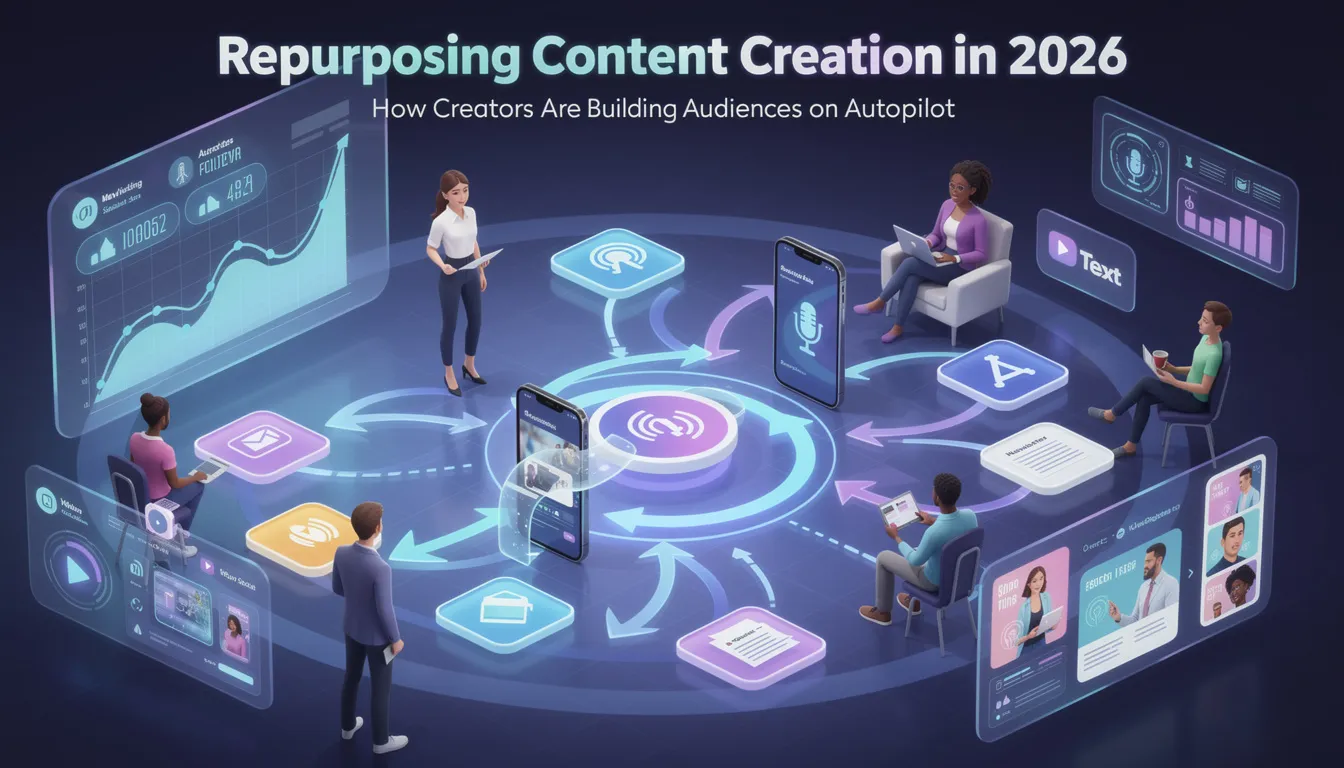
Content is rarely just one post successful creators in 2026 are repurposing a single idea into multiple formats across platforms, such as videos, carousels, and even an X thread, to maximize reach and engagement. Breaking down each stage of the content creation workflow helps identify opportunities for repurposing and streamlining distribution. Repurposing content across multiple platforms increases visibility and engagement without additional effort.
Repurposing content involves using existing content to create new and relevant pieces. Using AI tools can help with repurposing content, such as turning a blog post into a video or social media post. Human judgment is necessary for ensuring the repurposed content is high-quality and relevant to the target audience. Repurposing content can help increase efficiency, reduce waste, and attract new followers.
Advanced Content Creation Techniques
-
Advanced content creation techniques involve using AI tools, automation, and human insight to create high-quality content. AI-driven tools will forecast trending emotions and topics, allowing creators to pre-generate relevant multi-format content. AI will also enable hyper-personalization, tailoring content to individual user preferences and contexts.
-
Using data and analytics can help inform content decisions and improve engagement. User-generated content (UGC) is becoming more influential and will be subject to tighter transparency standards in 2026. Brands must treat UGC as a strategic content pillar rather than a supplemental asset.
-
Staying up-to-date with the latest trends and technologies is essential for remaining competitive in the content creation space. Platforms like Fueler help companies identify and attract the best talent by showcasing candidates’ proof of work, connecting organizations with top professionals.
-
Investing in AI tools and automation can help streamline the content creation process and increase efficiency.
Measuring Success
-
Measuring success involves tracking engagement metrics, such as likes, comments, and shares, but the most valuable social metric is shifting from follower counts to community engagement.
-
Building a community leads to higher engagement and better feedback, as communities create environments where users can learn, share, and contribute rather than simply observe.
-
Private, branded communities allow creators to have 100% control over the relationship and the data, giving them a strategic advantage.
-
Brands that build community ecosystems tailored to their audience’s needs will succeed, as engaged communities drive more meaningful outcomes than large, passive audiences.
-
The presence of active participants in these communities is crucial, as they contribute to higher engagement and ongoing support.
-
Using analytics tools can help inform content decisions and improve engagement.
-
Human insight and judgment are necessary for ensuring the content is meeting the brand’s goals and objectives.
-
A well-planned content strategy should include metrics for measuring success and adjusting the strategy accordingly.
Staying Ahead of the Curve
-
Staying ahead of the curve involves staying up-to-date with the latest trends and technologies in content creation.
-
Investing in AI tools and automation can help streamline the content creation process and increase efficiency.
-
Human insight and judgment are necessary for ensuring the content is high-quality, engaging, and relevant to the target audience.
-
A well-planned content strategy should include a plan for staying ahead of the curve and adapting to changes in the industry.
