
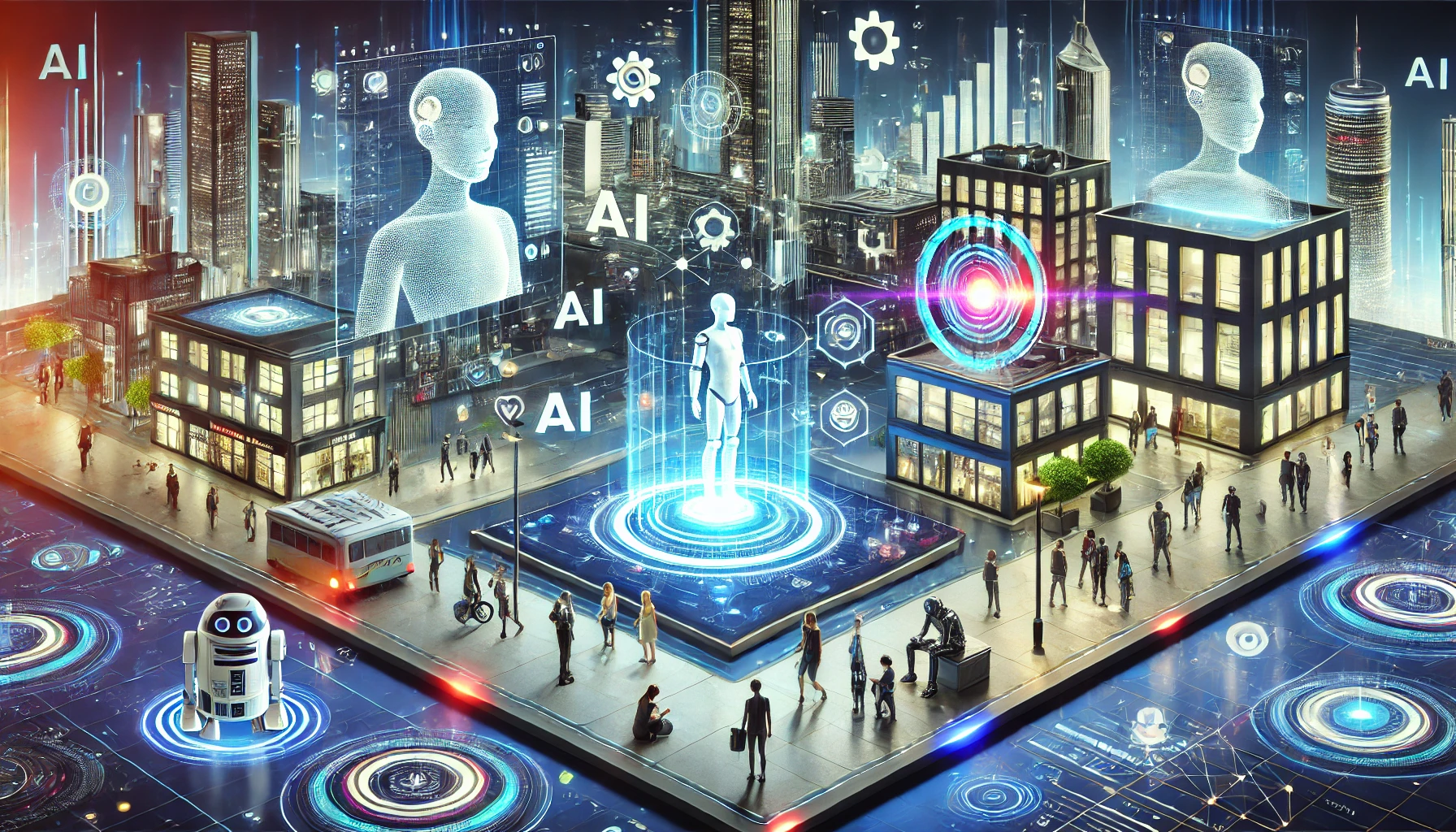
The rapid advancements in artificial intelligence (AI) and augmented reality (AR) are paving the way for a seamless integration of the digital and physical worlds, unlocking endless possibilities for businesses, consumers, and everyday life. By merging the physical environment with digital elements, AI and AR are creating immersive experiences that bridge the gap between the real world and digital realities. From transforming the retail industry to revolutionizing medical training, AI-enhanced AR is changing the way we interact with the world around us, allowing us to engage in more interactive experiences that are both personalized and immersive.
In this blog post, we will explore the evolving relationship between AI and augmented reality, the key technologies behind this fusion, and the diverse applications that are shaping industries such as healthcare, retail, education, and urban planning. We will also examine how machine learning, computer vision, and AR interfaces are enabling new levels of interaction between the physical and digital worlds.
Introduction to AI and Augmented Reality
Augmented reality (AR) is a technology that overlays digital elements (such as images, sounds, or other sensory stimuli) onto the real world in real-time, typically viewed through devices like smartphones, AR glasses, or specialized headsets. The core idea is to enhance the user’s perception of the physical world by blending it with virtual elements, creating a hybrid experience that allows users to interact with both environments simultaneously.
On the other hand, artificial intelligence (AI) is a broad field that focuses on creating intelligent systems capable of performing tasks that traditionally required human intervention, such as learning, reasoning, problem-solving, and understanding language. In the context of AR, AI enhances the capabilities of AR systems by enabling them to better understand and interpret the physical environment in real-time, and respond accordingly with virtual elements.
Merging Digital and Physical Worlds with AI and AR
The fusion of AI and augmented reality (AR) has immense potential to transform how we experience the digital and physical realities of our world. AI serves as the engine behind many AR applications, driving real-time data processing and enabling interactivity between the digital and physical realms.
For example, computer vision—a subfield of AI—enables AR systems to recognize objects, track movements, and understand the surrounding environment. This allows AR devices to overlay virtual elements onto physical spaces with high precision, creating immersive experiences. AI models can also leverage machine learning to adapt to different environments and personalize the user experience.
AI enhances AR by enabling smarter interactions and providing contextual understanding of the real world. In turn, AR can offer interactive experiences where users can see digital information overlaid onto the physical environment, allowing them to interact with objects and information in ways that were previously not possible. This merging of digital and physical worlds opens up new possibilities in areas ranging from retail and healthcare to education and urban planning.
The Role of AI in Augmented Reality
Artificial intelligence plays several critical roles in augmented reality (AR) systems. It powers key features that make AR more immersive, interactive, and adaptable to the user’s needs.
-
Computer Vision: One of the foundational technologies behind AR, computer vision enables devices to understand and interpret the physical world by recognizing objects, tracking movements, and interpreting visual data from the environment. AI helps improve the accuracy of object recognition, gesture recognition, and environmental mapping, enabling AR to seamlessly interact with the real world.
-
Machine Learning: Machine learning (ML) algorithms allow AR systems to become smarter over time by learning from user interactions and environmental data. ML models can predict user behavior, suggest relevant digital content, and adapt to changes in the physical space. This is particularly important for creating personalized experiences in AR applications, such as virtual try-ons in retail or personalized learning experiences in education.
-
Natural Language Processing: Natural language processing (NLP) allows users to interact with AR systems using spoken commands, enhancing the user experience and making interactions more intuitive. AI-powered voice recognition and NLP can enable users to ask questions or give commands that AR systems can understand and respond to in real-time.
-
Real-Time Data Processing: AI algorithms enable the real-time processing of data from AR devices, such as camera feeds, GPS, and sensor inputs. This allows AR systems to overlay relevant digital information on the physical environment with minimal delay, providing an immersive experience where digital and physical worlds are tightly integrated.
-
Context-Aware Computing: AI in AR systems can enhance context-awareness, meaning the system can recognize the user’s environment, adapt to different conditions, and offer dynamic content that is relevant to the situation. This is crucial for applications like urban planning, healthcare, and gaming, where the digital elements need to change based on the physical context.
Key Components of AI-Enhanced AR Systems
The integration of AI and AR involves various components that work together to provide seamless and interactive experiences. Some of the key components include:
-
AI Chips: Specialized AI chips are used to process data in real-time, providing the computational power needed to run machine learning algorithms, process sensor data, and drive augmented reality applications.
-
AR Glasses and Wearables: Devices like AR glasses are equipped with sensors, cameras, and AI chips to capture the physical world and display relevant digital content. These devices allow users to interact with both the digital and physical environments hands-free.
-
Headsets: Advanced AR headsets provide an immersive experience by overlaying digital elements onto the real world. These systems are typically powered by AI algorithms that process input from various sensors to create a responsive and dynamic AR experience.
-
Software Platforms: The software driving AI and AR systems includes frameworks and AR interfaces that enable the development and deployment of AR applications. Platforms like Unity and Unreal Engine are commonly used for creating AR experiences, while AI tools like TensorFlow and PyTorch power the machine learning models that enhance AR systems.
-
Sensor Technology: Sensors in AR devices, including cameras, accelerometers, and gyroscopes, collect real-time data from the physical environment. AI systems process this data to accurately map the physical space, track movements, and interact with the world.
Applications of AI and AR: Bridging the Gap Between Digital and Physical Realities
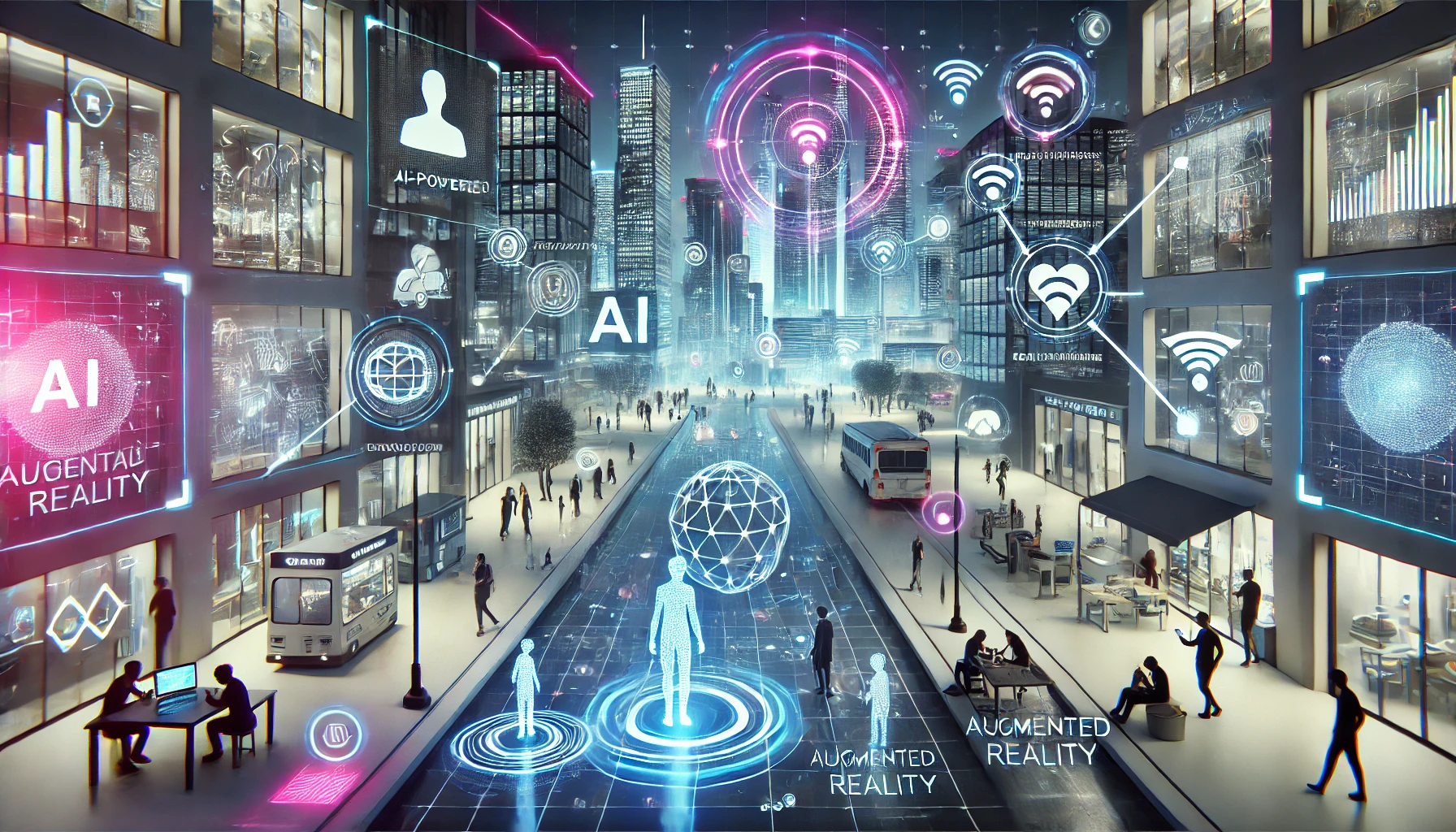
AI and AR are not just transforming individual industries; they are fostering environments where the digital and physical worlds merge to create new possibilities for interactive experiences. From healthcare and education to retail and entertainment, AI-enhanced AR is having a profound impact across various sectors.
1. Healthcare and Medical Training
AI-powered AR applications are transforming the healthcare sector by providing doctors, nurses, and medical students with immersive, real-time information that enhances medical training and patient care. AR can overlay digital medical data—such as anatomical images or patient health metrics—onto the physical body, allowing medical professionals to view real-time information during surgeries or medical procedures.
In medical training, AR enables students to interact with virtual anatomy models, providing an interactive learning experience that improves understanding. AI-powered AR systems can also assist in remote surgeries by providing real-time guidance and visualizations for surgeons in the operating room.
2. Retail and Consumer Experiences
The retail industry is one of the sectors where AI and AR are having the most profound impact. AR interfaces are now being used to enhance shopping experiences by offering features like virtual try-ons, where customers can see how products will look on them without trying them physically. This creates a more personalized shopping experience and helps customers make informed decisions.
For example, IKEA has developed an AR app that lets customers visualize how furniture will look in their homes by overlaying digital models in the physical space. AI plays a crucial role in personalizing these experiences by tracking customer preferences and behavior, enabling brands to offer more tailored product recommendations.
3. Education and Training
AI-enhanced AR is revolutionizing the educational sector by creating immersive learning experiences that engage students in interactive and hands-on ways. AR tools powered by AI can bring abstract concepts to life, allowing students to interact with 3D models of molecules, historical artifacts, or geographic features.
Moreover, AI allows adaptive learning where AR systems can respond to the learner’s progress, providing personalized feedback and adjusting the difficulty level of tasks. This ability to create customized educational content is particularly valuable in diverse learning environments, from K-12 schools to medical training and corporate education.
4. Urban Planning and Design
In urban planning, AI and AR are being used to visualize and design smart cities by merging digital models with physical spaces. Planners can use AR interfaces to explore digital representations of buildings, streets, and infrastructure, enabling better decision-making regarding urban development and resource management.
By integrating real-time data—such as traffic flow, weather conditions, and environmental factors—AI can help create more efficient and sustainable cities, improving traffic management, public safety, and resource allocation.
5. Entertainment and Gaming
AI and AR are also transforming the world of entertainment, especially in gaming. The AR gaming experience, exemplified by games like Pokémon Go, blends digital characters with the physical environment, allowing players to interact with virtual objects in real-world locations. AI enhances these experiences by enabling intelligent decision-making, object recognition, and context-aware interactions.
Conclusion
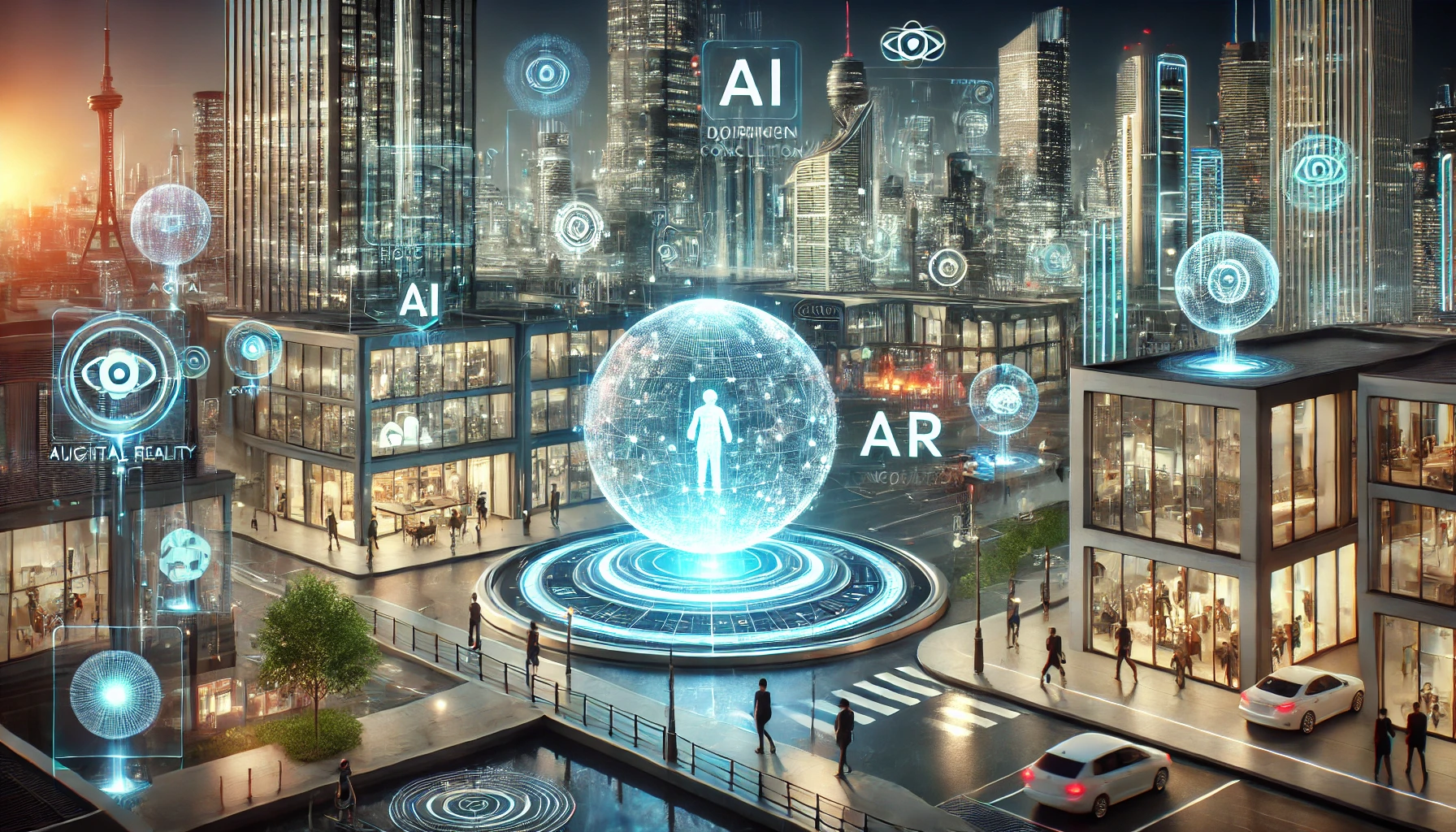
The merging of digital and physical worlds through AI and augmented reality is a groundbreaking development that is changing how we interact with technology. From immersive shopping experiences to interactive education, AI-enhanced AR is opening new avenues for businesses, educators, and consumers to engage with both physical and digital realities. As AI continues to evolve and AR becomes more advanced, the possibilities for creating more interactive and personalized experiences will only continue to grow, bringing us closer to a fully integrated world where digital and physical elements coexist seamlessly.
