

Introduction
The fintech industry has experienced tremendous growth in recent years, with artificial intelligence (AI) playing an increasingly crucial role in its transformation. As the AI in Fintech Market is estimated to be worth USD 42.83 billion in 2023, it’s clear that the integration of AI in financial services is no longer a distant dream but a reality. AI is revolutionizing the way fintech companies operate, providing benefits such as improved customer experience, reduced costs, enhanced fraud detection, and streamlined regulatory compliance. In this blog post, we’ll explore the transformative power of AI in the fintech industry, delving into its benefits, real-world use cases, and future trends in financial technology.
The rise of AI in financial industry forward fintech can be attributed to several factors, including the abundance of financial data, advancements in machine learning algorithms, and the increasing demand for personalized financial services. Fintech companies are leveraging AI technologies to gain a competitive edge, improve operational efficiency, and deliver innovative solutions to their customers. From chatbots and virtual assistants to predictive analytics and algorithmic trading, AI is being applied across various aspects of the financial industry.
According to a report by McKinsey & Company, AI is expected to generate up to $1 trillion in additional value for the global banking industry annually. This highlights the immense potential of AI in driving business growth and transforming the financial landscape. As we explore the benefits and use cases of AI in fintech, it’s essential to understand how this technology is shaping the future of the finance industry and what it means for businesses and consumers alike.
Benefits of AI in the Finance Sector
Improved Customer Experience
One of the most significant benefits of AI in the finance sector is its ability to enhance superior customer service experience. AI technology enables fintech companies to provide personalized and reliable customer services, tailored to individual needs and preferences. By analyzing vast amounts of customer data, AI algorithms can gain insights into customer behavior, allowing fintech firms to offer targeted product recommendations and financial advice.
AI-powered chatbots and virtual assistants are prime examples of how AI is transforming customer service in the fintech industry. These intelligent systems can handle a wide range of customer queries and provide 24/7 support, reducing response times and improving customer satisfaction. According to a study by Juniper Research, the use of chatbots in the banking sector is expected to save $7.3 billion in operational costs globally by 2023.
Moreover, AI-driven sentiment analysis helps fintech companies understand and address customer needs more effectively. By analyzing customer feedback and social media interactions, AI algorithms can identify patterns and sentiments, enabling fintech firms to proactively address customer concerns and improve their overall experience.
Reduced Costs
Another significant benefit of AI in the finance financial technology sector is its potential to reduce operational costs. By automating manual processes and streamlining workflows, AI-driven efficiency improvements can lead to substantial cost savings for fintech companies. Robotic process automation (RPA), for example, can automate repetitive tasks such as data entry and reconciliation, freeing up human resources for more strategic roles.
According to a report by Autonomous Next, AI and machine learning could potentially reduce operational costs for financial institutions by 22% by 2030. This cost reduction can be attributed to the increased efficiency and productivity gained through AI-powered automation.
In addition to reducing operational costs, AI can also help fintech companies optimize their marketing and customer acquisition efforts. By analyzing customer data and behavior patterns, AI algorithms can identify high-value prospects and tailor marketing campaigns accordingly, resulting in higher conversion rates and lower customer acquisition costs.
Fraud Detection and Regulatory Compliance

Fraud detection and regulatory compliance are critical aspects of the financial industry, and AI is playing a vital role in enhancing these areas. AI algorithms can analyze vast amounts of financial data in real-time, identifying patterns and anomalies that may indicate fraudulent activities. By leveraging machine learning techniques, AI-powered fraud detection systems can continuously learn and adapt to new fraud patterns, staying one step ahead of fraudsters.
According to a report by PwC, 47% of financial companies experienced fraud in the past 24 months, with a total loss of $42 billion. AI-based fraud detection and prevention mechanisms can significantly reduce these losses, protecting both fintech companies and their customers from financial crimes.
Moreover, AI can help fintech companies ensure compliance with regulatory requirements. By automating compliance processes and monitoring transactions in real-time, AI algorithms can flag potential regulatory breaches and suspicious activities, reducing the risk of non-compliance and associated penalties.
Faster Decision-Making
AI enables faster decision-making in the finance sector by processing and analyzing large datasets in real-time. With the help of machine learning algorithms, AI systems can quickly identify patterns and insights from financial data, providing actionable information for informed decision-making.
In the realm of credit risk assessment, AI algorithms can analyze a wide range of data points, including credit history, income, and employment status, to determine an applicant’s creditworthiness. This not only speeds up the loan approval process but also helps fintech companies make more accurate credit decisions, reducing the risk of defaults.
Similarly, AI-powered investment platforms can analyze market data, news sentiment, and social media trends to provide real-time investment recommendations. By leveraging AI algorithms, these platforms can help investors make faster and more informed decisions, optimizing their investment strategies.
Automation
Automation is a key benefit of AI in the finance sector, streamlining workflows and reducing manual labor. AI-powered automation can be applied to various processes, from account opening and KYC (Know Your Customer) verification to loan processing and fraud detection.
Robotic process automation (RPA) is a prime example of how AI is automating repetitive tasks in the fintech industry. RPA bots can handle tasks such as data entry, account reconciliation, and report generation, freeing up human resources for more strategic and value-added activities.
According to a report by Gartner, the global robotic process automation software market is expected to reach $1.89 billion in 2021, growing 19.5% from 2020. This growth highlights market trends and the increasing adoption of AI-driven automation in the fintech industry.
Automation not only improves operational efficiency but also reduces the risk of human error. By automating processes, fintech companies can ensure consistency, accuracy, and compliance, ultimately leading to better customer experiences and reduced operational costs.
Real-World Use Cases of AI in Finance
Conversational AI for Customer Service
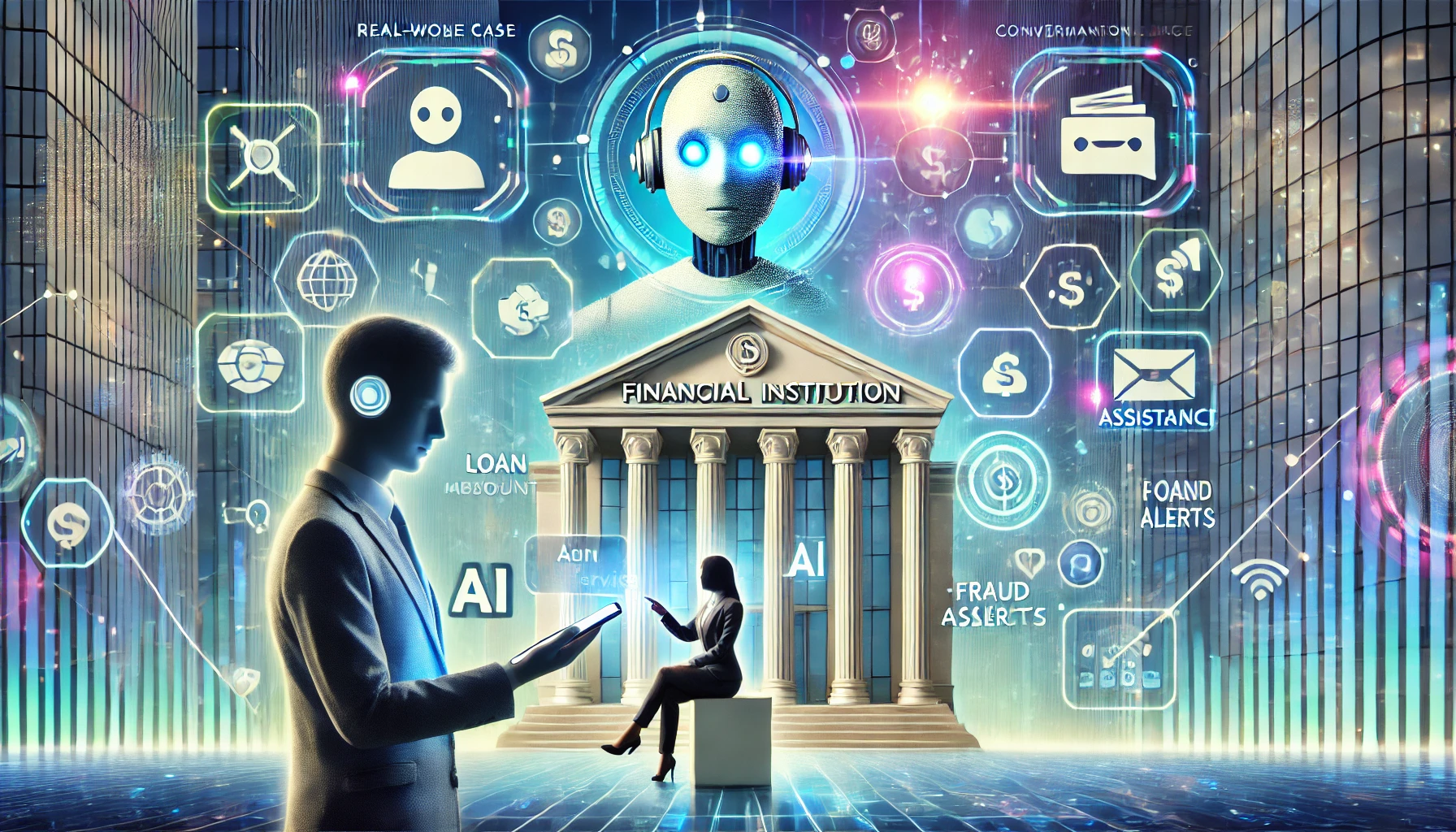
Conversational AI, powered by natural language processing (NLP) and machine learning, is transforming customer service in the fintech industry. AI-powered chatbots and virtual assistants can handle a wide range of customer queries, from account inquiries and transaction history to product recommendations and financial advice.
One notable example is Bank of America’s virtual assistant, Erica. Launched in 2018, Erica uses NLP and machine learning to provide personalized financial guidance to customers. With over 10 million users, Erica has successfully handled more than 100 million client requests, demonstrating the effectiveness of conversational AI in customer service.
Another example is Abe AI, a conversational AI platform designed for financial institutions. Abe AI enables banks and credit unions to create AI-powered chatbots that can handle customer inquiries, provide account information, and offer financial advice. By leveraging conversational AI, fintech companies can provide 24/7 customer support, reduce response times, and improve customer satisfaction.
AI-Based Fraud Detection and Risk Management
AI is playing a crucial role in fraud detection and risk management within the fintech industry. By analyzing vast amounts of financial data in real-time, AI algorithms can identify patterns and anomalies that may indicate fraudulent activities, such as money laundering, identity theft, and credit card fraud.
Feedzai is a leading provider of AI-based fraud detection and risk management solutions for the financial industry. Feedzai’s platform uses machine learning algorithms to analyze billions of financial transactions, in real-time, identifying potential fraud and minimizing false positives. By leveraging AI, Feedzai helps fintech companies reduce financial losses, protect their customers, and ensure regulatory compliance.
Another example is Kount, an AI-driven fraud prevention solution that helps fintech companies detect and prevent online fraud. Kount’s platform uses machine learning and data analysis to assess the risk of every transaction, providing real-time fraud prevention and reducing chargebacks.
Credit Risk Assessment Using AI Algorithms
AI algorithms are revolutionizing credit risk assessment in the fintech industry. By analyzing a wide range of data points, including credit history, income, and employment status, AI-powered credit scoring models can provide more accurate and inclusive credit assessments.
Lenddo is a fintech company that uses AI algorithms to assess creditworthiness based on alternative data sources, such as social media activity and mobile phone usage. By leveraging non-traditional data, Lenddo helps financial institutions extend credit to underserved populations, promoting financial inclusion.
Another example is ZestFinance, a company that uses machine learning to provide AI-powered credit scoring solutions. ZestFinance’s platform analyzes thousands of data points to generate more accurate risk assessments and credit risk assessments, helping fintech companies make more informed lending decisions and expand access to credit.
Personalized Banking Experience
AI is enabling fintech companies to provide personalized banking experiences, tailored to individual customer needs and preferences. By analyzing customer data, such as transaction history, spending patterns, and financial goals, AI algorithms can offer customized product recommendations, tailored financial advice,, and targeted promotions.
Personetics is a leading provider of AI-powered personalization solutions for the financial industry. Personetics’ platform uses machine learning and predictive analytics to deliver personalized insights, recommendations, and financial advice to customers. By leveraging AI, Personetics helps banks and fintech companies improve customer engagement, increase cross-selling opportunities, and drive business growth.
Another example is Kasisto, a company that provides AI-powered virtual assistants for the financial industry. Kasisto’s virtual assistants use NLP and machine learning to provide personalized financial guidance, helping customers manage their finances and achieve their financial goals.
Robo-Advisory for Investment Advice
Robo-advisory, powered by AI algorithms, is transforming the way fintech companies provide investment advice. AI-powered robo-advisors use machine learning models to analyze market data, risk tolerance, and investment goals to generate personalized investment recommendations and automatically manage investment portfolios.
Betterment is a leading robo-advisory platform that uses AI algorithms to provide personalized investment advice and portfolio management. By leveraging AI, Betterment helps investors make informed decisions, optimize their portfolios, and achieve their financial goals.
Another example is Wealthfront, a robo-advisor that uses AI to provide automated investment management and financial planning services. Wealthfront’s platform analyzes investor risk tolerance, financial goals, and market conditions to generate personalized investment strategies and automatically rebalance portfolios.
Algorithmic Trading for Accurate and Faster Trades
AI is revolutionizing trading in the fintech industry through algorithmic trading. AI-powered algorithmic trading systems analyze vast amounts of market data in real-time, identifying patterns and trends to execute trades automatically. By leveraging AI, fintech companies can make faster and more accurate trading decisions, reducing the risk of human error and emotion-driven trades.
Sentient Technologies is a company that provides AI-powered solutions for algorithmic trading. Sentient’s platform uses evolutionary algorithms and deep learning to analyze market data and generate trading strategies, helping fintech companies optimize their trading performance and reduce risk.
Another example is Kavout, an AI-driven investment platform that uses machine learning algorithms to identify investment opportunities, identify market trends and generate trading signals. By leveraging AI, Kavout helps investors make data-driven decisions and achieve better investment returns.
AI-Assisted Loan Decisions for Better Risk Assessment
AI is transforming loan decisioning in the fintech industry, enabling more accurate and efficient risk assessment. By analyzing a wide range of data points, including credit history, income, and alternative data sources, AI algorithms can provide a comprehensive assessment of a borrower’s creditworthiness, reducing the risk of defaults and improving loan approval times.
Upstart is a fintech company that uses AI to make credit decisions based on alternative data sources, such as education and employment history. By leveraging AI, Upstart can provide more accurate credit assessments and expand access to credit for underserved populations.
Another example is Zest AI (formerly ZestFinance), a company that provides AI-powered credit underwriting solutions for financial institutions. Zest AI’s platform uses machine learning algorithms to analyze thousands of data points, generating accurate credit risk assessments and helping lenders make more informed loan decisions.
Key Trends in AI Fintech
Automated Wealth Management through Robo-Advisors
Robo-advisors are becoming increasingly popular in the fintech industry, providing automated wealth management services powered by AI algorithms. These AI-driven platforms offer personalized investment advice, portfolio rebalancing, and tax optimization strategies, making wealth management more accessible and affordable for a wider range of investors.
According to a report by Statista, the global assets under management (AUM) by robo-advisors are expected to reach $1.4 trillion by 2025, up from $827 billion in 2020. This growth highlights the increasing adoption of AI-powered wealth management solutions in the fintech industry.
Some notable examples of robo-advisory platforms include Betterment, Wealthfront, and Personal Capital. These platforms use AI algorithms to provide personalized investment advice, automatically rebalance portfolios, and optimize tax strategies, helping investors achieve their financial goals more efficiently.
Data-driven Lending for Faster and More Accurate Loan Approvals
AI is transforming the lending landscape in the fintech industry, enabling faster and more accurate loan approvals. By leveraging machine learning algorithms and alternative data sources, such as social media activity and mobile phone usage, AI-powered lending platforms can provide a more comprehensive assessment of a borrower’s creditworthiness.
Data-driven lending not only improves the speed and accuracy of loan approvals but also expands access to credit for underserved populations. According to a report by the World Bank, AI-powered lending solutions can help close the global credit gap, which is estimated to be $5.2 trillion for small and medium-sized enterprises (SMEs) in emerging markets.
Companies like Kabbage and OnDeck use AI algorithms to provide fast and flexible lending solutions for small businesses. By analyzing alternative data sources and automating the underwriting process, these platforms can provide loan approvals in minutes, helping SMEs access the capital they need to grow their businesses.
Fraud Detection and Prevention using AI Algorithms
AI is playing a crucial role in fraud detection and prevention within the fintech industry. By analyzing vast amounts of financial data in real-time, AI algorithms can identify patterns and anomalies that may indicate fraudulent activities, such as money laundering, identity theft, and credit card fraud.
AI-powered fraud detection systems use machine learning techniques to continuously learn and adapt to new fraud patterns, staying one step ahead of fraudsters. According to a report by McKinsey & Company, AI-based fraud detection can reduce false positives by up to 60% and increase the detection of actual fraud by up to 50%.
Companies like Feedzai and DataVisor provide AI-powered fraud detection solutions for the fintech industry. These platforms use machine learning algorithms to analyze billions of transactions in real-time, identifying potential fraud and minimizing financial losses for fintech companies and their customers.
AI-powered Chatbots for Improved Customer Service
AI-powered chatbots are transforming customer service in the fintech industry, providing 24/7 support and personalized assistance to customers. These intelligent virtual assistants use natural language processing (NLP) and machine learning to understand customer queries and provide accurate, context-based responses.
According to a report by Juniper Research, the use of chatbots in the banking and financial sector alone is expected to save $7.3 billion in operational costs globally by 2023. This highlights the significant cost savings and efficiency gains that AI-powered chatbots can bring to the fintech industry.
Companies like Abe AI and Kasisto provide AI-powered chatbot solutions for the financial industry. These platforms enable banks and fintech companies to create intelligent virtual assistants that can handle customer inquiries, provide account information, and offer personalized financial advice, improving customer satisfaction and engagement.
How AI is Transforming Fintech
Automation for Streamlined Workflow and Improved Efficiency

AI-driven automation is streamlining workflows and improving efficiency in the fintech industry. By automating repetitive and time-consuming tasks, such as data entry, account reconciliation, and report generation, AI-powered solutions can help fintech companies reduce operational costs and improve productivity.
Robotic process automation (RPA) is a key technology in this area, enabling the automation of rule-based processes. According to a report by Gartner, the global robotic process automation software market is expected to reach $1.89 billion in 2021, growing 19.5% from 2020.
Companies like UiPath and Automation Anywhere provide RPA solutions for the fintech industry, helping companies automate processes and improve operational efficiency. By leveraging AI-driven automation, fintech companies can reduce manual errors, ensure compliance, and deliver better customer experiences.
Personalization for Tailored Financial Solutions
AI is enabling fintech companies to provide personalized financial solutions, providing tailored financial advice due to individual customer needs and preferences. By analyzing vast amounts of customer data, including transaction history, spending patterns, and financial goals, AI algorithms can generate personalized insights, recommendations, and financial advice.
Personalization not only improves customer satisfaction and loyalty but also helps fintech companies cross-sell and upsell relevant products and services. According to a report by Epsilon, 80% of consumers are more likely to make a purchase when brands offer personalized experiences.
Companies like Personetics and Flybits provide AI-powered personalization solutions for the financial industry. These platforms use machine learning and predictive analytics to deliver personalized insights, recommendations, and financial advice to customers, helping fintech companies improve engagement and drive business growth.
Market Trend Prediction for Data-Driven Decision-Making
AI is revolutionizing market trend prediction in the fintech industry, enabling data-driven decision-making. By analyzing vast amounts of financial data, including market prices, news sentiment predict market trends, and social media activity, AI algorithms can identify patterns and trends that may indicate future market movements.
Predictive analytics, powered by machine learning, is a key technology in this area. According to a report by Allied Market Research, the global predictive analytics market is expected to reach $35.45 billion by 2027, growing at a CAGR of 21.9% from 2020 to 2027.
Companies like Kensho and Ayasdi provide AI-powered market trend prediction solutions for the financial industry. These platforms use machine learning algorithms to analyze vast amounts of financial data, generating insights and predictions that help fintech companies make informed investment decisions and manage risk more effectively.
Risk Management for Fraud Detection and Credit Assessment
AI is transforming risk management in the fintech industry, particularly in the areas of fraud detection and credit assessment. By analyzing vast amounts of financial data in real-time, AI algorithms can identify patterns and anomalies that may indicate fraudulent activities or credit risk.
AI-powered risk management solutions use machine learning techniques to continuously learn and adapt to new fraud patterns and credit risk factors. According to a report by McKinsey & Company, AI-based risk management can help financial institutions reduce operational costs by up to 20% and increase revenue by up to 5%.
Companies like Feedzai and Zest AI provide AI-powered risk management solutions for the fintech industry. These platforms use machine learning algorithms to analyze financial data, detecting fraud and assessing credit risk more accurately, ultimately reducing financial losses and improving lending decisions for fintech companies.
Future of AI in Fintech
Predictive Analysis

As AI continues to advance, predictive analysis will play an increasingly important role in the fintech industry. AI algorithms will enable fintech companies to analyze vast amounts of financial data, identifying patterns and trends that can help predict future market movements future financial behavior, customer behavior, and business opportunities.
By leveraging predictive analytics, or artificial intelligence in fintech, companies can make more informed decisions, optimize their strategies, and stay ahead of the curve in a rapidly evolving industry. According to a report by MarketsandMarkets, the global predictive analytics market is expected to grow from $7.2 billion in 2020 to $21.5 billion by 2025, at a CAGR of 24.5% during the forecast period.
Chatbots for Customer Service
AI-powered chatbots will continue to transform customer service in the fintech industry. As natural language processing (NLP) and machine learning technologies advance, chatbots will become more sophisticated, capable of handling increasingly complex customer interactions and providing more personalized support.
In the future, emotional intelligence will be a key area of development for AI-powered chatbots. By analyzing customer sentiment and emotions, chatbots will be able to provide more empathetic and human-like support, improving customer satisfaction and loyalty.
Blockchain Integration
The integration of AI and blockchain technology into financial operations will be a significant trend in the fintech industry. AI can enhance the security, efficiency, and scalability of blockchain-based fintech applications, such as smart contracts and decentralized finance (DeFi) platforms.
AI algorithms can analyze blockchain data to detect fraudulent activities, optimize transaction processing, and improve the overall performance of blockchain networks. According to a report by MarketsandMarkets, the global blockchain AI market is projected to grow from $297 million in 2020 to $1,676 million by 2026, at a compound annual growth rate (CAGR) of 35%. This remarkable growth highlights the increasing adoption of AI-enhanced blockchain solutions across the financial sector.
One of the key advantages of combining AI and blockchain is the creation of smarter, more efficient smart contracts. AI can analyze data inputs in real-time to trigger automated actions within smart contracts, reducing errors and improving reliability. This capability is especially valuable in areas like supply chain financing, trade settlements, and insurance claims processing, where precision and timeliness are critical.
Moreover, AI can enhance the scalability of blockchain networks by intelligently managing resource allocation and optimizing consensus mechanisms. For instance, AI algorithms can predict network congestion and adjust transaction priorities dynamically, ensuring faster and more cost-effective operations. This is particularly beneficial for decentralized finance (DeFi) platforms, which require high throughput to handle a growing number of transactions and users.
Fraud detection and risk management are other areas where the synergy between AI and blockchain shines. By leveraging AI to monitor blockchain transactions, financial institutions can identify suspicious patterns and flag potential fraudulent activities in real time. This proactive approach reduces the risk of financial crimes and bolsters trust in blockchain-based systems.
As blockchain continues to evolve, the integration of AI will also drive advancements in data analytics and decision-making. AI-powered tools can extract actionable insights from blockchain data, helping financial institutions identify market trends, optimize investment strategies, and improve customer experiences.
While the integration of AI and blockchain holds immense potential, it also brings challenges, including scalability issues, regulatory hurdles, and the complexity of implementation. However, with continued innovation and collaboration among stakeholders, these challenges can be addressed, paving the way for a more secure, transparent, and efficient financial ecosystem.
The convergence of AI and blockchain represents a transformative shift in the fintech landscape, unlocking new possibilities for innovation and growth. As these technologies continue to mature, their combined impact will undoubtedly redefine the future of finance.
Conclusion
As we delve deeper into the intersection of artificial intelligence and financial technology, it becomes increasingly evident that AI is a game-changer for the fintech industry. By enhancing customer experiences, reducing costs, automating processes, and enabling predictive analytics, AI is reshaping how financial services are delivered and consumed. Its impact extends across diverse domains, from personalized banking and algorithmic trading to fraud detection and risk management.
The integration of AI in fintech is more than a technological upgrade; it represents a paradigm shift in the industry’s approach to efficiency, innovation, and customer-centricity. AI-powered chatbots and virtual assistants are transforming customer service, providing instant, personalized support that was previously unattainable. Similarly, machine learning algorithms are driving groundbreaking advancements in credit risk assessment and fraud detection, ensuring a safer and more inclusive financial ecosystem.
The real-world applications of AI in fintech are as varied as they are impactful. From predictive analytics optimizing investment strategies to RPA automating routine tasks, AI enables fintech companies to focus on innovation and strategic growth. This also underscores the importance of accessibility, as AI bridges the gap for underserved populations through data-driven credit scoring and personalized financial tools.
Looking ahead, the future of AI in fintech is bright and full of promise. Emerging trends such as blockchain integration, AI-driven robo-advisors, and emotionally intelligent chatbots point to a future where financial services are more secure, efficient, and tailored than ever before. Predictive analysis, in particular, will play a pivotal role in guiding strategic decisions, enabling fintech companies to anticipate market trends, customer behaviors, and financial risks with unparalleled accuracy.
However, the path forward is not without challenges. Issues such as data privacy, ethical considerations, and the need for robust regulatory frameworks will require the industry’s attention as AI continues to evolve. Collaboration between fintech companies, policymakers, and technology providers will be essential to address these challenges and ensure responsible AI adoption.
Ultimately, the marriage of AI and fintech signifies a new era of possibilities, where innovation drives inclusivity, efficiency, and growth. As AI continues to mature, it will unlock unprecedented opportunities for businesses and consumers alike, cementing its role as a cornerstone of the financial industry’s future. By embracing these advancements, the fintech industry is not just adapting to change—it is actively shaping a smarter, more connected financial world.
