
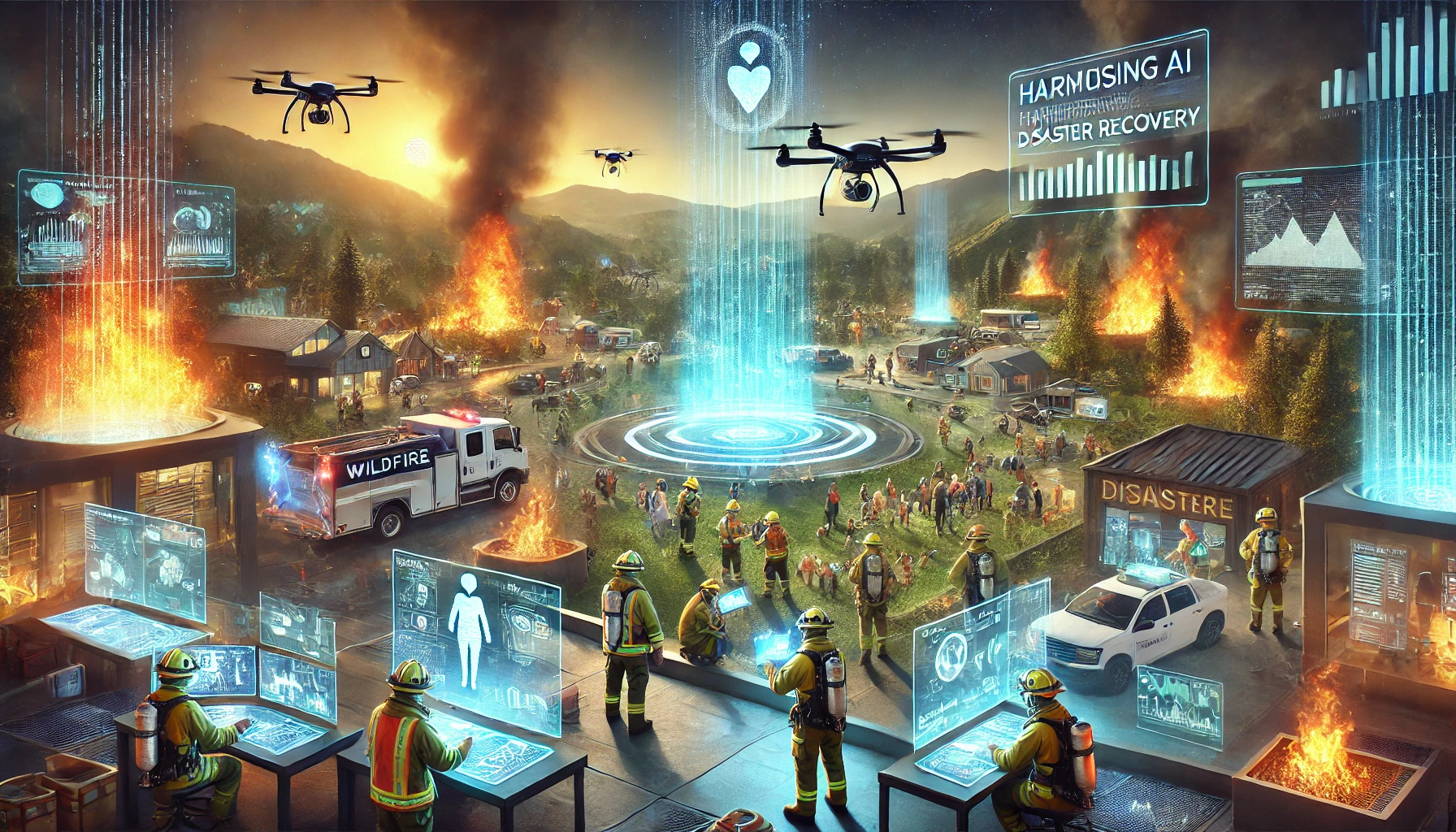
Understanding Disaster Management
Prevalence of Catastrophic Events Across the World
Natural disasters—including floods, earthquakes, droughts, and hurricanes—are inevitable forces of nature, often causing extensive damage to life, property, and economies. With climate change intensifying the frequency and severity of extreme weather events, the global community faces an increasing need for robust disaster management strategies. According to the National Oceanic and Atmospheric Administration (NOAA), the United States experienced 18 weather and climate disasters in 2022, each costing over $1 billion.
The upward trend in natural disasters has far-reaching implications. Beyond the immediate loss of human life and property, such events disrupt economies, deplete limited resources, and strain emergency services. For example, the World Bank estimates that disasters cost the global economy $390 billion annually. This highlights the urgent need for advanced disaster mitigation, preparedness, and emergency response systems to minimize the impact on affected communities.
Effective disaster management encompasses a range of activities, from early detection and preparedness to crisis response and recovery efforts. While traditional methods have been the backbone of natural disaster management, the integration of AI technologies provides a transformative opportunity to enhance resilience and efficiency in responding to such crises.
The Role of AI in Disaster Management
AI Technologies for Enhanced Disaster Response
Artificial intelligence (AI) has emerged as a game-changing tool in disaster management, offering innovative solutions for prediction, crisis recovery, and emergency response. AI-driven algorithms and machine learning models can analyze vast amounts of data in real-time, providing actionable insights to decision-makers during disasters. By augmenting traditional methods with AI, authorities can respond to natural hazards more effectively.
Key Applications of AI in Disaster Response:
-
Predictive Analytics: AI models can analyze historical and real-time data to forecast potential risks, such as floods, heatwaves, or earthquakes, enabling proactive measures.
-
Damage Assessment: Utilizing satellite images and geospatial data, AI systems can rapidly assess the extent of damage, prioritize humanitarian assistance, and allocate resources efficiently.
-
Situational Awareness: AI tools provide first responders with comprehensive information on affected areas, improving coordination and response.
Case Study: AI for Flood Prediction
In 2020, Google AI partnered with local governments in India to develop an early warning system for floods. Using historical data and real-time weather information, the system provided warnings to millions, reducing fatalities and enabling timely evacuations.
AI’s ability to process large-scale datasets and generate insights with unprecedented speed makes it invaluable for disaster response agencies, state and local governments, and organizations managing public health emergencies.
Challenges of AI in Disaster Management
Organizational and Technical Challenges
Despite its potential, the integration of AI in disaster recovery faces significant challenges, both organizational and technical. Overcoming these barriers is essential to fully leverage AI’s capabilities in disaster response and recovery efforts.
Organizational Challenges:
-
Data Integration: Government agencies and private organizations often operate in silos, resulting in fragmented data systems that hinder AI tools from generating accurate insights.
-
Data Security: Handling sensitive information, such as location data or public health records, raises concerns about data privacy and cybersecurity.
Technical Challenges:
-
Data Quality: AI models rely on high-quality training data to make accurate predictions. Inconsistent or incomplete datasets can reduce the effectiveness of AI-driven algorithms.
-
Ethical Considerations: Ensuring that AI systems are transparent, accountable, and equitable is a critical aspect of their deployment in emergency management.
Example: Addressing Data Limitations
During Hurricane Harvey, AI models struggled to provide accurate predictions due to insufficient data sets on urban flooding. This underscores the need for comprehensive and consistent data collection practices to improve AI systems.
Addressing these challenges requires investment in data infrastructure, cross-sector collaboration, and a commitment to ethical AI development. By overcoming these hurdles, AI can become a cornerstone of effective crisis management.
Leveraging AI for Disaster Recovery
Collaboration and Data Integration

Effective disaster recovery depends on collaboration among state and local governments, academic institutions, private industry, and affected communities. AI technologies can play a pivotal role in facilitating such collaboration by integrating data from diverse sources and providing actionable insights.
Benefits of Collaboration:
-
Comprehensive Risk Assessment: Combining data from meteorological agencies, urban planners, and public health systems enables a holistic understanding of disaster risks.
-
Enhanced Response Coordination: AI tools streamline communication among stakeholders, ensuring that resources are deployed where they are needed most.
-
Informed Decision-Making: By aggregating real-time data, AI systems empower decision-makers to act with confidence.
Example: Wildfire Management with AI
In California, AI-driven tools have been used to predict the spread of wildfires, integrating data from satellite imagery, weather reports, and local sensors. This collaboration has significantly improved response times and minimized damage to critical infrastructure.
AI Applications in Disaster Management
Predictive Analytics and Risk Assessment
One of the most promising applications of AI in disaster recovery is its ability to predict and assess risks. By analyzing historical and real-time data, machine learning models can identify patterns and generate early warnings, allowing for proactive measures.
Applications:
-
Early Warning Systems: AI algorithms can provide advance warnings for extreme weather events, such as hurricanes and droughts.
-
Damage Assessment: After disasters, AI can analyze images and data to estimate damage, prioritize recovery efforts, and allocate financial support.
Table: Benefits of AI-Driven Predictive Analytics
|
Application |
Impact |
|---|---|
|
Early Warning Systems |
Reduces fatalities by enabling evacuations |
|
Risk Assessment |
Identifies vulnerabilities in infrastructure |
|
Damage Monitoring |
Speeds up post-disaster recovery efforts |
By leveraging AI-driven algorithms, disaster management agencies can anticipate potential risks and minimize the impact of natural disasters on human life and economies.
Enhancing Disaster Resilience with AI
Building Resilient Communities
AI has the potential to enhance disaster resilience by fostering preparedness and empowering communities. From public education campaigns to crisis management plans, AI technologies provide valuable support in building resilient societies.
Strategies for Resilience:
-
Community Engagement: AI tools can provide localized risk assessments and resources to communities, helping them prepare for emergencies.
-
Crisis Management Plans: AI systems assist in developing comprehensive emergency response strategies tailored to specific disaster scenarios.
-
Public Health Preparedness: AI can model the spread of diseases after natural disasters, ensuring timely interventions.
Example: Earthquake Preparedness in Japan
Japanese authorities use AI to simulate earthquake scenarios and design infrastructure that can withstand potential quakes. This proactive approach has significantly reduced casualties in such events.
Future Directions
Addressing Challenges and Limitations
To fully harness the potential of AI in disaster recovery, future efforts must focus on addressing its limitations while promoting transparency and accountability. AI systems should be designed to complement human oversight, ensuring that decision-makers retain control over critical processes.
Priorities for Future Development:
-
Improving Data Quality: Investing in standardized data collection and integration practices.
-
Ethical AI Deployment: Ensuring that AI systems are fair, transparent, and equitable.
-
Enhanced Collaboration: Strengthening partnerships among governments, academia, and the private sector.
By addressing these challenges, AI can revolutionize disaster management and create a more resilient and responsive global community.
Conclusion
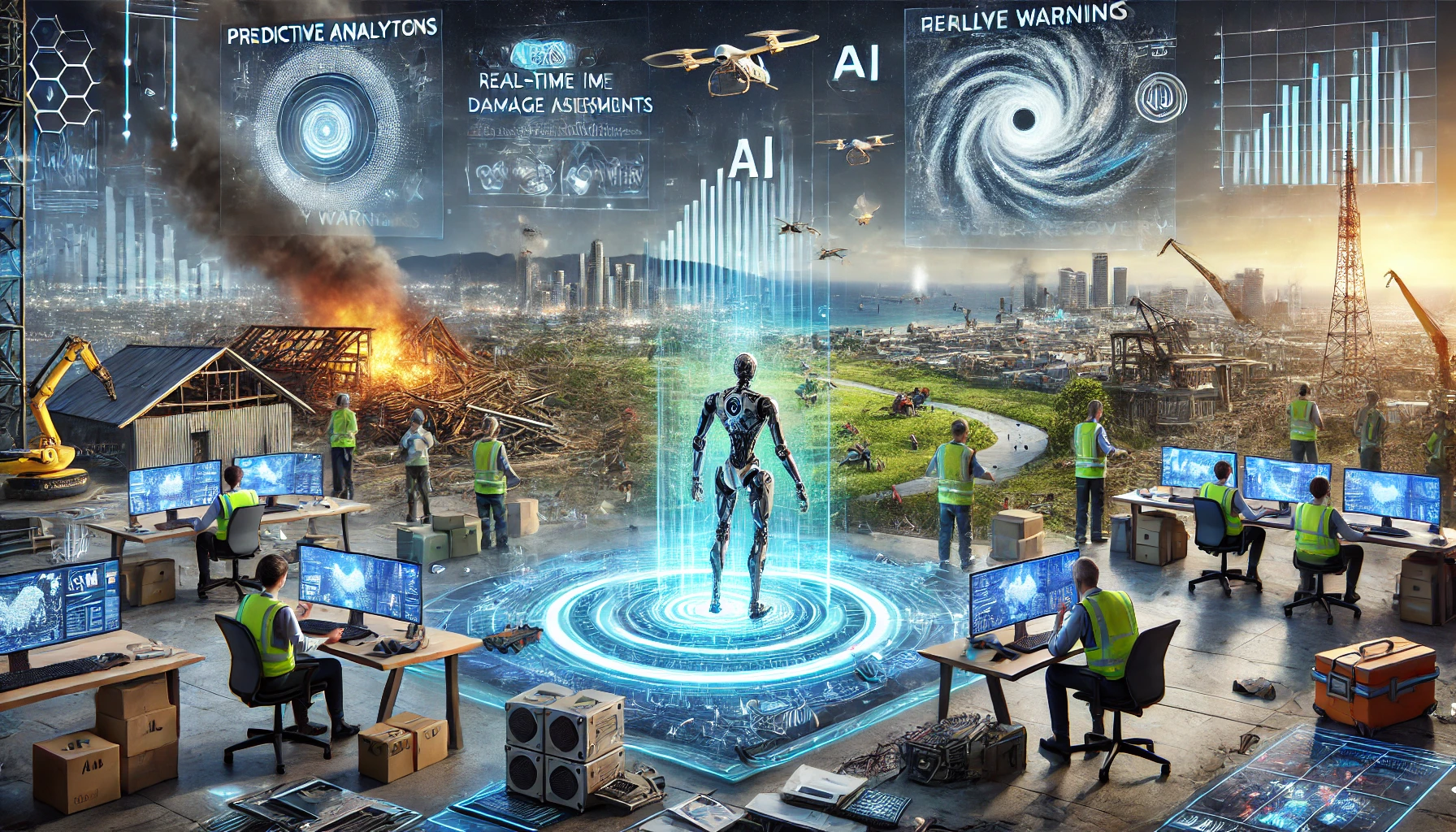
The integration of AI technologies into disaster recovery represents a transformative step forward in natural disaster management. From predictive analytics and early warnings to damage assessment and recovery planning, AI enhances every stage of the response and recovery process.
However, the path to fully leveraging AI’s potential is not without challenges. Addressing data limitations, fostering collaboration, and ensuring ethical practices are crucial for creating a robust framework for disaster management. By combining AI tools with human oversight, the global community can build a more resilient system that saves lives, protects economies, and promotes well-being in the face of increasing disaster risks.
Harnessing AI for disaster response is not just a technological advancement—it is a humanitarian imperative.
FAQs: AI in Disaster Recovery
1. How can AI improve disaster management?
AI enhances disaster management by providing early warning systems, analyzing vast amounts of data for risk assessment, and facilitating damage assessment with tools like satellite images and predictive models.
2. What challenges exist in using AI for disaster recovery?
Challenges include the need for high-quality data sets, ensuring data privacy and security, and integrating AI with traditional crisis management methods.
3. How does AI help build disaster resilience?
AI supports resilience by enabling predictive analytics, enhancing situational awareness for first responders, and aiding communities in preparing for and responding to natural hazards effectively.

Your article helped me a lot, is there any more related content? Thanks!
Can you be more specific about the content of your article? After reading it, I still have some doubts. Hope you can help me.
I don’t think the title of your article matches the content lol. Just kidding, mainly because I had some doubts after reading the article.