
Introduction to Asset Tokenization
-
Real world asset tokenization is transforming the financial landscape by migrating assets onto blockchain networks, enabling fractional ownership and enhanced liquidity.
-
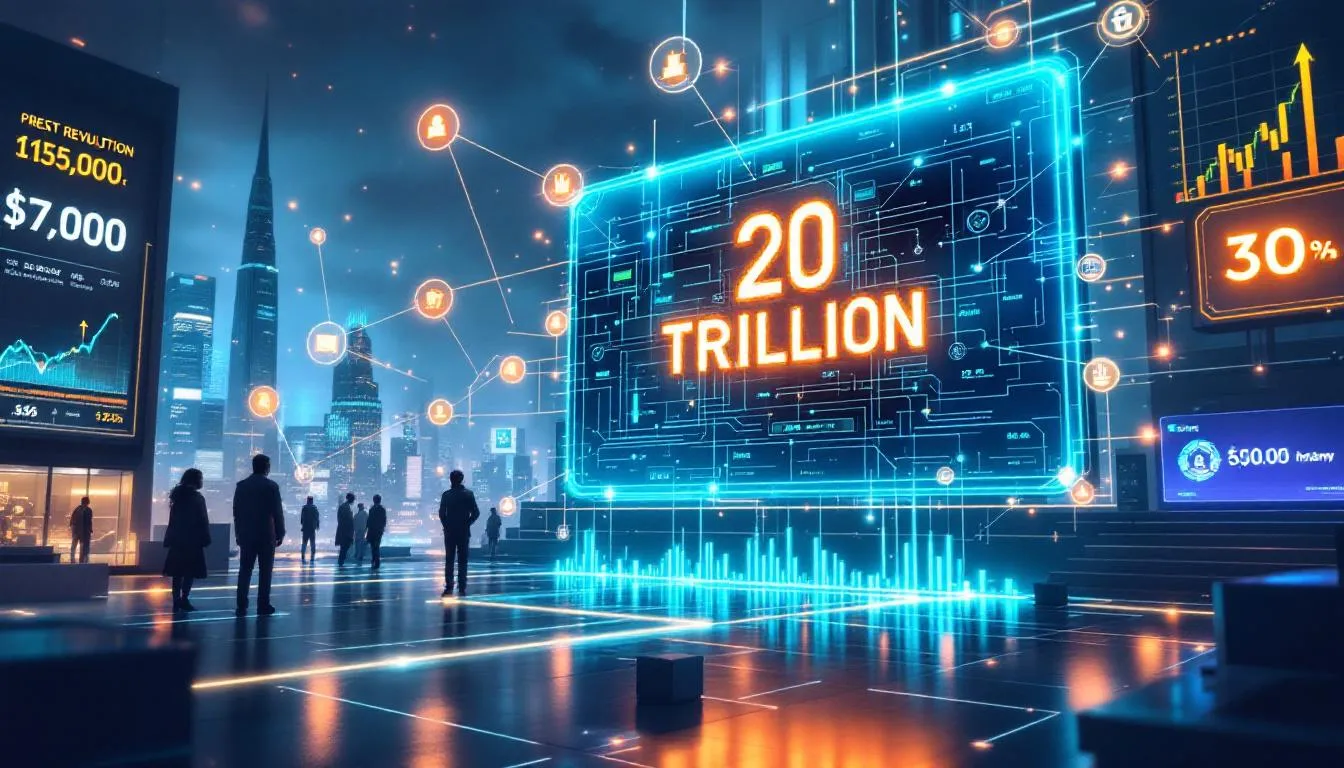
The explosive growth of the rwa tokenization market has been marked by recent market size milestones and rapid adoption, signaling a new era for digital assets. The market for tokenized real world assets (rwa market) is projected to reach $20 trillion by 2025, fueled by increasing market demand, institutional adoption, and technological advancements.
-
Major financial institutions and other major financial players are rapidly tokenizing real world assets like U.S. Treasuries and real estate, playing a pivotal role in transforming the financial world through tokenization, promoting financial inclusion and democratizing access to markets.
-
Tokenized assets offer real yield, with tokenized Treasury bills yielding 4-5% and private credit tokens 8-10%, attracting retail and institutional investors. The growth of tokenized assets is outpacing many trends in the broader crypto market, highlighting their unique value proposition.
-
Regulatory clarity and multi-chain expansion are accelerating the growth of the real world asset tokenization market, with firms like BlackRock and JPMorgan expanding tokenized assets. The rwa tokenization market is being shaped by both institutional adoption and evolving market demand.
Benefits of Tokenization
-
Tokenization reduces friction in traditional asset management, enabling faster settlement and 24/7 trading of tokenized assets like real estate. It is transforming asset ownership by enabling programmable and fractional ownership of both physical and virtual assets, increasing flexibility and accessibility for investors.
-
Programmable compliance replaces paper-based processes, improving efficiency in asset management and reducing costs. Regulatory compliance and evolving regulatory frameworks are key to ensuring programmable compliance and operational efficiency in tokenized asset markets.
-
Tokenization unlocks liquidity and market efficiency across diverse real estate and intellectual property assets, enabling fractional ownership and global access. It is also reshaping financial markets and capital markets by integrating tokenized assets into traditional systems, with the evolving regulatory landscape playing a crucial role in adoption and market stability.
-
Digital tokens enable secure, transparent, and instant settlement of transactions, reducing transaction costs and enhancing market sentiment. These tokens can encode ownership rights and automate interest payments through smart contracts, streamlining cash flows for investors.
-
Tokenization promotes financial inclusion, democratizing access to high-value assets and traditional financial instruments, and bridging the gap between traditional finance and decentralized finance. It also facilitates cross border transactions by overcoming jurisdictional barriers, and helps investors manage market dynamics and maintain stable assets during periods of volatility.
Tangible assets such as real estate, commodities, and fine art are represented as digital tokens on blockchain platforms, with each token directly linked to the value of its underlying asset, ensuring transparency and security in asset management.
Real Estate Investment Opportunities
-
Real estate tokenization is a major driver of growth in the tokenized real world assets sector, with the market projected to reach $4 trillion by 2035. Real estate, as a type of physical asset, is increasingly being transformed into digital tokens on blockchain platforms.
-
Tokenized real estate offers a stable and secure investment opportunity, with the potential for substantial capital appreciation and rental income.
-
Institutional investors are increasingly adopting real estate tokenization, driven by the benefits of fractional ownership, enhanced liquidity, and reduced transaction costs.
-
Tokenized real estate assets can be traded on blockchain networks, enabling global access and instant settlement, and reducing the need for intermediaries.
-
Real estate tokenization is expected to transform the property investment landscape, enabling more efficient and secure transactions, and promoting financial inclusion. Tokenization and smart contracts are streamlining property transactions, making them more efficient and transparent.
Private Credit and Intellectual Property
-
Private credit dominates the tokenized real world assets market, with a market share of 58% and a total value of $14 billion.
-
Intellectual property tokenization is a growing trend, enabling creators to monetize their assets and investors to access a new asset class. New investment strategies are emerging for tokenized intellectual property and private credit, allowing investors to better manage risk and adapt to evolving market conditions.
-
Tokenization of private credit and intellectual property assets promotes financial inclusion, democratizing access to these asset classes and enabling fractional ownership. Tokenization is opening access to retail investors as well as institutions, lowering barriers and expanding participation.
-
Smart contracts and blockchain technology ensure secure, transparent, and efficient management of these assets, reducing the risk of default and enhancing market efficiency. Government money funds are also being tokenized, providing institutional products with enhanced liquidity and regulatory compliance.
-
Institutional investors are increasingly adopting tokenized private credit and intellectual property, driven by the benefits of enhanced liquidity, reduced transaction costs, and improved risk management.
Corporate Bonds and Private Equity
Corporate bonds and private equity are emerging as pivotal segments within the real world asset tokenization movement. Major financial institutions are increasingly leveraging blockchain technology to tokenize these traditionally illiquid assets, unlocking new avenues for institutional investors and asset managers. By converting corporate bonds and private equity stakes into digital tokens, asset tokenization platforms are enabling fractional ownership, which lowers the barriers to entry and broadens participation in these high-value asset classes.
This shift is streamlining asset management by reducing reliance on intermediaries and enabling more efficient, transparent transactions. Tokenized corporate bonds and private equity not only enhance liquidity but also provide investors with greater flexibility in portfolio construction and risk management. As regulatory clarity around digital tokens and ownership rights continues to improve, institutional adoption is accelerating, with financial institutions deploying substantial capital into tokenized assets.
The market for tokenized corporate bonds and private equity is projected to experience a compound annual growth rate of 21% from 2024 to 2033, reflecting the growing confidence in blockchain technology and the expanding appetite for real world asset tokenization. As more world assets are brought onto blockchain networks, the financial landscape is set for a profound transformation, making these asset classes more accessible, efficient, and attractive to a global pool of investors.
Institutional Adoption and Blockchain Technology
-
Major financial institutions are driving the growth of the real world asset tokenization market, with substantial capital investments and partnerships with blockchain companies.
-
Blockchain technology is the backbone of real world asset tokenization, enabling secure, transparent, and efficient transactions, and promoting financial inclusion.
-
Institutional adoption of blockchain technology is accelerating, driven by the benefits of enhanced security, reduced transaction costs, and improved market efficiency. Institutions are increasingly integrating traditional financial assets, such as real estate and corporate bonds, and actively participating in the tokenized treasury market as part of this shift.
-
Tokenized assets are being integrated into traditional financial systems, enabling institutional investors to access new asset classes and promoting financial inclusion.
-
Regulatory clarity and compliance are essential for institutional adoption, with governments and regulatory bodies developing frameworks to support the growth of the real world asset tokenization market. Understanding market dynamics is crucial for institutions as they navigate the evolving landscape of real world asset tokenization.
Digital Assets and Asset Classes
The landscape of digital assets and asset classes is undergoing a dramatic transformation, fueled by the rapid adoption of real world asset tokenization. As tokenized assets such as real estate, corporate bonds, and private credit become integrated into both traditional financial systems and decentralized finance platforms, institutional investors are gaining unprecedented access to a diverse array of investment opportunities. Fractional ownership and enhanced liquidity are making it easier for investors to diversify across asset classes that were once difficult to access or trade.
Technological advancements in blockchain networks are driving this convergence, enabling seamless interactions between digital assets and traditional financial instruments. This integration is not only improving market efficiency but also expanding the market capitalization of tokenized real world assets, which is projected to reach $30 trillion by 2034. The ability to tokenize and trade real world assets alongside crypto assets is redefining the financial landscape, offering new strategies for asset management and risk mitigation.
As decentralized finance continues to gain traction, the boundaries between traditional assets and digital tokens are blurring, creating a more dynamic and inclusive financial system. Real world asset tokenization is at the forefront of this evolution, empowering financial institutions, businesses, and investors to participate in global markets with greater flexibility and transparency. With ongoing innovation and institutional adoption, the future of digital assets and asset classes promises to be more interconnected, efficient, and accessible than ever before.
