
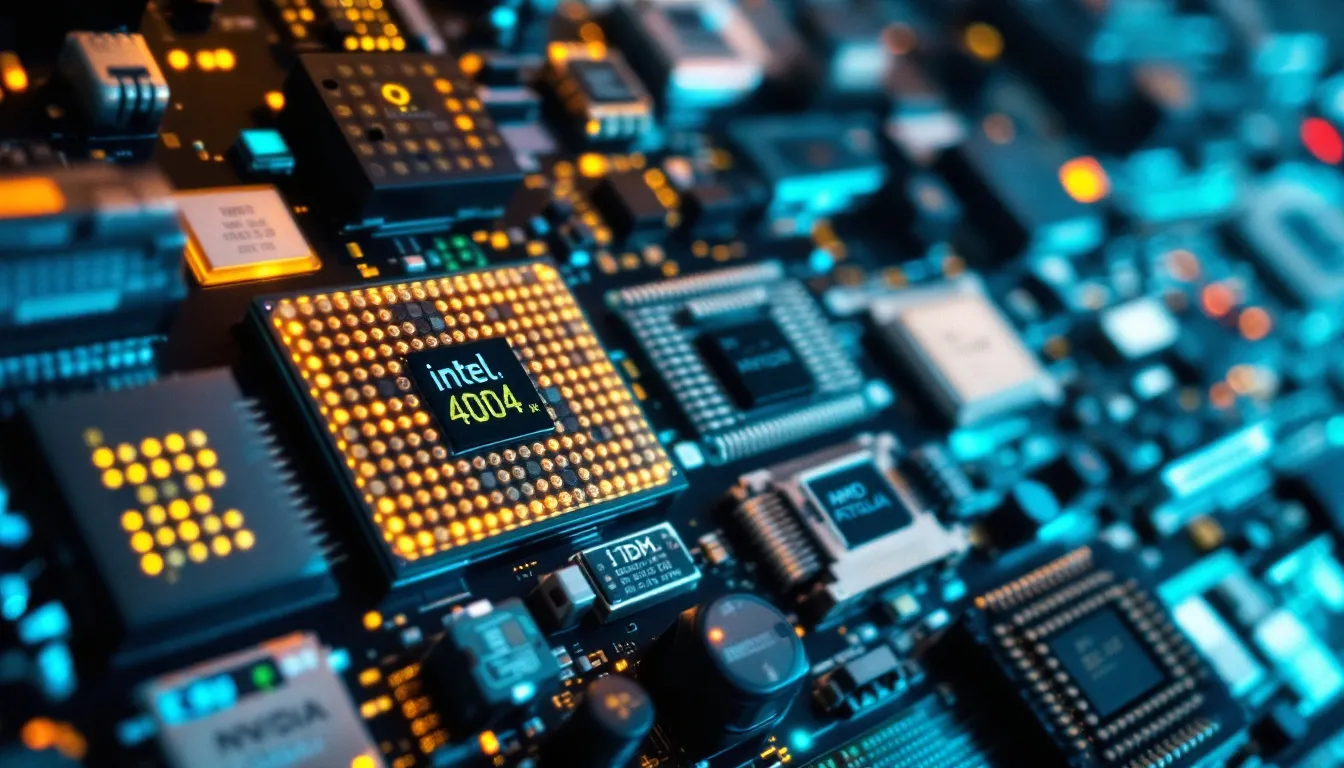
The rapid evolution of AI hardware has played a crucial role in transforming the capabilities of artificial intelligence (AI). The demand for increasingly sophisticated AI algorithms, machine learning models, and complex computations has driven the development of specialized AI chips that are tailored for handling the growing demands of AI workloads. As AI continues to permeate various industries, from healthcare and finance to autonomous vehicles and robotics, the chips and processing power behind these systems are evolving to meet new challenges and enable cutting-edge advancements. In this blog post, we will explore the evolution of AI hardware, the various types of AI chips, and how they have influenced the development of AI systems over time.
Introduction to AI Hardware
The advent of AI has placed significant demands on traditional computing hardware. Unlike general-purpose computing tasks, AI tasks often involve complex computations, massive datasets, and highly parallelizable processes, making traditional Central Processing Units (CPUs) less suited for the task. As a result, specialized AI hardware has emerged to accelerate AI tasks such as machine learning, image recognition, and natural language processing.
Traditional Hardware vs. AI Hardware
In traditional computing systems, the Central Processing Unit (CPU) acts as the heart of the system, executing instructions for a variety of tasks. While CPUs are highly versatile and capable of handling general computing workloads, they are not optimized for the parallel nature of AI tasks. AI models, especially those involving deep neural networks (DNNs) or large language models, require immense processing power and computational efficiency, which led to the development of more specialized hardware.
The Role of Specialized AI Chips
Specialized AI chips are designed specifically to handle the unique computational needs of AI systems. These chips are optimized for tasks such as neural network training, image recognition, object detection, and real-time video processing. By accelerating these specific tasks, AI chips can deliver better performance and energy efficiency than traditional CPUs, which are not optimized for these specialized workloads.
Some key types of AI hardware include:
-
Graphics Processing Units (GPUs): Initially designed for rendering graphics in video games, GPUs are now widely used in AI due to their parallel processing capabilities. GPUs can handle multiple tasks simultaneously, making them well-suited for AI tasks like training machine learning models and processing vast datasets.
-
Application-Specific Integrated Circuits (ASICs): These chips are custom-designed to perform a specific task, such as deep learning or neural network processing. ASICs are highly efficient, delivering superior performance for specific AI tasks while consuming less energy than general-purpose processors.
-
Field-Programmable Gate Arrays (FPGAs): FPGAs are programmable chips that can be reconfigured to execute specific tasks. These chips are versatile and can be adapted to different AI workloads. They are often used in environments where flexibility is essential, such as edge computing applications.
-
Custom AI Chips: Major tech companies like Google and NVIDIA have developed custom AI chips, specifically designed to power their AI systems. Google’s Tensor Processing Units (TPUs), for example, are specialized AI chips used for accelerating deep learning tasks in Google’s data centers. These custom chips have been optimized for large-scale machine learning workloads.
Why Specialized AI Hardware is Important
As AI technology has become more advanced, traditional computing hardware has struggled to keep up with the increasing computational demands. AI algorithms, particularly deep learning models, require large-scale matrix multiplications, floating-point operations, and parallel processing capabilities. Specialized AI hardware is designed to optimize these tasks and reduce energy consumption, ensuring that AI systems can scale to handle increasingly complex tasks efficiently.
AI Chip Market Growth
The growth of AI has driven a booming market for specialized AI chips. According to a report by Grand View Research, the AI chip market was valued at $10.6 billion in 2020 and is expected to grow at a compound annual growth rate (CAGR) of 41.2% from 2021 to 2028. This growth is fueled by the increasing demand for AI capabilities across various sectors, including healthcare, automotive, and cloud computing.
The Evolution of AI Chips: From GPUs to Specialized Hardware

The history of AI hardware can be traced back to the development of graphics processing units (GPUs), which were initially designed for rendering graphics in video games. However, researchers soon realized that the highly parallel nature of GPU architecture made it ideal for accelerating certain types of AI computations, particularly deep learning tasks. Over time, this realization led to the development of specialized AI chips tailored for AI models.
1. The Rise of GPUs in AI
Graphics processing units (GPUs) have played a pivotal role in the evolution of AI hardware. The NVIDIA Tesla K80, released in 2014, was one of the first GPUs to be widely used for AI workloads, particularly in deep learning. GPUs excel at handling parallel processing tasks, which are essential for training large machine learning models.
The transition from CPU-based computing to GPU-based computing allowed researchers to train more complex neural networks and achieve breakthroughs in fields like computer vision, speech recognition, and natural language processing. Today, NVIDIA’s GPUs are widely considered the standard for AI development in both research and industry.
2. The Advent of Specialized AI Chips: ASICs and TPUs
While GPUs provided a significant performance boost for AI, they still had limitations in terms of energy efficiency and speed for specific tasks. This led to the development of Application-Specific Integrated Circuits (ASICs), which are custom-designed chips tailored for specific applications, such as deep learning or neural network processing.
In 2016, Google introduced the Tensor Processing Unit (TPU), a custom ASIC designed specifically to accelerate deep learning computations. Unlike GPUs, which are general-purpose processors capable of handling a wide range of tasks, TPUs are purpose-built for AI algorithms and can perform tensor processing more efficiently. This specialized design allows TPUs to deliver superior performance for training and inference tasks in deep learning.
3. Field-Programmable Gate Arrays (FPGAs) for Flexibility
While ASICs like TPUs are highly efficient for specific AI workloads, Field-Programmable Gate Arrays (FPGAs) offer greater flexibility. FPGAs are chips that can be reprogrammed to perform different tasks, making them ideal for applications where AI workloads may change over time. For example, FPGAs are often used in edge computing, where AI applications must process data locally without relying on cloud resources.
FPGAs allow developers to experiment with different AI algorithms and chip architectures, making them particularly valuable in research and development settings. Companies like Microsoft and Amazon have incorporated FPGAs into their cloud computing platforms to accelerate AI tasks in data centers.
4. The Future of AI Chips: Energy Efficiency and Power
As AI continues to evolve, the demand for more powerful AI chips will only increase. However, with this increased power comes the challenge of maintaining energy efficiency. As AI models become larger and more complex, the energy consumption of the hardware required to run these models becomes a major concern.
The next generation of AI chips will need to strike a balance between computational power and energy efficiency. Companies are exploring new chip architectures, including in-memory computing, which stores data in memory rather than moving it between separate memory and processing units, thereby reducing energy consumption and latency.
Key Trends in AI Chip Development
-
AI Chips in Data Centers: The increasing demand for cloud computing and AI services is driving the need for more powerful AI chips in data centers. Major tech companies like Amazon, Microsoft, and Google are developing custom AI chips to handle machine learning workloads more efficiently.
-
Edge Computing: The rise of edge computing is pushing for AI chips that are optimized for local data processing. Edge AI chips need to deliver high performance while minimizing power consumption, making energy efficiency a critical factor in their design.
-
Neuromorphic Computing: Neuromorphic computing, which mimics the structure and function of the human brain, is another frontier in AI chip development. These chips are designed to improve the efficiency of AI systems, particularly in applications like robotics and autonomous vehicles.
Conclusion

The evolution of AI hardware has been a pivotal factor in the advancement of artificial intelligence. From the early days of GPU-based computing to the rise of specialized AI chips like ASICs and TPUs, AI hardware has enabled the development of increasingly powerful and efficient AI systems. As AI algorithms become more complex and AI applications continue to grow, the demand for cutting-edge AI chips will only increase, driving innovation in chip technology and ensuring that AI can continue to push the boundaries of what is possible.
The future of AI hardware is exciting, with advancements in energy efficiency, parallel processing capabilities, and custom AI chips paving the way for even more powerful AI applications across a wide range of industries. As AI chips continue to evolve, they will play an increasingly important role in the AI revolution, unlocking new possibilities and transforming how we interact with technology.

Thanks for sharing. I read many of your blog posts, cool, your blog is very good.