
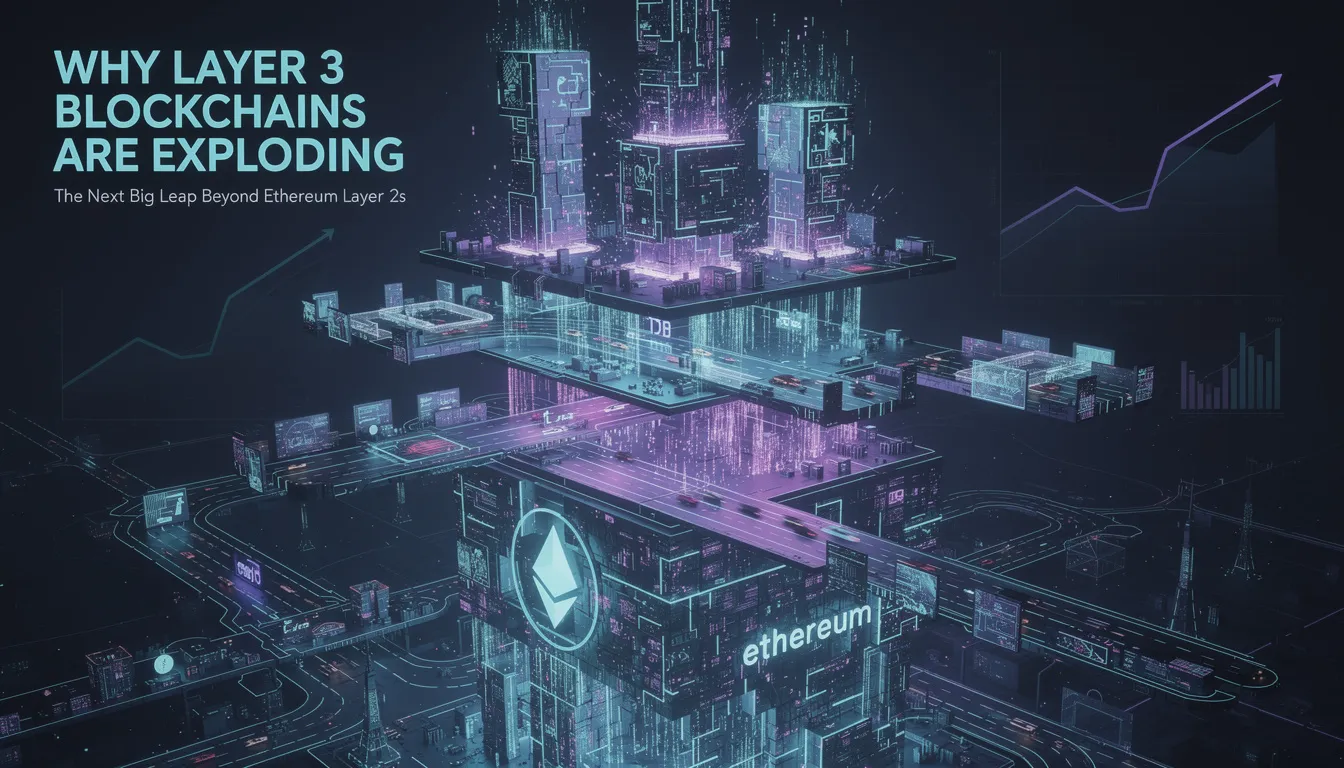
Introduction to Layer 3 Blockchains
-
Layer 3 blockchains represent the next evolution in blockchain technology, building upon the foundation of Layer 1 and Layer 2 solutions to provide enhanced scalability, security, and interoperability within the broader crypto space.
-
They enable the creation of application-specific blockchains that can interact with each other seamlessly, fostering a more vibrant ecosystem, while allowing developers to easily deploy and customize Layer 3 networks for specific needs. Layer 3s offer application specific functionalities tailored to diverse use cases.
-
Layer 3 solutions are designed to address the limitations of Layer 2s, such as limited scalability and high transaction fees, by providing a more efficient and cost-effective way to process transactions.
-
The development of Layer 3 blockchains is driven by the need for more complex smart contracts, cross-chain interoperability, and enhanced scalability.
Limitations of Layer 2 Solutions
-
Layer 2 solutions, such as Optimistic Rollups, have limitations in terms of scalability, transaction costs, and complexity, which can hinder the widespread adoption of blockchain technology. While they aim to provide greater scalability and faster transactions, these improvements often fall short of what is needed for mass adoption. For example, the Lightning Network, a well-known Layer 2 solution for Bitcoin, has improved transaction speed and reduced fees but still faces certain limitations.
-
They often rely on the underlying blockchain infrastructure, which can be slow and expensive, leading to high transaction fees and limited transaction throughput. Gas fees, in particular, remain a significant pain point for users. Layer 2s attempt to improve performance by processing transactions off the main chain, but they still face challenges in fully overcoming these issues.
-
The lack of cross-chain communication and interoperability between different Layer 2 solutions can also create fragmentation and hinder the growth of the blockchain ecosystem.
-
Furthermore, the security risks associated with Layer 2 solutions can be significant, making it essential to develop more robust and secure solutions.
Advantages of Layer 3
-
Layer 3 blockchains offer several advantages over Layer 2 solutions, including enhanced scalability, lower transaction costs, and improved security. These improvements are enhancing user experience by delivering better performance and usability. Greater scalability and efficiency also enable Layer 3s to support more users and drive broader adoption.
-
They enable the creation of complex smart contracts that can interact with multiple blockchains, facilitating cross-chain interoperability and communication.
-
Layer 3 solutions also provide a more efficient way to process transactions, reducing the load on the main chain and enabling faster transaction speeds.
-
Additionally, they offer a more robust and secure way to manage digital assets, reducing the risk of losses due to security breaches. Layer 3s are expanding utility by supporting a wider range of applications and collaborations across the ecosystem.
The improved capabilities and growing ecosystem of Layer 3s are starting to attract significant investment from both developers and institutional players.
Architecture and Mechanics
-
The architecture of Layer 3 blockchains is designed to provide a scalable and secure way to process transactions, using techniques such as zero-knowledge proofs and homomorphic encryption. Ensuring robust data availability is essential for reliable validation and interoperability across different layers and systems.
-
They utilize a network of nodes to validate and process transactions, ensuring that the network is decentralized and resilient. Layer 3s are also designed to enhance data privacy for users and applications, supporting secure transaction handling and regulatory compliance.
-
The mechanics of Layer 3 blockchains are based on complex algorithms and consensus mechanisms, which enable the creation of a secure and trustworthy network.
-
The use of emerging trends such as artificial intelligence and machine learning can also enhance the performance and security of Layer 3 blockchains.
Ongoing advancements in Layer 3 architecture continue to drive improvements in scalability, efficiency, and security. Achieving successful implementation of these solutions is crucial for overcoming technical and user engagement challenges, ensuring their effective adoption and long-term impact.
Interoperability and Governance
-
Interoperability is a key feature of Layer 3 blockchains, enabling them to interact with multiple blockchains and facilitating the creation of a vibrant ecosystem. On the Ethereum network, Layer 3s are being built to enhance scalability and connectivity, addressing challenges like liquidity fragmentation and cross-chain interoperability. Enabling blockchains and protocols such as IBC facilitate secure communication and asset transfer between multiple networks, promoting a more connected and scalable blockchain ecosystem. Layer 3s are designed to operate across multiple networks, not just a single blockchain, further supporting the growing multi-chain landscape.
-
Governance is also an essential aspect of Layer 3 blockchains, ensuring that the network is managed in a fair and transparent way.
-
The use of decentralized governance models, such as DAOs, can provide a more democratic and community-driven approach to decision-making.
-
Additionally, the development of regulatory frameworks can help to ensure that Layer 3 blockchains are compliant with existing laws and regulations.
Top Layer 3 Blockchain Solutions
-
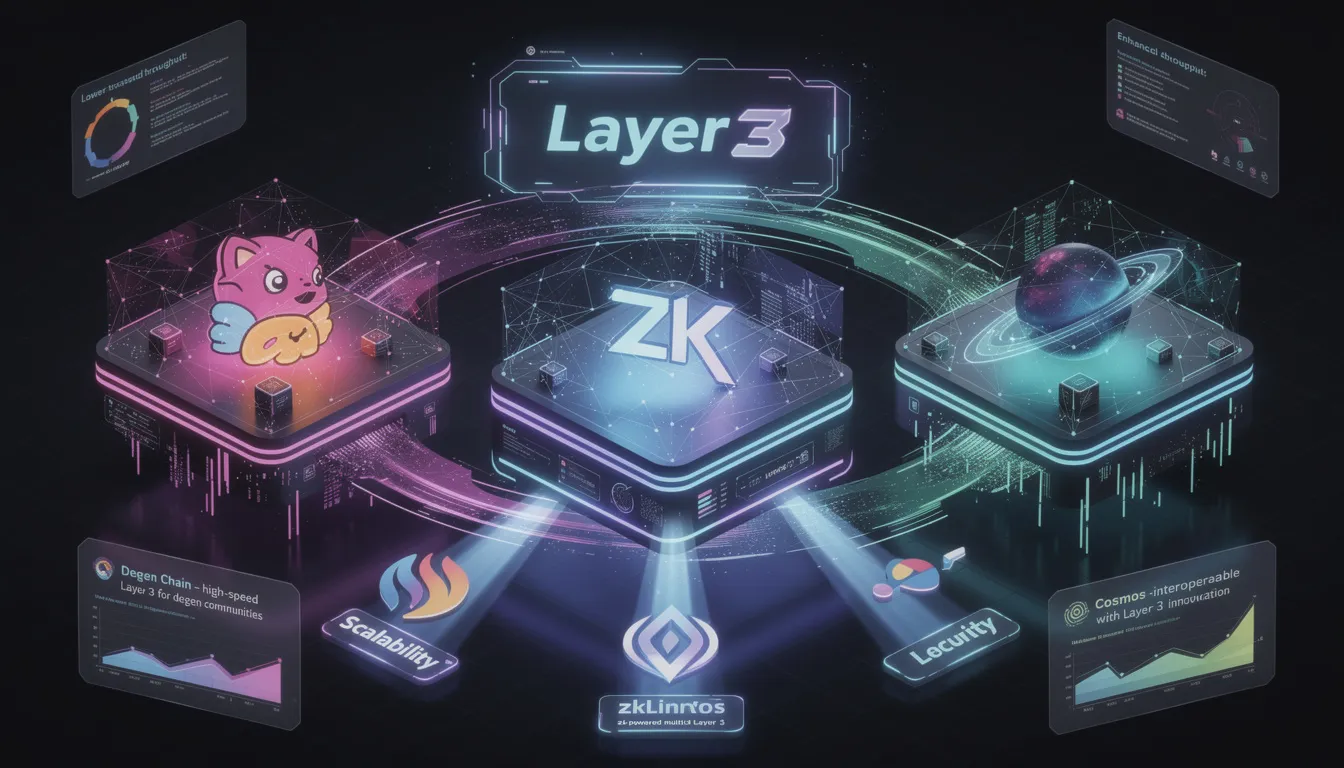
Several Layer 3 blockchain solutions are currently being developed, including Degen Chain, zkLink Nova, and Cosmos. These are among the leading blockchain projects driving innovation in Layer 3 solutions.
-
These solutions offer a range of features and functionalities, including enhanced scalability, lower transaction costs, and improved security.
-
They are designed to provide a more efficient and cost-effective way to process transactions, enabling the widespread adoption of blockchain technology.
-
The choice of Layer 3 blockchain solution will depend on the specific needs and requirements of the user or organization.
Practical Use Cases
-
Layer 3 blockchains have a range of practical use cases, including decentralized finance, supply chain management, and digital identity verification. They enable application-specific functionalities tailored for industries like gaming, DeFi, and privacy, allowing for customized, interoperable, and privacy-focused blockchain applications.
-
They can be used to create complex smart contracts that interact with multiple blockchains, facilitating cross-chain interoperability and communication.
-
The use of Layer 3 blockchains can also enable the creation of new business models and revenue streams, such as decentralized oracle networks and prediction markets. A decentralized oracle network is a type of oracle network that connects smart contracts to off-chain data sources, ensuring data accuracy, security, and resistance to manipulation, which enhances the functionality and trustworthiness of decentralized applications across multiple blockchain networks.
-
Additionally, they can provide a more secure and efficient way to manage digital assets, reducing the risk of losses due to security breaches.
Development Trends
The rapid evolution of Layer 3 blockchain solutions is reshaping the blockchain ecosystem, as developers seek to overcome the limitations of earlier layers and unlock new possibilities. A major focus is on enhancing transaction efficiency and reducing costs, with technologies like zero-knowledge proofs enabling faster and more private transactions. The explosive growth of decentralized finance (DeFi) and non-fungible tokens (NFTs) has highlighted the need for more advanced blockchain infrastructure, driving the adoption of Layer 3 solutions that support complex smart contracts and seamless cross chain interoperability. As the blockchain world continues to innovate, we are witnessing the emergence of sophisticated applications—ranging from decentralized oracle networks to multi-chain asset management—that leverage the unique capabilities of Layer 3. This ongoing wave of development is not only expanding the utility of blockchain technology but also setting the stage for the next generation of decentralized applications and services.
Building Layer 3 Blockchains
-
Building a Layer 3 blockchain requires a range of skills and expertise, including blockchain development, cryptography, and software engineering.
-
The use of existing frameworks and tools, such as Ethereum’s Layer 2 solutions, can provide a starting point for developers. These resources are allowing developers to more easily create and customize Layer 3 blockchains for specific applications.
-
The development of a Layer 3 blockchain requires a deep understanding of the underlying technology and the ability to create complex smart contracts.
-
Additionally, the use of testing and validation tools can help to ensure that the blockchain is secure and functions as intended.
Key Considerations
Building a successful Layer 3 blockchain solution requires careful attention to a range of technical and strategic factors. Developers must navigate the technical complexities inherent in integrating multiple layers and ensuring secure cross chain communication, especially when facilitating asset transfers across different blockchains. A deep understanding of the entire blockchain ecosystem and the underlying blockchain infrastructure is essential, as is the ability to anticipate and mitigate potential risks. Security, scalability, and interoperability must be balanced to support widespread adoption, while also considering the regulatory landscape and the evolving needs of users. By thoroughly evaluating these considerations, teams can design Layer 3 solutions that are robust, adaptable, and capable of thriving in the dynamic blockchain space.
Network Protocols
-
The network protocols used in Layer 3 blockchains are designed to provide a scalable and secure way to process transactions. Data availability plays a crucial role in this context, ensuring that transaction data is accessible and verifiable across the network, which is essential for maintaining high throughput and secure validation.
-
They utilize a range of techniques, including zero-knowledge proofs and homomorphic encryption, to ensure the security and integrity of the network.
-
The use of existing protocols, such as TCP/IP, can provide a starting point for developers.
-
Additionally, the development of new protocols can help to enhance the performance and security of the blockchain.
Ecosystem Development
A thriving ecosystem is fundamental to the long-term success of any Layer 3 blockchain solution. Attracting a diverse community of node operators, developers, and users is key to building a vibrant ecosystem that can support a wide array of applications, from supply chain management to digital identity verification. Incentivizing participation through token rewards, grants, and other benefits helps to foster engagement and drive innovation. Equally important is the development of intuitive interfaces and accessible tools, which lower the barrier to entry for new participants and encourage broader adoption. By prioritizing ecosystem development, Layer 3 solutions can create a self-sustaining network that not only supports decentralized finance and NFTs but also enables real-world utility across various sectors.
Security and Integrity
Ensuring the security and integrity of Layer 3 blockchain solutions is paramount, especially as they facilitate transactions and data exchanges across multiple chains. Robust consensus mechanisms—such as proof-of-stake or proof-of-work—form the backbone of network security, while advanced cryptographic techniques like zero-knowledge proofs provide additional layers of protection and privacy. Decentralized oracle networks play a crucial role in delivering accurate and reliable real-world data to smart contracts, further enhancing trust in the system. Regular security audits and rigorous testing are essential to identify and address vulnerabilities, ensuring that Layer 3 solutions remain resilient and trustworthy as they scale to support increasingly complex use cases.
Scalability and Performance
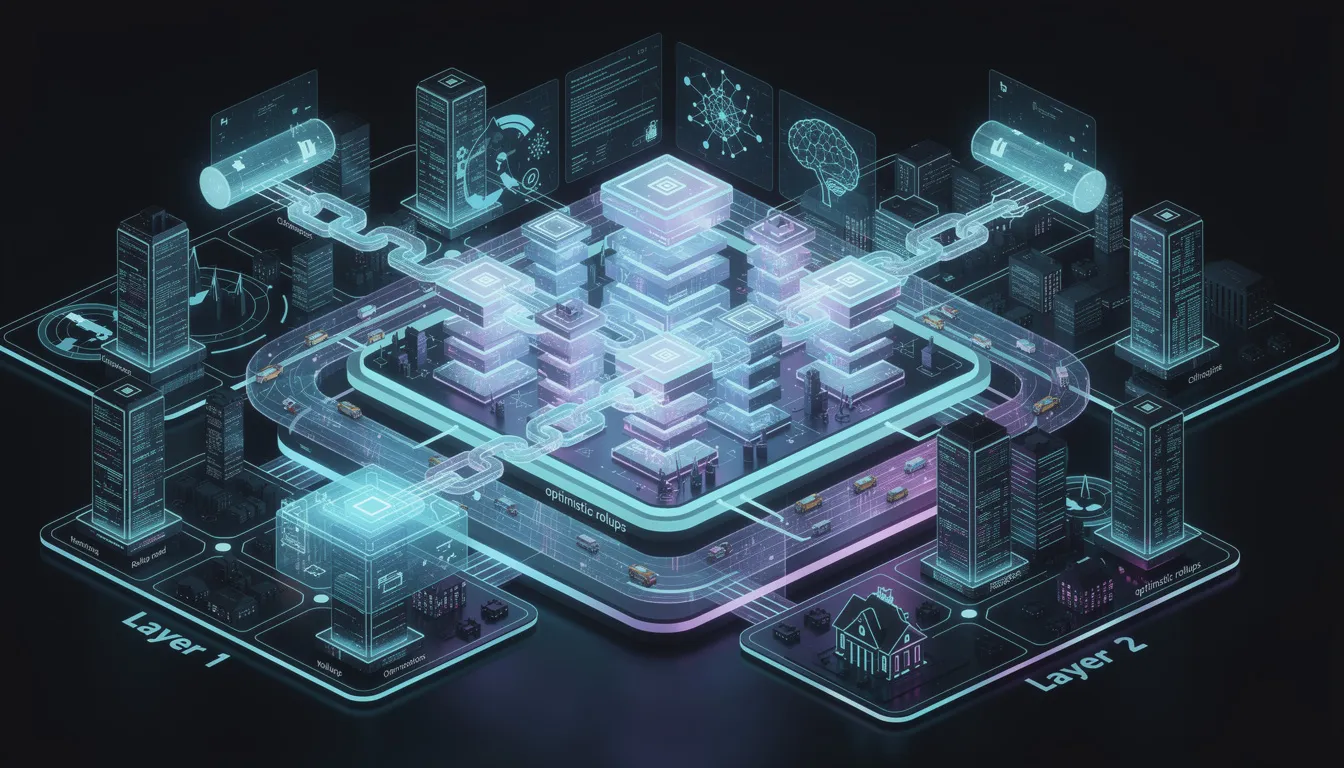
The ability to scale efficiently and deliver high performance is a defining feature of successful Layer 3 blockchain solutions. By leveraging techniques such as sharding, parallel processing, and optimized data storage, developers can significantly increase transaction speeds and throughput across multiple chains. Integrating Layer 2 solutions like optimistic rollups further enhances scalability, enabling faster and more cost-effective processing of transactions. Continuous improvement protocols, informed by emerging trends such as artificial intelligence and machine learning, ensure that Layer 3 networks remain agile and responsive to the evolving demands of enterprise solutions and institutional participation. This focus on scalability and performance positions Layer 3 solutions to support mass adoption and a diverse range of applications within the expanding blockchain ecosystem.
