

Introduction to Local LLMs
-
Local LLMs, or large language models, specifically refer to local AI models that are revolutionizing the AI world by enabling users to run AI models locally on their devices—a fundamental change from traditional cloud-based solutions. Running LLMs in offline mode allows users to operate without an internet connection, enhancing privacy and security.
-
This shift to local AI capabilities enables users to run LLMs locally, with the ease of running LLMs locally being a key benefit. It offers several compelling advantages, including complete data privacy, offline capability, and reduced dependence on cloud servers and internet connections.
-
Local LLMs are particularly useful for organizations that handle sensitive data and require full control over their AI workloads.
-
With the rise of accessible hardware, running LLMs locally is becoming increasingly feasible for non-technical users.
Benefits and Advantages
-
Local LLMs provide significant advantages over cloud-based models, including cost effectiveness, enhanced security, and low latency. Local LLMs also deliver cost savings compared to cloud-based models due to predictable expenses and reduced API fees.
-
By running AI models locally, users can ensure complete data privacy and avoid potential data leaks associated with third-party servers. Performing data processing locally further improves privacy and operational efficiency by eliminating reliance on external cloud services.
-
Local deployment also enables organizations to comply with regulatory requirements and data sovereignty laws. Platforms that support local models make deployment and management easier for organizations by providing user-friendly infrastructure and reducing technical barriers.
-
Additionally, local LLMs offer advanced features such as multimodal AI, multilingual capabilities, and fine-tuning options.
Technical Requirements
Running local LLMs requires careful consideration of hardware requirements, including sufficient hardware capabilities such as high-bandwidth memory and powerful processors.
The choice of hardware configurations depends on the model size and complexity, with larger models requiring more advanced hardware.
Some platforms, such as LM Studio, offer a graphical interface to simplify deployment for users, while others like Jan AI and command-line tools provide alternative ways to deploy and manage local LLMs.
Open-source models and unified memory architectures are also available for users who prefer more customization and control.
Model Development and Fine Tuning
-
Fine-tuning models is a crucial step in local LLM deployment, and the ability to fine tune models locally allows for greater customization and flexibility compared to cloud-based solutions, enabling users to adapt the models to their specific needs and applications.
-
Users can fine-tune their models using various techniques, including transfer learning and knowledge distillation.
-
Advanced models, such as those with multimodal capabilities, require more complex fine-tuning procedures.
-
The development of local LLMs is an active area of research, with new models and techniques being developed continuously.
Emerging Trends and Industry Applications
Local LLMs are being adopted across various industries, including regulated industries such as healthcare and finance. In sectors like retail, local LLMs can analyze customer data to enhance personalized recommendations while ensuring data security and compliance.
The use of local LLMs enables organizations to process sensitive data locally, reducing the risk of data breaches and ensuring compliance with regulatory requirements.
Emerging trends, such as the use of edge devices and advanced AI models, are expected to drive further adoption of local LLMs.
The integration of local LLMs with other AI technologies, such as computer vision and natural language processing, is also an area of ongoing research and development.
Cost-Effective Solutions
-
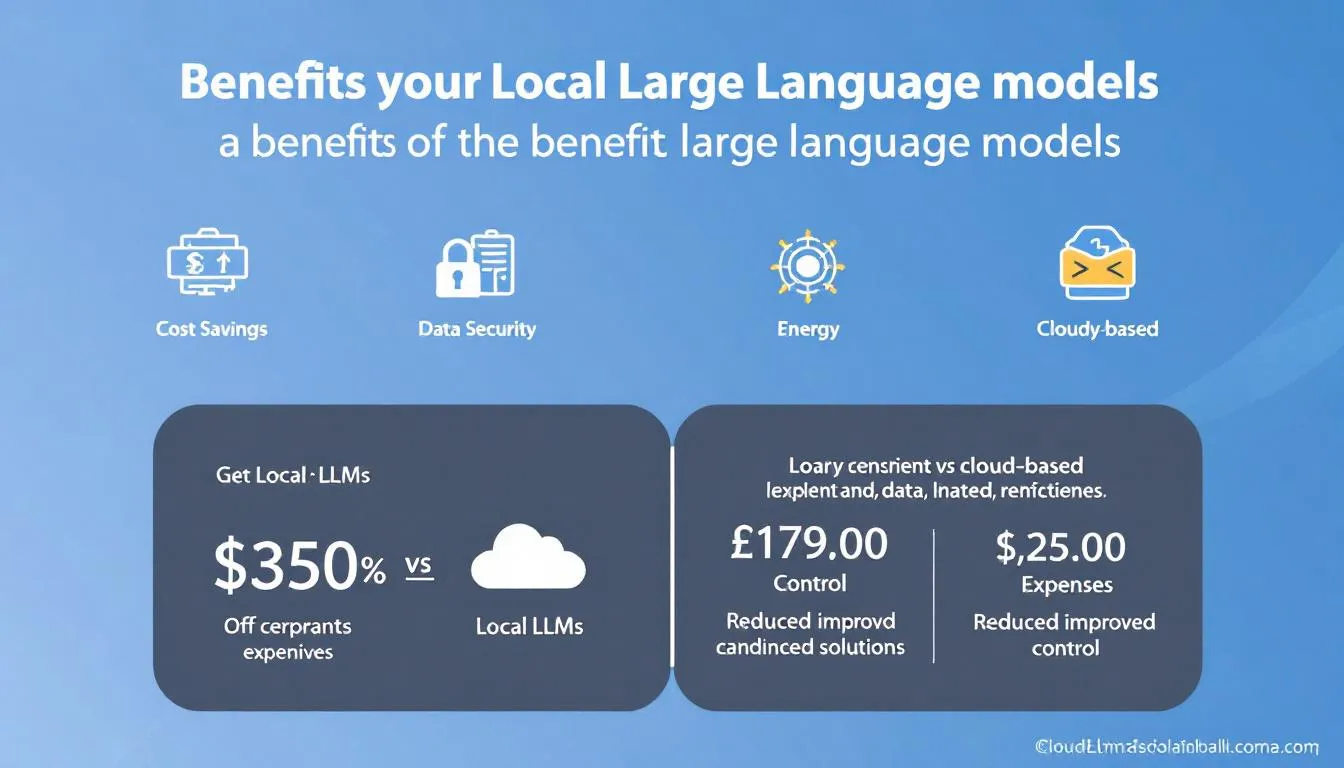
Local LLMs offer cost-effective solutions for organizations that require advanced AI capabilities but are constrained by budget or regulatory requirements.
-
By reducing the need for cloud-based services and third-party providers, local LLMs can help organizations save on costs and improve their bottom line.
-
Additionally, local LLMs can be more energy-efficient and environmentally friendly than traditional cloud-based solutions.
-
The use of open-source models and community-driven development can also help reduce costs and improve the accessibility of local LLMs.
Setup and Optimization
-
Setting up and optimizing local LLMs requires careful consideration of hardware and software configurations.
-
Users must ensure that their hardware meets the requirements of the model and that the software is properly configured for optimal performance.
-
The use of intuitive GUIs and command-line tools can simplify the setup and optimization process.
-
Regular maintenance and updates are also essential to ensure the continued performance and security of local LLMs.
Local LLM Deployment
Deploying local LLMs has rapidly gained traction in 2025, marking a fundamental change in how individuals and organizations approach artificial intelligence. By running large language models (LLMs) directly on personal devices or local servers, users unlock several compelling advantages over traditional cloud-based solutions. Chief among these is complete data privacy—since sensitive information never leaves your device, the risk of data leaks or unauthorized access is dramatically reduced.
Local AI capabilities have advanced significantly, with open-weight models like Llama 3 and Mixtral 8x7B now delivering strong performance even on accessible hardware configurations. This means that you no longer need a data center or expensive cloud infrastructure to harness the power of large language models. Fine-tuning models locally has also become more straightforward, allowing developers and organizations to adapt AI tools for specialized tasks such as code generation, data analysis, or even to explain quantum computing in plain language.
Platforms like LM Studio have made running AI locally more user-friendly, offering intuitive interfaces and streamlined workflows for both technical and non-technical users. Whether you’re a sustainability professional seeking to analyze environmental data or a business looking to automate customer support, local LLMs provide full control over your AI workloads, cost effectiveness, and the flexibility to customize models to your unique needs. As a result, local deployment of LLMs is quickly becoming the go-to solution for those seeking innovation, autonomy, and trust in the evolving AI world.
AI Development and Community
-
The development of local LLMs is a community-driven effort, with many researchers and developers contributing to the development of new models and techniques.
-
The use of open-source models and collaborative development platforms can help facilitate the development of local LLMs.
-
The AI community is actively engaged in discussing the benefits and challenges of local LLMs, and many online forums and resources are available for users who want to learn more.
-
The community-driven approach to local LLM development is expected to drive further innovation and adoption in the field.
Regulatory and Ethical Considerations
-
The use of local LLMs raises several regulatory and ethical considerations, including data privacy, security, and bias.
-
Organizations must ensure that their use of local LLMs complies with relevant laws and regulations, such as GDPR and CCPA.
-
The development of local LLMs must also prioritize transparency, explainability, and fairness to avoid perpetuating biases and discrimination.
-
The AI community is actively engaged in discussing these issues and developing guidelines and best practices for the responsible development and deployment of local LLMs.
Comparison of Local LLM Tools
-
Several local LLM tools are available, including LM Studio, Jan AI, and command-line tools.
-
Each tool has its strengths and weaknesses, and the choice of tool depends on the specific needs and requirements of the user.
-
Some tools, such as LM Studio, offer intuitive GUIs and user-friendly interfaces, while others, such as Jan AI, provide more advanced features and customization options.
-
The comparison of local LLM tools is an ongoing process, and new tools and platforms are being developed continuously.
Top Local LLM Models
-
Several top local LLM models are available, including open-weight models and large language models.
-
These models offer advanced capabilities, such as multimodal AI and multilingual support, and are suitable for a wide range of applications.
-
The choice of model depends on the specific needs and requirements of the user, including the type of application, the size of the dataset, and the level of customization required.
-
The development of new models and techniques is an active area of research, and new models are being released continuously.
Local LLM Ecosystem
-
The local LLM ecosystem is a complex and dynamic environment that includes a wide range of tools, platforms, and models.
-
The ecosystem is driven by the needs and requirements of users, and new tools and platforms are being developed continuously to meet these needs.
-
The local LLM ecosystem is expected to continue to evolve and grow, with new innovations and advancements being made regularly.
-
The ecosystem is also influenced by the broader AI landscape, including trends and developments in areas such as computer vision and natural language processing.
Balancing Privacy and Performance
-
Balancing privacy and performance is a key challenge in the development and deployment of local LLMs.
-
Users must ensure that their use of local LLMs prioritizes data privacy and security while also delivering advanced AI capabilities and performance.
-
The use of techniques such as differential privacy and federated learning can help balance privacy and performance.
-
The development of new models and techniques is also focused on addressing this challenge and delivering more private and performant local LLMs.
Technical Challenges and Solutions
-
Several technical challenges must be addressed in the development and deployment of local LLMs, including hardware limitations, software complexity, and data quality issues.
-
Solutions to these challenges include the use of advanced hardware, such as high-bandwidth memory and powerful processors, and software optimizations, such as model pruning and knowledge distillation.
-
The development of new models and techniques is also focused on addressing these challenges and delivering more efficient and effective local LLMs.
-
The use of collaborative development platforms and community-driven development can also help address technical challenges and drive innovation in the field.
Local LLM Maintenance and Updates
-
Local LLM maintenance and updates are essential to ensure the continued performance and security of these systems.
-
Users must regularly update their models and software to ensure that they have the latest features and security patches.
-
The use of automated update tools and collaborative development platforms can simplify the maintenance and update process.
-
Regular monitoring and testing are also essential to ensure that local LLMs are functioning correctly and delivering the expected performance.
Local LLM Security
-
Local LLM security is a critical consideration, as these systems can be vulnerable to cyber threats and data breaches.
-
Users must ensure that their local LLMs are properly secured, using techniques such as encryption and access controls.
-
The use of secure hardware and software configurations can also help to protect local LLMs from cyber threats.
-
Regular monitoring and testing are essential to ensure that local LLMs are secure and functioning correctly.
Local LLM Scalability
-
Local LLM scalability is an important consideration, as these systems must be able to handle large amounts of data and traffic.
-
Users must ensure that their local LLMs are properly scaled, using techniques such as distributed computing and load balancing.
-
The use of advanced hardware and software configurations can also help to improve the scalability of local LLMs.
-
Regular monitoring and testing are essential to ensure that local LLMs are scalable and functioning correctly.
Local LLM Integration
-
Local LLM integration is an important consideration, as these systems must be able to integrate with other AI technologies and systems.
-
Users must ensure that their local LLMs are properly integrated, using techniques such as APIs and data exchange protocols.
-
The use of collaborative development platforms and community-driven development can simplify the integration process.
-
Regular monitoring and testing are essential to ensure that local LLMs are integrated correctly and functioning as expected.
Local LLM Support and Resources
-
Local LLM support and resources are essential to ensure that users have the help and guidance they need to deploy and manage these systems.
-
Users can access a range of support and resources, including online forums, documentation, and community-driven development platforms.
-
The use of intuitive GUIs and command-line tools can also simplify the deployment and management process.
-
Regular monitoring and testing are essential to ensure that local LLMs are functioning correctly and delivering the expected performance.
Future of Local LLMs
Looking ahead, the future of local LLMs is bright and full of potential. As organizations recognize the value of local deployment, the demand for advanced models and robust hardware configurations is set to soar. No longer limited to cloud servers, AI workloads are increasingly being handled by personal devices and edge devices, thanks to rapid improvements in hardware capabilities and the efficiency of capable models.
One of the most exciting emerging trends is the growing importance of offline capability. With local LLMs, users can perform complex AI tasks without relying on an internet connection, ensuring uninterrupted access to artificial intelligence even in remote or regulated environments. This shift is particularly significant for industries where data sovereignty and regulatory compliance are paramount.
Advancements in unified memory and high-bandwidth memory are further enhancing the performance of local LLMs, making it possible to run larger, more sophisticated models locally. As hardware becomes more accessible and models more efficient, local LLMs will offer a cost-effective, secure, and scalable alternative to cloud-based solutions.
In the evolving AI landscape, local LLMs are poised to play a pivotal role—empowering individuals and organizations to innovate sustainably, protect sensitive data, and reduce reliance on external servers. As artificial intelligence continues to advance, local deployment will remain at the forefront, driving a new era of autonomy, efficiency, and responsible AI development.
