
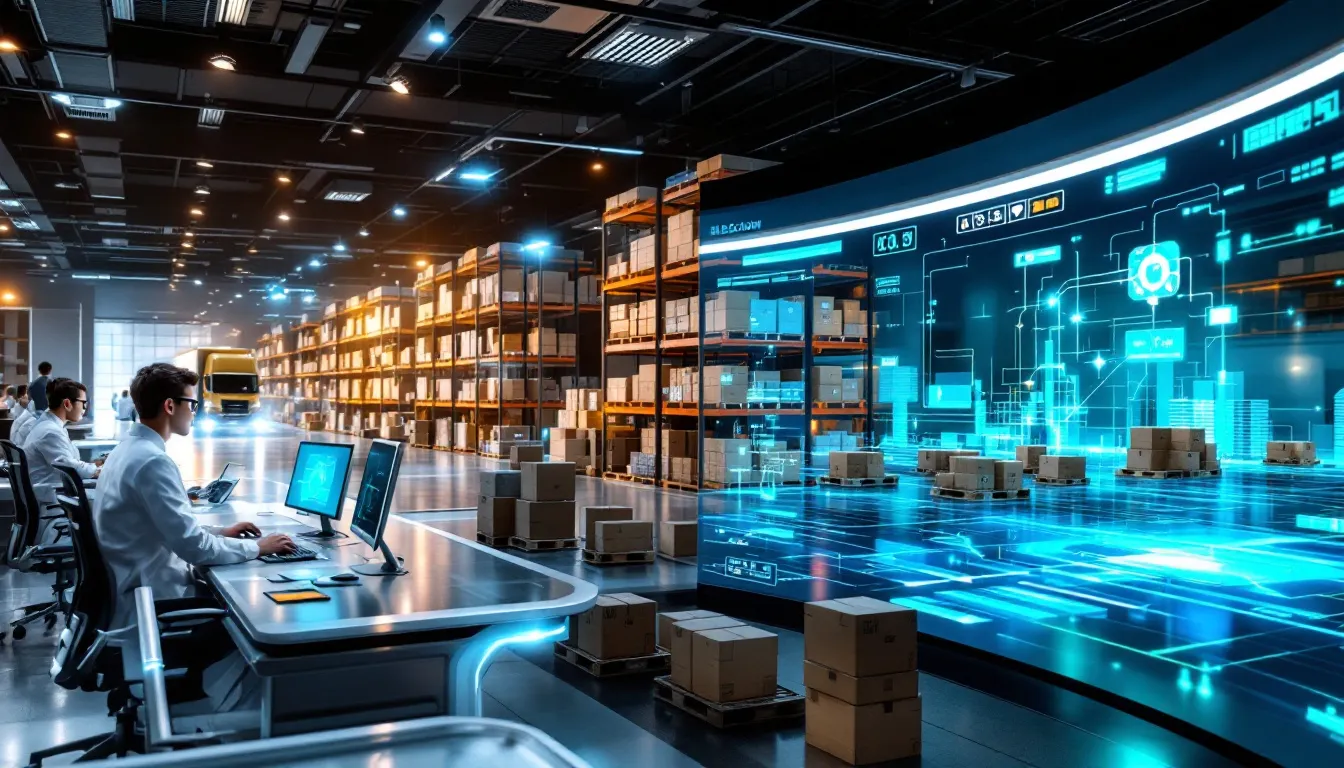
Introduction to Supply Chain Management
In today’s hyper-connected world, supply chain management is the backbone of any business striving for operational efficiency and competitiveness. It encompasses all activities involved in the sourcing of raw materials, production, and final distribution of products. The complexity of global supply chains, combined with rising customer expectations, fluctuating demand, and geopolitical uncertainties, has made it essential for organizations to adopt innovative tools to manage and optimize operations.
One such transformative tool is artificial intelligence (AI). The rise of AI in supply chain operations is enabling businesses to make faster, smarter decisions using real-time data and predictive analytics. From demand forecasting to supplier risk management, AI technologies are helping supply chain professionals gain end-to-end visibility, reduce operational costs, and increase responsiveness across their networks.
Benefits of AI in Supply Chain Operations
The integration of AI systems into modern supply chain operations unlocks a wide range of benefits that go beyond basic automation. Leveraging AI empowers companies to:
-
Analyze vast amounts of data (including historical data, market trends, and sales forecasts) to drive strategic decision-making.
-
Improve inventory planning by minimizing excess inventory and reducing inventory costs.
-
Optimize operations by identifying inefficiencies and bottlenecks.
-
Increase agility and responsiveness to external factors such as weather patterns, political instability, and supply shortages.
-
Enhance supply chain visibility, enabling better coordination with supply chain partners.
A 2023 study by McKinsey & Company found that organizations using AI in their supply chains reported a 15% reduction in logistics costs, a 35% improvement in inventory levels, and up to a 65% increase in service levels.
Challenges in Implementing AI
Despite its advantages, implementing AI in supply chain settings presents several challenges:
-
Data Quality: Effective AI systems rely on accurate, clean, and consistent data. Poor data quality undermines model accuracy.
-
Integration with Legacy Systems: Many businesses still operate on outdated ERP platforms, making integrating AI difficult without significant upgrades.
-
Talent Gap: Implementing AI requires skills in data science, machine learning, and supply chain planning—areas where there is a global shortage of professionals.
-
Organizational Change Resistance: Transitioning from traditional business models to AI-driven systems may face pushback from employees accustomed to manual processes.
-
Ethical and Security Concerns: Companies must also consider AI bias, privacy issues, and cybersecurity risks.
For more on overcoming these obstacles, read our guide on AI implementation strategies for supply chains.
Supply Chain Optimization with AI
AI plays a pivotal role in supply chain optimization by identifying inefficiencies and making data-driven recommendations that improve outcomes.
Key Optimization Capabilities:
-
Forecast demand using AI algorithms that incorporate variables like seasonality, customer demands, and promotional activities.
-
Identify optimal inventory levels using real-time analytics and pattern recognition.
-
Analyze data to locate excess stock, underperforming routes, or unreliable vendors.
-
Improve supply chain planning by simulating future scenarios and adjusting plans dynamically.
Case Study: Amazon
Amazon’s AI-driven forecasting tools help the company maintain optimal inventory across its network of fulfillment centers. This capability was instrumental during the COVID-19 pandemic, helping the retail giant mitigate supply chain disruptions.
Intelligent Transportation and Logistics
Transportation and logistics operations are critical components of the supply chain, and AI is revolutionizing how goods move from origin to destination.
AI-Driven Logistics Innovations:
-
Route optimization using real-time traffic data, fuel costs, and weather conditions.
-
Warehouse management systems that automate storage, picking, and packing using robotics and computer vision.
-
Logistics AI tools that predict potential disruptions such as strikes, natural disasters, or political events.
-
Predictive maintenance of delivery fleets to prevent breakdowns and reduce downtime.
The use of AI capabilities in logistics not only lowers operating costs but also enhances customer satisfaction through faster and more reliable delivery services.
Explore our full logistics optimization case study.
Supplier Risk Management

AI tools are instrumental in helping supply chain managers assess and mitigate risks associated with suppliers. AI can:
-
Monitor supplier performance across quality, timeliness, cost, and compliance.
-
Analyze supplier data from financial reports, news sources, and social media to uncover reputational risks.
-
Identify potential risks such as single-source dependencies or suppliers located in geopolitically unstable regions.
Companies can then diversify sourcing, build strategic buffers, and enhance collaboration with supply chain partners to increase resilience.
Best Practices for AI Implementation
To fully unlock the benefits of AI in supply chain operations, businesses should follow structured implementation practices:
-
Define Clear Objectives: Align AI initiatives with business goals (e.g., reducing costs, improving accuracy, speeding delivery).
-
Build High-Quality Data Sets: Invest in cleaning and enriching inventory data, supplier data, and sales forecasts.
-
Start Small, Scale Fast: Begin with pilot projects and expand upon successful results.
-
Train Supply Chain Planners: Equip teams with AI literacy, including data interpretation and model feedback.
-
Monitor and Evaluate: Regularly test system performance and recalibrate AI models as needed.
The Future of Supply Chains
The future of supply chains lies in digital transformation and AI integration. Over the next decade, we will see more companies adopting:
-
Machine learning for autonomous decision-making.
-
Natural language processing for voice-enabled supply chain assistants.
-
Blockchain for transparent and tamper-proof transactions.
-
IoT-based sensors for enhanced visibility into inventory and shipment conditions.
According to Gartner, by 2030, over 75% of companies will have moved from reactive to predictive supply chain planning powered by AI.
End-to-End Visibility
AI is enabling end-to-end visibility by aggregating real-time data from across the value chain. This allows businesses to:
-
Track goods from procurement to delivery.
-
Monitor inventory in real time using RFID, GPS, and sensor data.
-
Identify delays or supply disruptions before they impact production.
-
Improve coordination with supply chain partners.
Such transparency enhances agility and responsiveness, helping companies avoid stockouts, reduce lead times, and improve service levels.
Logistics Optimization
With rising shipping costs and volatile global trade routes, logistics optimization has never been more important. AI can:
-
Determine the most efficient route for deliveries.
-
Optimize mode selection (air, sea, rail, road) for speed and cost.
-
Adapt plans in response to external factors like fuel prices or import/export restrictions.
AI algorithms ensure supply chain organizations can keep pace with market shifts, manage risk, and respond to disruptions in real time.
Change Management and Monitoring
Continuous change management is critical to sustaining successful AI implementation. This involves:
-
Monitoring AI tools for accuracy, fairness, and reliability.
-
Addressing employee concerns around job security and reskilling.
-
Creating feedback loops for AI improvement.
-
Ensuring compliance with regulations and ethical AI standards.
Supply chains are living ecosystems, and AI systems must evolve with them. Regular performance evaluations, user training, and stakeholder engagement ensure long-term success.
Conclusion

AI-driven supply chain optimization and logistics represent the next frontier in business efficiency and resilience. With powerful tools for analyzing data, forecasting demand, managing risks, and optimizing logistics, AI is redefining the possibilities for modern supply chain management.
As companies progress along their digital transformation journey, those that strategically invest in AI and embrace innovation will gain significant competitive advantages. The future of supply chain planning is intelligent, connected, and adaptive.
Related Resources
Internal Links
-
Learn more about our AI supply chain solutions
-
Explore our insights on digital transformation in supply chains
-
Read our guide on managing supplier risks with AI

Your article helped me a lot, is there any more related content? Thanks! https://www.binance.info/ar-BH/register?ref=V2H9AFPY