
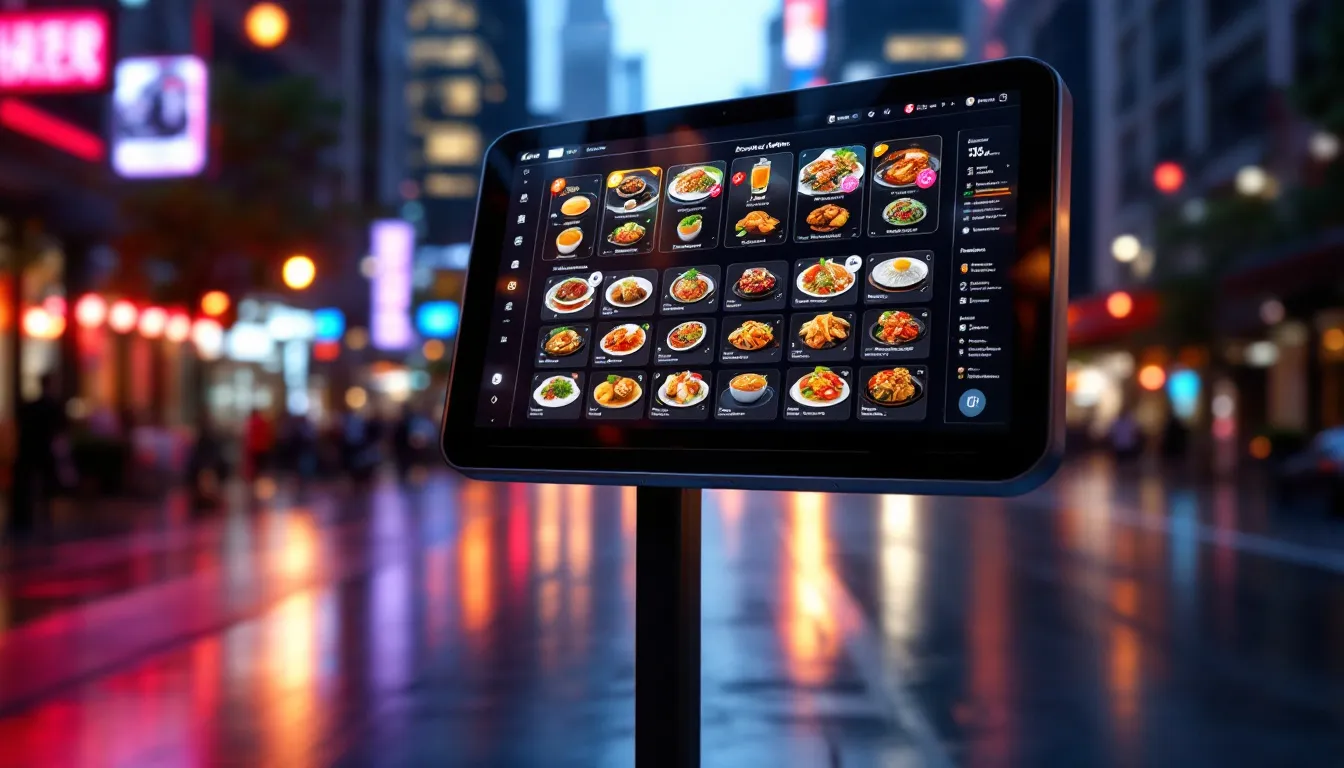
The food delivery industry has seen rapid growth over the last decade, with platforms like Uber Eats, DoorDash, and Grubhub transforming how we order and enjoy meals from our favorite restaurants. As this market continues to expand, artificial intelligence (AI) is playing an increasingly critical role in enhancing operational efficiency, optimizing delivery routes, personalizing customer experiences, and ensuring better customer satisfaction. By leveraging AI technologies such as machine learning algorithms, natural language processing, and predictive analytics, the food delivery sector is becoming more efficient and customer-centric, with numerous benefits for both food delivery businesses and customers alike.
In this blog post, we will explore how AI for food delivery is changing the landscape of the industry, its key applications, and its potential to drive sustainability, efficiency, and innovation.
How AI is Transforming the Food Delivery Industry
1. Optimizing Delivery Routes
One of the most important ways AI in food delivery is making a difference is by optimizing delivery routes. Delivery drivers face the challenge of navigating busy urban areas, dealing with traffic patterns, and ensuring that food arrives on time while maintaining food quality. AI helps streamline this process by analyzing real-time traffic data and historical delivery information to determine the most efficient routes.
-
Real-time traffic analysis: AI can predict traffic patterns and adjust delivery routes accordingly to avoid congestion or delays. This ensures faster deliveries and reduces fuel consumption, contributing to eco-friendly practices.
-
Delivery optimization: Machine learning algorithms can calculate the optimal route for each delivery driver, considering factors like weather conditions, road closures, and traffic incidents. The result is more timely deliveries and improved operational efficiency.
Example: Uber Eats uses AI-powered algorithms to calculate the fastest and most efficient delivery routes for drivers. By analyzing traffic patterns and historical data, Uber Eats can predict the optimal delivery time, ensuring that customers receive their orders on time.
2. Enhancing Customer Experience with Personalization
Personalization is key to driving customer satisfaction in the food delivery sector. By analyzing user behavior, past orders, and browsing history, AI-powered systems can provide tailored recommendations that match dietary preferences, taste profiles, and food restrictions.
-
Personalized menu recommendations: AI can use machine learning algorithms to suggest dishes based on a customer’s previous orders, dietary restrictions, and preferences. For example, if a customer often orders vegan dishes, the app can suggest new vegan options they might like.
-
Customer preferences analysis: By analyzing customer data, AI can identify trends and patterns in user behavior. This helps food delivery apps offer customized promotions and special offers, making the overall user experience more engaging and relevant.
Example: DoorDash uses AI to analyze customer data, suggesting personalized dishes or meals based on dietary preferences, previous orders, and current trends. This not only improves customer satisfaction but also boosts customer loyalty and retention.
3. Improving Delivery Times with Predictive Analytics
AI for food delivery also plays a crucial role in predicting delivery times. By analyzing factors such as historical data, current order volumes, traffic conditions, and restaurant preparation times, AI can provide more accurate delivery time estimates, reducing customer frustration and improving expectations.
-
Predictive analytics for demand forecasting: AI systems can forecast peak times, helping food delivery businesses manage demand more efficiently. This allows them to assign more drivers to busy areas, reducing wait times during high-demand periods such as lunch or dinner rush hours.
-
Dynamic pricing: AI can adjust pricing based on delivery times and order volumes, ensuring that the price reflects the current demand and operational costs. This ensures more balanced demand and supply, reducing delivery delays.
Example: Grubhub uses AI-driven predictive analytics to forecast order volumes and adjust delivery staffing accordingly. This allows them to provide more accurate delivery time estimates, leading to better customer satisfaction.
4. Reducing Food Waste
In the food delivery industry, food waste is a significant issue, with restaurants often preparing too much food or having leftovers that cannot be reused. AI for food delivery can help address this challenge by improving inventory management and demand forecasting.
-
Demand forecasting: AI can predict demand more accurately, helping restaurants and food delivery platforms prepare the right amount of food. By analyzing historical data and customer behavior, AI can help restaurants avoid overstocking ingredients, reducing both food waste and operational costs.
-
Inventory optimization: AI-driven systems can help restaurants manage their inventory more efficiently by tracking stock levels and ensuring that ingredients are used before they expire. This helps reduce waste and supports sustainable practices in food preparation.
Example: Uber Eats has collaborated with restaurants to implement AI-powered inventory management systems that optimize ingredient use based on predicted demand, reducing the likelihood of excess food being prepared.
5. Integrating AI with Autonomous Delivery Vehicles
As the food delivery industry evolves, autonomous delivery vehicles (ADVs) are becoming an increasingly important part of the equation. These vehicles use AI-powered systems to navigate traffic, avoid obstacles, and deliver food autonomously, contributing to more efficient delivery logistics.
-
Last-mile delivery: AI in autonomous vehicles can help food delivery companies reduce delivery times, minimize traffic congestion, and lower costs associated with human drivers. Autonomous delivery vehicles can navigate traffic more efficiently, ensuring faster and more reliable delivery.
-
Food safety: Autonomous vehicles equipped with AI sensors can monitor food safety conditions during the delivery process, ensuring that food remains at the correct temperature and preventing contamination.
Example: Postmates, a part of Uber Eats, has tested autonomous delivery robots that use AI technology to navigate sidewalks and make deliveries in urban areas. These robots are designed to optimize delivery routes and enhance efficiency in last-mile delivery.
6. AI-Powered Virtual Assistants for Customer Service
AI-powered virtual assistants are becoming an essential tool for improving customer service in the food delivery industry. These systems can handle customer inquiries, resolve issues, and provide instant assistance, improving overall customer experience.
-
24/7 support: AI-powered chatbots and virtual assistants can provide round-the-clock support for customers, answering questions about order status, delivery times, and payment issues. This reduces the need for human customer service agents and speeds up response times.
-
Handling customer queries: AI can be used to efficiently resolve common queries, such as helping customers track their orders, modify delivery details, or handle complaints. This improves the overall customer satisfaction and creates a seamless user experience.
Example: Domino’s Pizza has integrated an AI-powered virtual assistant named Dom that helps customers place orders, track deliveries, and answer questions. This improves customer engagement and provides a more personalized service.
The Future of AI in Food Delivery: Emerging Trends
The future of AI for food delivery looks bright, with new technologies and innovations continuing to shape the industry. Below are some of the emerging trends that will likely drive the next wave of AI-driven solutions in food delivery.
1. AI-Driven Sustainability Initiatives
As consumers become more environmentally conscious, food delivery businesses are leveraging AI technologies to implement sustainability initiatives. These initiatives include eco-friendly packaging options, reducing carbon footprints, and minimizing food waste.
-
Eco-friendly packaging: AI can help food delivery platforms identify and implement sustainable packaging options that reduce waste and improve environmental impact. By analyzing consumer preferences and vendor capabilities, AI can promote packaging solutions that align with sustainability goals.
-
Green logistics: AI can optimize delivery routes to reduce fuel consumption and improve environmental sustainability. By minimizing unnecessary travel and promoting electric vehicles for deliveries, AI can help reduce the environmental impact of food delivery services.
2. AI in Predictive Order Analytics
AI will play an increasingly important role in predictive order analytics, helping businesses forecast demand at an even more granular level. By considering weather conditions, special events, public holidays, and other external factors, AI systems will be able to predict food delivery demand with high accuracy.
-
Dynamic pricing: AI will enable more refined dynamic pricing models, adjusting prices based on predicted demand and supply conditions. This ensures fair pricing for customers while helping food delivery businesses optimize their revenue.
3. Continued Integration with Autonomous Delivery Solutions
The use of autonomous delivery vehicles and drones will continue to grow, with AI technologies at the core of these innovations. Autonomous delivery vehicles will be able to use real-time data to navigate, avoid obstacles, and deliver food in a more efficient and environmentally friendly manner.
Example: In California, a food delivery company has partnered with self-driving car manufacturers to deliver meals via autonomous vehicles. By integrating AI into the autonomous delivery process, the company aims to reduce delivery times, enhance safety, and lower operational costs.
Addressing Challenges with AI in Food Delivery
While the integration of AI for food delivery brings many advantages, it also presents certain challenges that need to be addressed for the systems to work effectively and equitably. These challenges involve technology, customer experience, and operational hurdles that may hinder the widespread adoption of AI-driven solutions in the food delivery industry. Let’s explore some of these key challenges and how businesses are addressing them.
1. Data Privacy and Security
Given that AI in food delivery often involves the collection and analysis of personal customer data, such as preferences, past orders, and location data, there are inherent concerns regarding data privacy and security. Ensuring that customers’ personal information remains protected is paramount, especially as data breaches and cybersecurity threats are becoming increasingly common.
-
Ensuring customer trust: Food delivery businesses need to implement robust security measures to protect customer data. This includes encrypting sensitive data and ensuring compliance with privacy regulations like GDPR (General Data Protection Regulation) or CCPA (California Consumer Privacy Act).
-
Transparency in data usage: Being transparent about how customer data is used for AI-driven services will help build trust with users. Providing users with the option to control their data preferences, such as opting out of targeted recommendations or tracking their location, can enhance confidence in the service.
Example: DoorDash provides users with clear information about how their data is used, including the use of personal information for AI-powered recommendations and delivery optimizations. It also offers privacy settings that let users control how much data is shared.
2. AI Bias and Personalization Issues
While AI has the potential to personalize food delivery recommendations based on customer behavior, there is a risk of bias in AI algorithms. If the AI systems used in food delivery apps are trained on biased data or only consider a narrow set of preferences, it could lead to unfair recommendations or exclusions of certain groups.
-
Bias in algorithms: If the AI models are not properly trained or tested for diversity, they may perpetuate stereotypes or fail to suggest options outside a user’s previous choices. For example, a system might only recommend fast food options based on prior orders, ignoring healthier or more diverse food choices.
-
Diversity in recommendations: To combat this, businesses should focus on creating more inclusive and diversified data sets for training AI algorithms. AI should be programmed to recommend food choices based on a broad spectrum of customer preferences, including dietary needs and new, healthier choices.
Example: Uber Eats is constantly working on refining its AI systems to provide more diverse meal recommendations. By considering dietary preferences like vegetarian, vegan, or gluten-free, Uber Eats aims to create a more inclusive experience for all customers.
3. Operational Complexity and Infrastructure
Implementing AI-powered delivery solutions often requires a high level of operational coordination and sophisticated infrastructure. This can be a major challenge, especially for small or emerging businesses that may not have the resources to implement such advanced technologies.
-
Integration with existing systems: To effectively implement AI, food delivery apps need to integrate new AI technologies with their existing logistics, customer service, and payment systems. This process can be complex and require significant investment in both hardware (e.g., smart sensors, cameras) and software (e.g., machine learning models, predictive analytics).
-
High implementation costs: The costs associated with AI integration can be a barrier for small businesses, especially in terms of initial capital investment and ongoing operational costs related to maintaining and updating AI systems.
Example: Domino’s Pizza has invested heavily in AI and robotics for delivery automation. Their AI-powered chatbots and delivery systems require substantial infrastructure, including integration with order management systems and delivery fleet operations to function smoothly.
4. Human Dependency and Job Displacement
As AI-powered systems become more sophisticated, there are concerns about job displacement, particularly for delivery drivers. While AI can optimize delivery routes and reduce operational costs, it could also reduce the demand for human drivers, leading to potential unemployment or the need for workers to retrain in new areas.
-
Autonomous delivery vehicles: With the rise of self-driving cars and robots for food delivery, there may be fewer job opportunities for traditional delivery drivers. This is a significant concern, especially in regions where gig economy workers depend on these jobs for their livelihood.
-
Job creation and transformation: Although autonomous delivery systems may reduce the need for human drivers, they also create opportunities for new roles in AI system management, robotics maintenance, and delivery logistics optimization. There is an opportunity for businesses to retrain workers and provide new roles in the evolving food delivery ecosystem.
Example: Postmates has already experimented with autonomous delivery robots to reduce reliance on human drivers. However, the company continues to explore ways to create new jobs in AI system monitoring and robotics maintenance.
The Future of AI in Food Delivery: Innovations on the Horizon
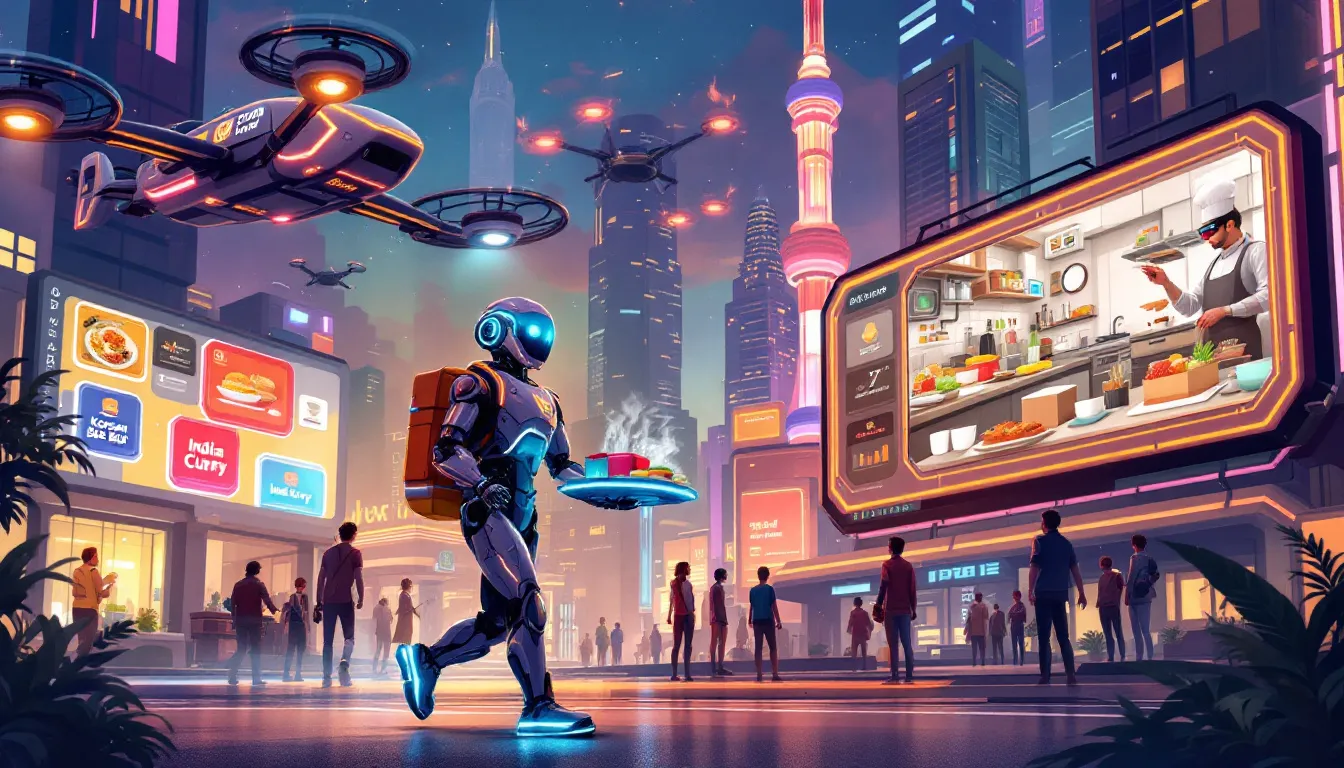
Looking forward, AI will continue to drive the evolution of food delivery services. Below are some innovative trends and technological advancements that will likely shape the future of AI for food delivery.
1. AI and Sustainability: Green Delivery Systems
The push for eco-friendly and sustainable practices in the food delivery industry is accelerating. As consumers become more conscious of the environmental impact of their purchases, businesses are integrating AI technologies to create more sustainable food delivery systems.
-
Electric delivery vehicles: AI-powered systems can help businesses optimize the use of electric vehicles (EVs) in food delivery. EVs produce fewer emissions compared to conventional gasoline-powered delivery trucks and are an environmentally friendly option for reducing carbon footprints.
-
AI-driven sustainability: AI can help businesses reduce food waste, optimize delivery logistics, and even recommend sustainable packaging options, such as recyclable or biodegradable materials, to customers.
Example: Uber Eats has begun using electric bikes and electric cars for deliveries in certain regions. These environmentally friendly delivery options reduce the environmental impact of each order and align with the company’s sustainability goals.
2. AI-Powered Autonomous Drones for Delivery
Another promising development in AI for food delivery is the use of autonomous drones for last-mile delivery. These drones can be equipped with AI systems to navigate through urban environments, avoiding obstacles, and delivering food directly to customers’ doors. This development has the potential to further reduce delivery times and costs while improving the efficiency of the overall delivery process.
-
Drone delivery logistics: AI can help drones calculate the fastest route, avoid congestion, and even determine the optimal time to make deliveries based on weather conditions and traffic patterns.
-
Food safety: Drones equipped with AI sensors can also ensure that the food stays at the right temperature and remains safe for consumption during the delivery process.
Example: Wing, a subsidiary of Alphabet, is conducting trials of autonomous drone deliveries in select cities. The drones use AI systems to navigate complex environments and deliver food within minutes, significantly reducing delivery time.
3. AI-Powered Voice Ordering
The rise of virtual assistants like Siri, Alexa, and Google Assistant has led to the development of AI-powered voice ordering systems for food delivery. These systems enable users to place orders and track deliveries simply by speaking to their devices.
-
Voice-based interaction: AI will allow customers to place orders, customize meals, and track deliveries using natural language processing (NLP). This makes the ordering process more accessible and convenient, especially for customers who prefer voice commands over traditional typing.
-
Enhanced personalization: As AI systems learn from users’ voice commands and ordering habits, they will become more personalized and capable of suggesting meals based on previous orders, dietary preferences, and taste profiles.
Example: Domino’s has partnered with Amazon Alexa to offer customers the ability to place pizza orders via voice command. This is just one example of how AI in food delivery is streamlining the ordering process and improving user experience.
4. AI-Powered Chatbots for Customer Service
The role of AI-powered chatbots in customer service continues to grow. These intelligent assistants can handle a wide range of customer queries, from tracking orders to offering assistance with payment issues, ensuring a smoother customer experience.
-
Faster response times: AI-powered chatbots can answer customer questions instantly, significantly reducing the time customers spend waiting for responses.
-
24/7 availability: With AI-powered virtual assistants, food delivery services can provide 24/7 support, allowing customers to get help whenever they need it.
Example: Pizza Hut uses an AI-powered chatbot to help customers place orders, track deliveries, and handle common queries. This improves the user experience by providing immediate assistance and reducing wait times for customers.
Conclusion: The Impact of AI on the Future of Food Delivery
The use of AI for food delivery is transforming the industry, creating more efficient, personalized, and sustainable delivery solutions. From optimizing delivery routes and improving customer satisfaction to reducing food waste and enhancing operational efficiency, AI is playing a critical role in shaping the future of food delivery.
As AI technologies continue to evolve, we can expect even more innovative solutions to emerge, offering consumers faster, smarter, and more eco-friendly delivery services. The integration of AI will not only enhance user experiences but also drive sustainability in the food delivery sector, making it more efficient and environmentally responsible. AI in food delivery is paving the way for a smarter, more efficient future in the food service industry.

Can you be more specific about the content of your article? After reading it, I still have some doubts. Hope you can help me.
Thanks for sharing. I read many of your blog posts, cool, your blog is very good.