
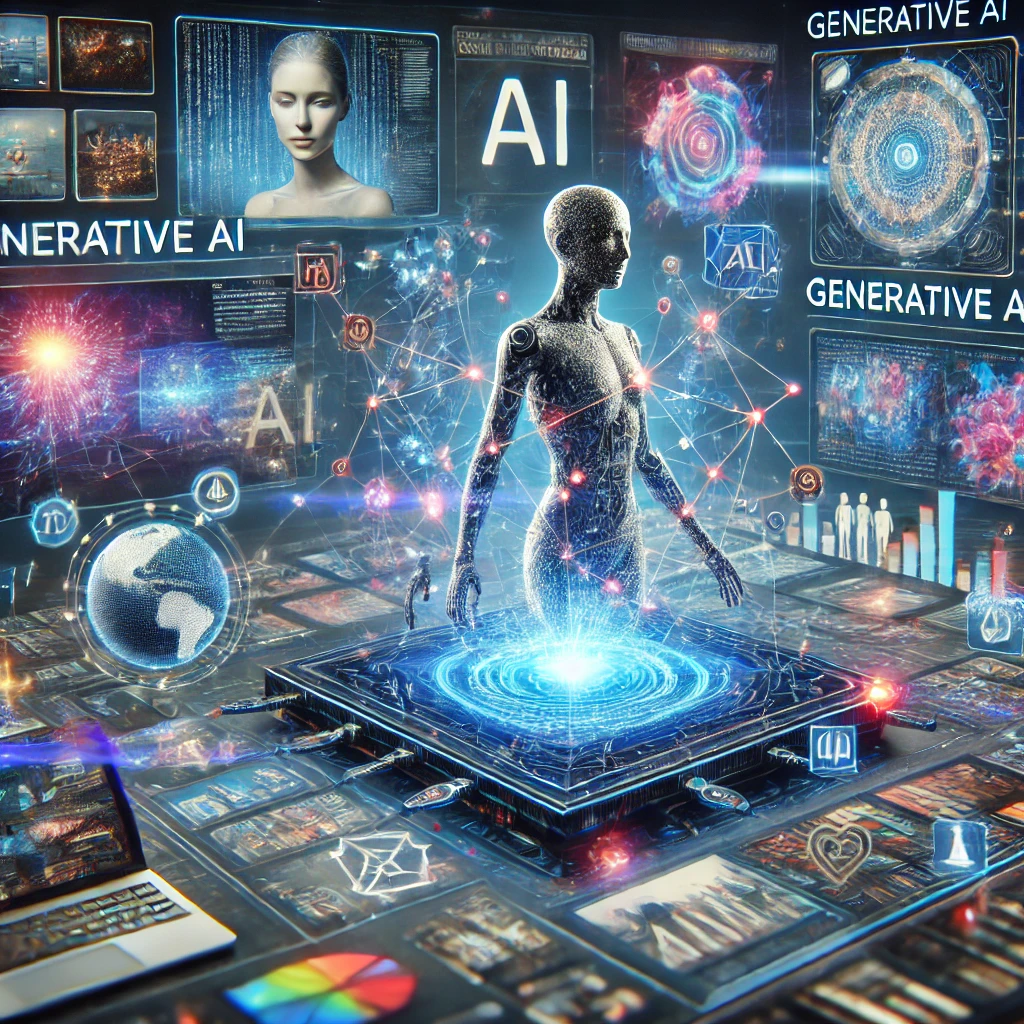
The transformative power of Artificial Intelligence (AI) has never been more evident as the AI revolution reshapes industries and AI technologies enhance productivity across sectors. In 2024, key AI trends are set to redefine the boundaries of technology and business. Emerging innovations in Generative AI, democratized AI tools, AI-human collaboration, and more are driving the widespread adoption and adaptation of AI in business, creating both immense opportunities and challenges.
Table of Contents
1. Generative AI
Generative AI, which involves algorithms that can create content such as text, images, and videos, has gained significant traction. AI-generated content is enhancing quality and reliability through advanced techniques like Retrieval-Augmented Generation (RAG). Powered by advances in neural networks and multimodal AI, Generative AI models are now able to produce remarkably lifelike and personalized content. This innovation is revolutionizing sectors like marketing, entertainment, and education by enabling unique customer experiences and streamlined content production.
While these tools are becoming indispensable, concerns about AI bias, authenticity, and intellectual property ownership are prevalent. The importance of Responsible AI practices, AI governance, and robust AI policies are critical in mitigating the risks associated with Generative AI.
2. AI Democratization
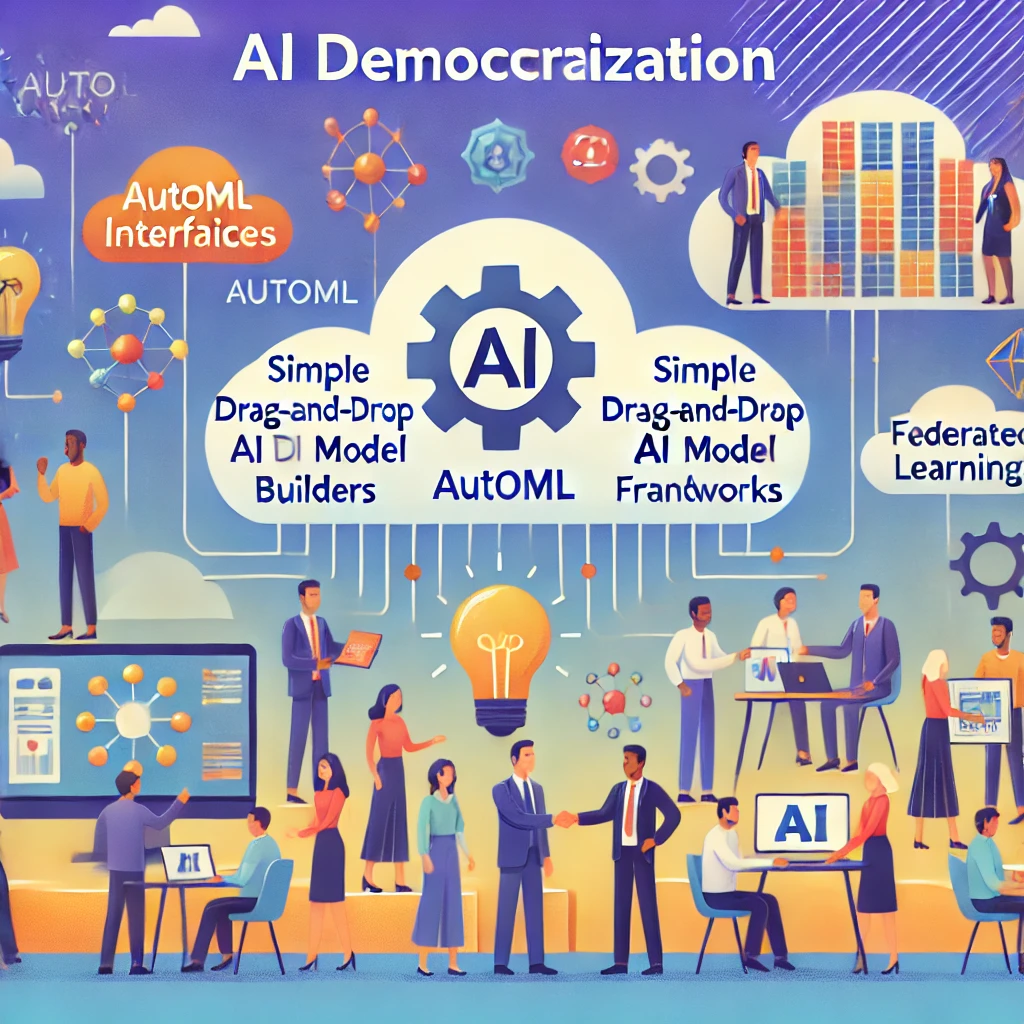
The democratization of AI is bridging the gap between technical and non-technical users. AutoML (Automated Machine Learning), federated learning, and MLOps (Machine Learning Operations) are making AI more accessible, allowing businesses and individuals to create and deploy AI models without specialized expertise. AI democratization is fostering innovation by empowering more people to solve real-world problems using AI-driven solutions.
However, as AI becomes accessible to a wider audience, there is an increased need for regulatory frameworks to ensure ethical AI practices, data security, and transparency. The growing need for AI ethics and responsible AI practices is urging businesses to adopt strict AI policies and improve AI governance.
3. Advanced AI Systems
AI systems are evolving rapidly, integrating multiple AI models, from Large Language Models (LLMs) to computer vision, to create versatile and powerful solutions. Modifying existing AI models can help build customizable generative AI systems, offering a cost-effective alternative to creating new models. In industries like healthcare, finance, and transportation, AI systems are revolutionizing operations by automating tasks, enhancing data analysis, and enabling predictive insights. These systems are also leading to innovations in reinforcement learning, AI optimization, and AI scalability, ensuring AI can operate in various environments.
With increased sophistication, AI systems face scrutiny over transparency, accountability, and AI alignment to ensure they align with human values and ethical standards. Organizations are prioritizing explainable AI (XAI) and robust lifecycle management to enhance accountability and minimize AI bias.
4. Workplace AI

AI is reshaping the workplace by automating repetitive tasks through robotic process automation (RPA), which boosts productivity and efficiency. The rise of shadow AI, where employees use AI tools without IT department oversight, is leading to potential security and compliance risks. The introduction of AI assistants, AI-powered personalization, and zero-shot learning technologies is enabling faster adaptation to new tasks, enhancing employee productivity.
However, workplace AI raises ethical concerns about job displacement and the need for upskilling the workforce. Businesses must address these challenges by providing reskilling opportunities and fostering AI-human collaboration to ensure that AI augments rather than replaces human roles.
5. AI Ethics and Regulation
With AI’s expansion, ethical considerations around AI transparency, accountability, and fairness are becoming paramount. AI regulation is evolving to address issues of bias, privacy, and human rights, ensuring responsible AI deployment. Explainable AI, AI interpretability, and AI governance frameworks are essential for fostering trust and mitigating risks associated with AI applications.
As governments and organizations work towards creating robust policies, responsible AI practices will play a significant role in establishing a safe AI ecosystem, enabling sustainable AI development while minimizing societal risks.
6. AI in Industries
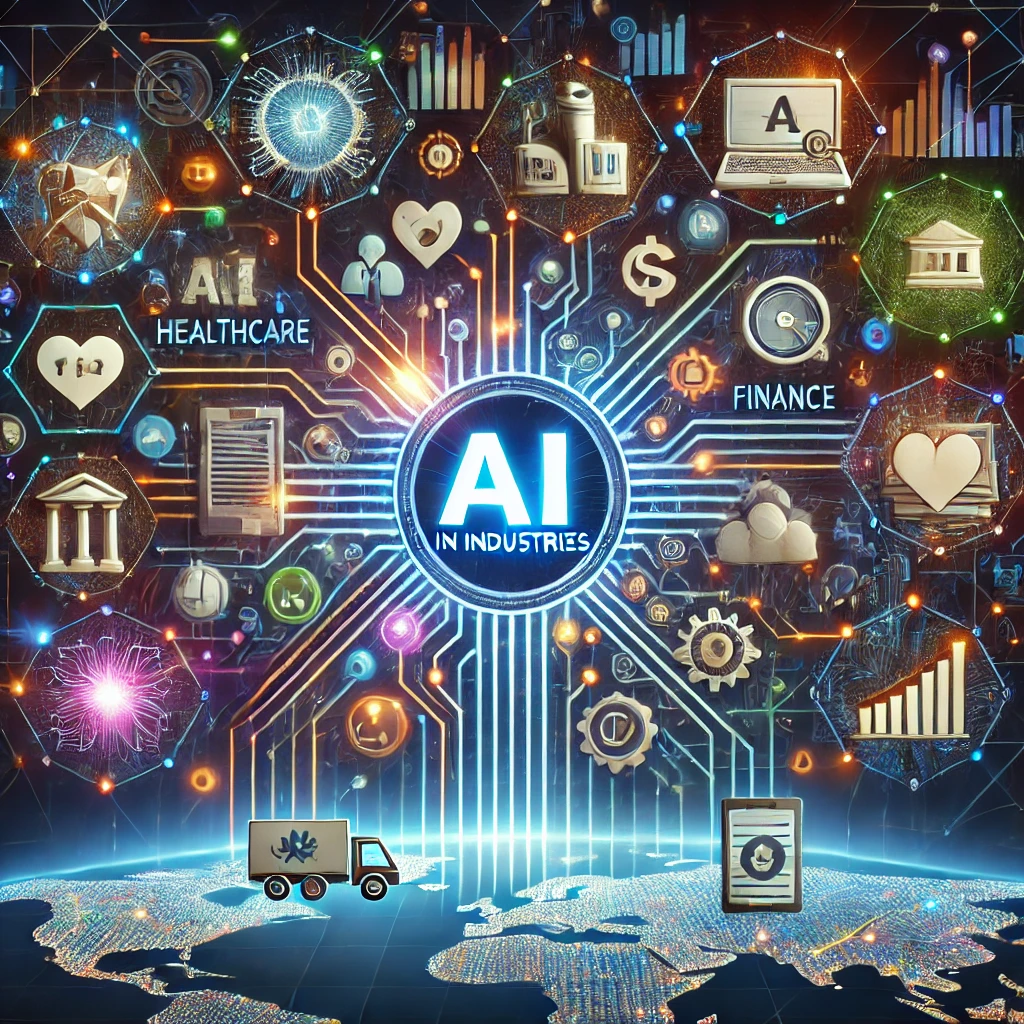
AI is finding widespread application across industries, including healthcare, finance, transportation, and education. AI technologies are being strategically incorporated to enhance productivity and optimize operations across various industries. In healthcare, AI assists with diagnostics, personalized treatment plans, and medical imaging analysis. In finance, AI enhances fraud detection, automates trading, and improves risk assessment.
These AI applications bring significant improvements in efficiency and customer satisfaction but also present challenges related to job displacement, skill requirements, and ethical concerns. Businesses must adopt industry-specific AI strategies that balance innovation with ethical considerations.
7. AI and Human Collaboration
AI-human collaboration is at the forefront of AI innovation, with systems being designed to work alongside humans. By leveraging technologies like transfer learning, reinforcement learning, and few-shot learning, AI models can learn rapidly from human interactions, improving decision-making and productivity.
This collaboration raises concerns about job displacement and requires businesses to develop strategies to foster AI-human synergy, ensuring that AI systems augment human capabilities rather than entirely replace them. Skills training and education play a critical role in this transformation, equipping workers to work effectively with AI systems.
8. AI and Emerging Technologies
AI integration with emerging technologies like blockchain, IoT, and 5G is reshaping digital ecosystems. Blockchain enhances AI’s transparency and security, while IoT allows AI to process vast amounts of data from connected devices. With 5G, AI can achieve real-time data processing, enabling applications in smart cities and autonomous systems.
These integrations, however, necessitate updated AI regulation and security protocols to address potential risks. Organizations must establish AI governance practices to ensure the ethical and safe use of AI in tandem with emerging technologies.
9. AI Talent and Education
The demand for AI talent is surging as businesses recognize the need for skilled professionals in deep learning, prompt engineering, and quantum AI. AI education and training programs are vital in developing the expertise necessary to create, deploy, and manage AI solutions.
With the growing importance of AI talent, organizations are investing in skills development to prevent skill gaps. However, AI-driven job displacement remains a challenge, requiring a proactive approach to retraining and upskilling workers in fields impacted by AI advancements.
10. AI Adoption and Statistics
AI adoption is accelerating globally as businesses and individuals leverage advancements in machine learning, natural language processing (NLP), and computer vision. The AI trend of democratization is making these technologies more accessible and user-friendly, with specific trends like retrieval-augmented generation enhancing their efficiency and application. AI systems are becoming integral in solving real-world problems across diverse industries, from retail to healthcare, driven by large language models (LLMs), transformers, and neural networks.
This rapid adoption underscores the need for policies addressing AI security, ethics, and accountability. As AI becomes more ubiquitous, organizations must focus on responsible AI adoption, developing strategies to address potential risks while optimizing benefits.
11. AI and Cybersecurity
AI is essential in cybersecurity, enabling advanced threat detection, automated responses to cyber incidents, and real-time monitoring. AI-powered cybersecurity tools help organizations safeguard their digital assets and enhance security operations.
However, the use of AI in cybersecurity also raises ethical and regulatory concerns, including AI bias, transparency, and accountability. As cyber threats evolve, businesses must invest in AI security measures that build trust while safeguarding against potential risks associated with AI in cybersecurity.
12. AI and Quantum Computing
AI and quantum computing are beginning to intersect, creating opportunities for Quantum AI models that can process data at unprecedented speeds. Quantum AI has the potential to revolutionize industries, from pharmaceuticals to financial modeling, by solving complex problems that are beyond the capacity of classical computing.
While quantum computing opens new frontiers, it also presents challenges related to AI ethics, security, and regulation. Businesses must adapt to these advances with strategies that ensure secure and responsible use of Quantum AI.
13. AI and Digital Humans
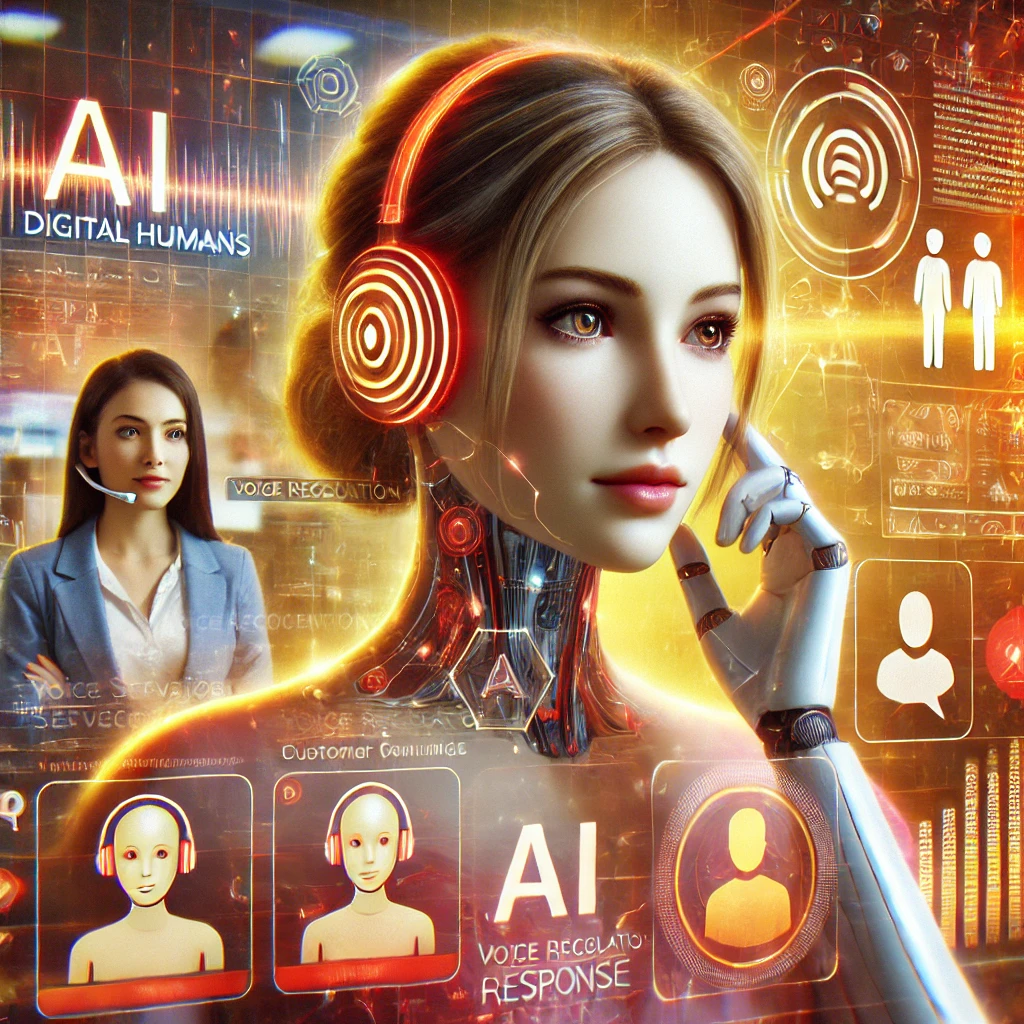
Digital humans, powered by AI, are transforming customer service by providing 24/7 assistance and personalized interactions. These AI-powered avatars are used across industries to enhance customer satisfaction and engagement, particularly in retail and hospitality.
Digital humans raise ethical considerations about authenticity, transparency, and AI bias. Organizations must prioritize responsible AI practices, ensuring digital humans are designed with accountability and transparency to build trust and provide ethical service.
14. AI and Edge Computing
The integration of AI and edge computing enables data processing closer to the source, reducing latency and improving efficiency. Edge AI is particularly valuable for real-time applications in sectors like transportation and manufacturing, where quick decision-making is crucial.
Despite the advantages, edge AI requires strict security protocols to protect sensitive data. Businesses must adopt AI policies that address security and ethical concerns, ensuring AI at the edge operates safely and responsibly.
15. AI and 5G
The combination of AI and 5G technologies facilitates faster data processing, supporting applications such as autonomous vehicles and smart cities. AI-driven 5G networks enable real-time analytics and enhanced connectivity, transforming industries like healthcare and logistics.
However, integrating AI with 5G also requires advanced security measures to protect against potential vulnerabilities. Companies must implement comprehensive AI governance strategies to mitigate risks and ensure the responsible use of AI in conjunction with 5G technology.
16. AI in Autonomous Systems

Autonomous systems, such as self-driving vehicles and robotic assistants, rely heavily on AI to operate independently. These systems have applications in logistics, manufacturing, and healthcare, improving efficiency and reducing human intervention.
To address safety and ethical concerns, organizations must focus on AI alignment and AI safety measures, ensuring that autonomous systems operate reliably and ethically. Robust regulatory frameworks are essential for the safe deployment of these systems.
17. AI and Neuromorphic Computing
Neuromorphic computing, inspired by the human brain’s architecture, enables AI systems to process data more efficiently. This technology has the potential to revolutionize AI performance, particularly in tasks involving pattern recognition and decision-making.
As neuromorphic computing gains traction, businesses must prioritize AI transparency and accountability. Ensuring ethical and responsible use of this advanced technology will be essential for its successful adoption.
18. AI Personalization and Zero-Shot Learning
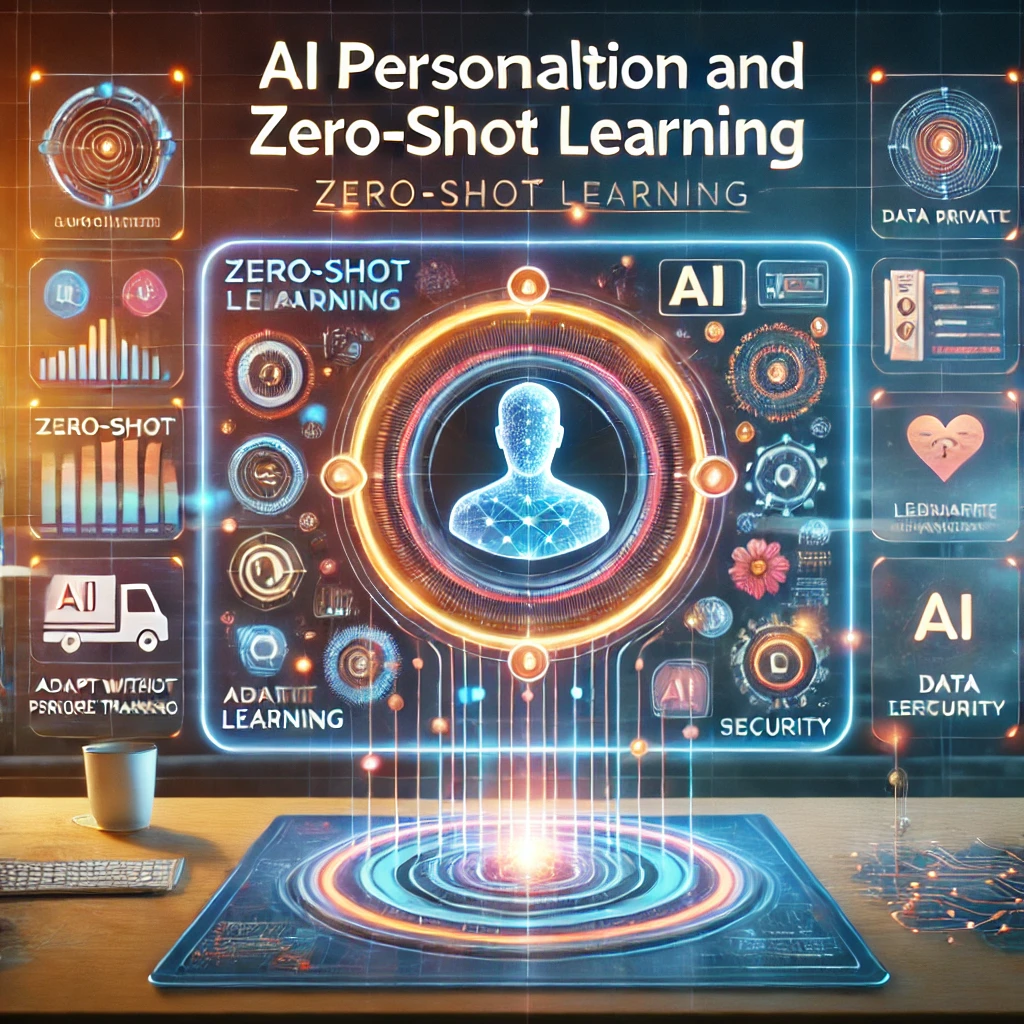
AI personalization is transforming customer experiences by tailoring services based on individual preferences and behaviors. Zero-shot learning, where AI models learn without explicit training on specific tasks, further enhances personalization capabilities, enabling AI to adapt to new scenarios rapidly.
While AI personalization offers a competitive edge, it also necessitates careful consideration of privacy and data security. Businesses must ensure AI alignment with ethical standards to build trust in AI-driven personalization.
19. AI Scalability and AI Infrastructure
The scalability of AI applications is crucial for businesses aiming to leverage AI across large operations. Investments in AI infrastructure and AI lifecycle management are enabling organizations to deploy and maintain large-scale AI solutions effectively.
Scalability, however, brings challenges in monitoring and maintaining AI systems. Organizations must establish robust AI monitoring frameworks to ensure optimal performance and reliability.
20. AI and Synthetic Data
Synthetic data, generated by AI models, is becoming invaluable for training AI systems without compromising privacy. This approach is particularly beneficial in sectors like healthcare, where data sensitivity is high.
Businesses must prioritize responsible AI practices, ensuring synthetic data use aligns with ethical standards. Synthetic data has the potential to fuel AI development while addressing privacy concerns, making it a promising avenue for ethical AI advancements.
Artificial Intelligence (AI) is reshaping industries, transforming business operations, and unlocking new possibilities. In 2024, AI advancements will introduce groundbreaking changes across sectors, influencing everything from product personalization to ethical AI standards. This article explores the top AI trends driving these changes and their potential impacts on business and society.
Generative AI

Generative AI uses machine learning to create text, images, and video content that closely resemble human-created material. The use of generative AI tools in the workplace is on the rise, with employees often turning to Shadow AI for quick solutions without IT oversight, raising data privacy concerns. Advanced neural networks, large language models (LLMs), and multimodal AI models power these applications, leading to more realistic, customizable content. This has applications across marketing, entertainment, and education.
-
Opportunities: Enhanced creativity and personalized content
-
Challenges: AI ethics, authenticity, and intellectual property rights
AI Democratization
AI democratization aims to make AI accessible to individuals and businesses without deep technical expertise. Tools like AutoML, Machine Learning Ops (MLOps), and federated learning allow more users to develop and deploy AI solutions.
-
Opportunities: Increased innovation and problem-solving capabilities
-
Challenges: Regulation, security, and ethical considerations in AI deployment
Advanced AI Systems
Today’s AI systems integrate multiple technologies, such as computer vision, natural language processing (NLP), and reinforcement learning. This convergence enhances automation, predictive analytics, and operational efficiency.
-
Opportunities: Improved efficiency and scalability across sectors
-
Challenges: Transparency, accountability, and potential for AI bias
Workplace AI
In the workplace, AI streamlines tasks, automates processes, and improves productivity through tools like robotic process automation (RPA) and AI-powered personalization.
-
Opportunities: Increased productivity and better customer satisfaction
-
Challenges: Concerns about job displacement and the need for skills training
AI Ethics and Regulation
With AI’s rapid expansion, ethical considerations around transparency, explainable AI (XAI), and accountability are essential. Governments and organizations are working to develop policies that prioritize AI safety and ethical use.
-
Opportunities: Improved AI trustworthiness and public confidence
-
Challenges: Balancing innovation with robust AI policies and accountability
AI in Industries
AI is transforming various industries, including healthcare, finance, and education, by automating processes and enhancing data-driven decision-making.
-
Opportunities: Enhanced efficiency and customer satisfaction
-
Challenges: Job displacement, skill gaps, and ethical concerns
AI and Human Collaboration
AI is increasingly designed to work alongside humans, from AI-human collaboration systems to AI assistants. Few-shot learning and transfer learning allow AI models to learn with limited data, making them adaptable to new tasks.
-
Opportunities: Enhanced productivity and decision-making
-
Challenges: Ensuring job security and fostering AI-human synergy
AI and Emerging Technologies
AI’s integration with blockchain, IoT, and 5G technologies is expanding its capabilities. For example, blockchain can improve AI’s transparency, while 5G enables real-time data processing.
-
Opportunities: Real-time insights and enhanced connectivity
-
Challenges: Increased need for regulation and security
AI Talent and Education
The demand for AI professionals skilled in deep learning, prompt engineering, and quantum AI is rising. AI education programs are essential to bridge the talent gap and meet the growing demand.
-
Opportunities: Skilled workforce and innovation
-
Challenges: Preventing job displacement and fostering continual skill development
AI Adoption and Statistics
As businesses across industries adopt AI, advancements in machine learning, natural language processing, and computer vision are being utilized to solve real-world challenges.
-
Opportunities: Enhanced decision-making and operational efficiency
-
Challenges: Ethical and security concerns in large-scale AI deployment
AI and Cybersecurity

AI is crucial in enhancing cybersecurity through AI-powered threat detection and automated responses. These solutions help organizations protect data and respond to incidents more effectively.
-
Opportunities: Improved security and threat detection
-
Challenges: AI bias, transparency, and accountability in AI-based security systems
AI and Quantum Computing
Quantum AI models leverage the power of quantum computing, enabling faster data processing and the ability to solve complex problems in industries such as finance and pharmaceuticals.
-
Opportunities: Enhanced computational abilities and efficiency
-
Challenges: Regulatory and ethical concerns with quantum computing integration
AI and Digital Humans
Digital humans are AI-powered avatars that provide personalized assistance in customer service. These digital assistants are becoming essential in sectors like retail and hospitality.
-
Opportunities: Increased customer satisfaction and accessibility
-
Challenges: Ethical issues regarding transparency and AI authenticity
AI and Edge Computing
Edge AI enables data processing closer to the data source, reducing latency and improving decision-making in real-time applications, such as smart cities and transportation.
-
Opportunities: Faster response times and reduced bandwidth
-
Challenges: Security and privacy concerns with distributed data processing
AI and 5G
The convergence of AI and 5G accelerates data processing and connectivity, supporting applications in autonomous vehicles, healthcare, and logistics.
-
Opportunities: Enhanced real-time analytics and connectivity
-
Challenges: Ensuring security and robust AI governance
AI in Autonomous Systems
Autonomous systems, such as self-driving vehicles and robotic assistants, are revolutionizing logistics, healthcare, and manufacturing.
-
Opportunities: Increased efficiency and reduced human intervention
-
Challenges: Safety, regulatory, and ethical considerations in autonomous AI systems
AI and Neuromorphic Computing
Neuromorphic computing, inspired by the human brain, enables AI to process data more efficiently, especially in pattern recognition tasks.
-
Opportunities: Improved AI performance and energy efficiency
-
Challenges: Establishing transparency and accountability standards for new technologies
AI Personalization and Zero-Shot Learning
AI personalization tailors experiences based on user data, while zero-shot learning enables AI models to adapt to new tasks without specific training.
-
Opportunities: Enhanced customer experience and adaptability
-
Challenges: Privacy concerns and alignment with ethical standards
AI Scalability and AI Infrastructure
Scalable AI requires robust AI infrastructure and AI lifecycle management to deploy large-scale applications efficiently.
-
Opportunities: Large-scale AI solutions across sectors
-
Challenges: Effective monitoring, maintenance, and ethical scalability
AI and Synthetic Data
Synthetic data generation offers a privacy-friendly approach to training AI models, especially useful in data-sensitive industries like healthcare.
-
Opportunities: Privacy-preserving data for AI development
-
Challenges: Ensuring synthetic data aligns with ethical standards
AGI (Artificial General Intelligence)

Artificial General Intelligence (AGI) represents the next frontier in AI, aiming for machines with human-like cognitive abilities. Unlike narrow AI, which specializes in specific tasks, AGI can perform a wide range of intellectual tasks, learning and adapting in much the same way humans do. Although still largely theoretical, advancements in deep learning, transfer learning, and reinforcement learning are inching closer to making AGI a reality.
-
Opportunities: True AI autonomy, revolutionizing industries and research
-
Challenges: Enormous ethical, security, and regulatory considerations; potential risks to human jobs and autonomy
Multimodal AI
Multimodal AI combines multiple types of data (e.g., text, images, audio) to make sense of complex environments. For example, multimodal models can interpret both visual and textual data, making them ideal for applications in healthcare, education, and customer service. This trend is paving the way for sophisticated AI-human collaboration and explainable AI by offering context-rich insights that align more closely with human perception.
-
Opportunities: Enhanced accuracy and applicability across multiple industries
-
Challenges: Computational cost, complexity in model training, and potential biases across data modalities
Large Language Models (LLMs)
Large Language Models (LLMs) like GPT-4 are transforming language-based applications, from customer service chatbots to complex content generation. These models enable advanced capabilities in natural language processing (NLP), opening up possibilities for real-time translation, sentiment analysis, and conversational AI.
-
Opportunities: Improved user engagement and natural interactions
-
Challenges: High data and computational requirements, ethical concerns around content generation, and potential for AI misuse
Conclusion
The future of AI is brimming with possibilities, from autonomous systems to AI-driven cybersecurity. As these technologies evolve, businesses must adopt responsible AI practices, prioritizing ethics, security, and governance. In a rapidly changing landscape, fostering transparency, building AI literacy, and implementing robust AI policies are vital for achieving sustainable, ethical AI growth.
By embracing these trends responsibly, businesses can harness the power of AI to create a future that benefits society while safeguarding against potential risks.
Thank you for your sharing. I am worried that I lack creative ideas. It is your article that makes me full of hope. Thank you. But, I have a question, can you help me?